
Plants
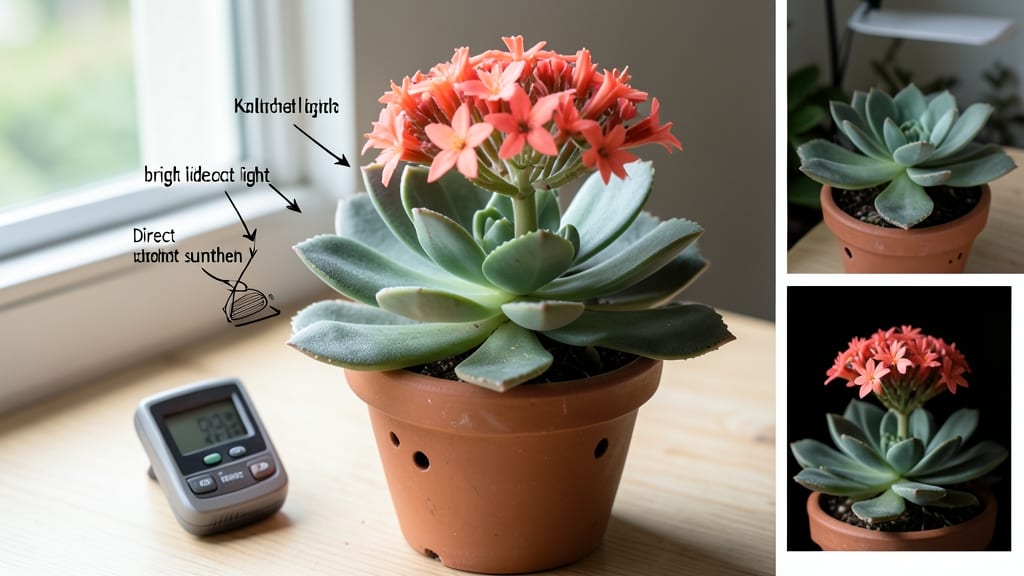
If you’re wondering how much light does a kalanchoe plant need, the answer is simple: it craves plenty of it—but there’s a fine balance to strike.
If your kalanchoe is struggling to bloom—or worse, its leaves are stretching toward the light like it’s desperate for more—you’re probably dealing with a light issue. The right amount of brightness isn’t just about survival; it’s the key to those vibrant flowers and lush foliage you love.
Kalanchoes are sun-worshippers, but they’re not as forgiving as you might think. Too little light, and you’ll end up with leggy stems and sparse blooms. Too much direct sun, and those pretty leaves can turn crispy at the edges.
Finding that sweet spot means understanding how much light your kalanchoe truly craves—and how to give it just the right dose.
In this guide, I’ll break down exactly how much light your kalanchoe needs to thrive, whether you’re placing it by a window or relying on artificial lighting. You’ll learn how to spot signs of over- or under-lighting and how to adjust your setup for perfect growth year-round.
Ready to unlock the secret to a healthier, happier kalanchoe? Let’s dive into the light requirements that will transform your plant care routine.


Optimal light requirements for kalanchoe blooms: bright light essentials
Kalanchoe plants, especially varieties like Kalanchoe blossfeldiana, thrive under bright indirect light with 4-6 hours of direct sunlight daily. This succulent loves light but can’t handle harsh midday rays, which is why east or west-facing windows are ideal.
Without enough light, your kalanchoe will stretch toward the sun—a condition called etiolation—while too much direct sun causes leaf scorch and crispy edges.
The key is mimicking their natural habitat in Madagascar’s arid regions, where they receive intense but filtered sunlight. Think of it like giving them a sunbath with sunscreen: plenty of light, but protected from burning.
If your home lacks natural light, grow lights can bridge the gap, especially during winter’s shorter days.
Seasonal adjustments matter too. In summer’s peak sunlight, move your kalanchoe 3-4 feet back from windows to avoid overheating. During winter’s weaker light, supplement with a 12-hour photoperiod using a LED grow bulb to maintain blooming cycles. This mimics the short-day plant behavior that triggers flowering.
Here’s the science behind it: Kalanchoes use C4 photosynthesis, which is efficient in bright light but shuts down in low light. Without sufficient light, they stop producing chlorophyll, leading to pale leaves and failed blooms.
The goal is to keep leaves deep green and stems sturdy—signs your plant is photosynthesizing happily.
| Light Requirement | Specification | Ideal Conditions |
|---|---|---|
| Bright Indirect Light | 4-6 hours daily | East/west windows or 3-4 ft from south window |
| Direct Sun Tolerance | 2-3 hours max | Morning or late afternoon only |
| Low Light Threshold | <4 hours/day | Leads to etiolation; supplement with grow lights |
| Winter Light Boost | 12-hour photoperiod | Use LED grow bulb 6 inches above plant |
Pro tip: Rotate your kalanchoe quarter-turn weekly to ensure even light exposure. This prevents lopsided growth and keeps foliage lush on all sides. If you notice leaves leaning toward one direction, it’s a clear sign your plant is light-deprived on the darker side.
For outdoor growers, partial shade (like under a 30% shade cloth) is perfect during summer’s harshest months. In USDA Zone 6+, you can keep them outdoors year-round if temperatures stay above 50°F. Just avoid midday July sun, which can cause leaf bleaching within hours.
Remember, kalanchoes are succulents with a thirst for light—but like all succulents, they’re not desert plants. They need brightness, not baking heat. Think of it as giving them a sunroom vacation: plenty of light, but with a cool breeze to keep them comfortable.
If your kalanchoe’s leaves turn red or purple, it’s often a light stress signal. Move it to a brighter spot immediately—but not direct sun. The goal is to find that sweet spot where leaves stay glossy green and blooms stay vibrant.
🌸
Optimal light requirements for kalanchoe blooms: bright light essentials
Kalanchoes thrive in bright, indirect sunlight for 4-6 hours daily, but they can handle up to 3-4 hours of morning direct sun without burning. This succulent-like plant originates from sun-drenched African regions, so it’s adapted to handle more light than most houseplants—but don’t mistake that for carefree sunbathing.
The key is bright, filtered light. Think of it like a south-facing window with sheer curtains—enough light to fuel photosynthesis but not the harsh midday rays that can scorch delicate leaves.
Without this balance, your kalanchoe will either stretch leggily toward the light (a sign of etiolation) or develop brown, crispy edges from too much intensity.
Here’s the breakdown of what your kalanchoe needs to bloom beautifully:
Seasonal adjustments are crucial. During winter months, when natural light is weaker, supplement with a grow light to maintain 12-14 hours of light daily. This mimics the plant’s natural long-day photoperiod and prevents dormancy before its time.
In summer, move your kalanchoe away from south-facing windows by midday to avoid leaf bleaching or sunburn.
Pro tip: Rotate your plant quarter-turn weekly to ensure even light exposure. Uneven growth (where one side leans toward the light) is a classic sign of light deprivation or favoritism.
A well-lit kalanchoe will reward you with compact growth, vibrant foliage, and prolonged blooming—sometimes for months at a time!
Remember, the goal isn’t just survival—it’s showstopping blooms. With the right light, your kalanchoe will become the star of your collection, not just another green thumb trophy.