
Watering
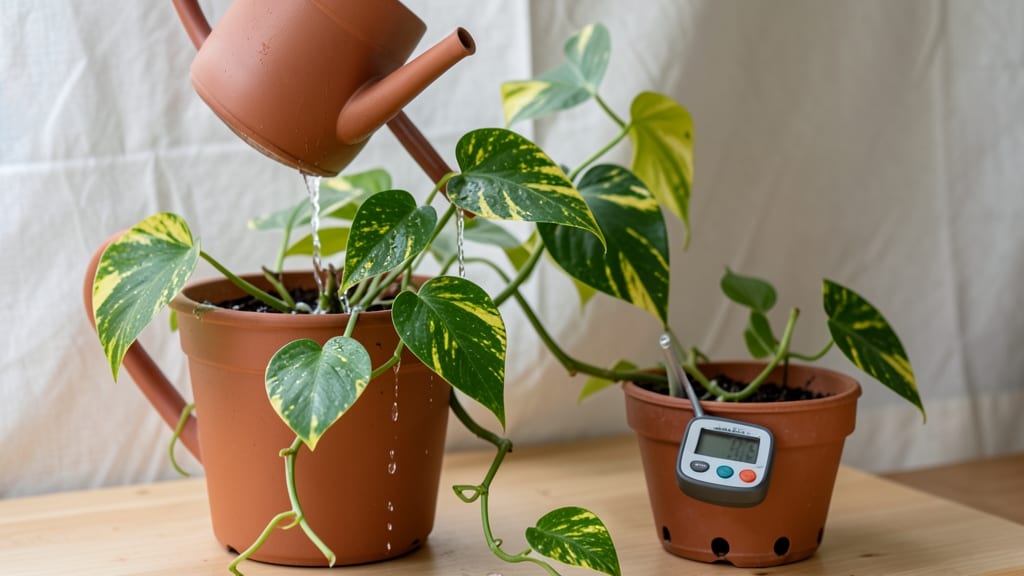
Figuring out how much water your pothos plant 🌿 needs can feel like walking a tightrope—too little, and its leaves turn crispy; too much, and you risk root rot. The good news? With the right approach, keeping your pothos thriving becomes second nature.
Most beginners make the mistake of sticking to a rigid schedule, but pothos care is all about reading your plant’s signals.
Instead of guessing, I’ll show you how to check soil moisture the easy way and adjust based on your home’s conditions—whether you live in a dry climate or have a humid bathroom.
In this guide, you’ll discover the goldilocks zone for watering: not too much, not too little, but just right. We’ll cover everything from seasonal changes to pot size, so you can finally stop second-guessing and keep those lush vines happy year-round.
Ready to master the art of watering? Let’s dive into the simple steps that’ll have your pothos growing faster and looking healthier than ever—without the guesswork.

How often to water pothos based on soil dryness (not a fixed schedule)
Your pothos plant thrives on consistency, but its watering needs aren’t set in stone—think of it like a drought-tolerant friend who prefers to go thirsty than drown. Unlike strict weekly schedules, pothos care relies on soil dryness as your guide.
Stick your finger about 1 inch deep into the soil: if it feels dry, it’s time to water. If it’s still damp, wait another 2-3 days. This method prevents both root rot and crispy leaves from dehydration.
Most pothos owners water every 7-10 days in summer, but this shifts to bi-weekly in winter when growth slows. Smaller pots dry out faster—check soil moisture more often—while larger containers can hold moisture for 10-14 days.
The key? Well-draining soil with perlite or orchid bark helps prevent soggy roots, which are pothos’ worst enemy.
Here’s the golden rule: Water thoroughly until it drains from the bottom, then empty the saucer. Stagnant water turns into a breeding ground for fungus gnats and root rot. In dry climates, your pothos may need water more frequently, while humid environments can stretch those 10-14 day intervals.
Pay attention to your plant’s leaf color and droopiness—these are its way of talking to you.
| Season | Watering Frequency | Soil Check Depth | Signs of Overwatering |
|---|---|---|---|
| Spring | Every 7-10 days | 1 inch deep | Yellow leaves, mushy stems |
| Summer | Every 5-7 days | 1 inch deep | Brown leaf tips, slow growth |
| Fall | Every 10-14 days | 1-2 inches deep | Drooping leaves, stunted growth |
| Winter | Every 3-4 weeks | 2 inches deep | Blackened stems, wilting |
Pot size plays a huge role in watering frequency. A 6-inch pot may need water every 5-7 days in summer, while a 12-inch container can go 10-14 days between waterings. The larger the pot, the more soil retains moisture, reducing evaporation.
Pro tip: Group pothos plants together to create a microclimate with higher humidity, which mimics their tropical origins and cuts down on watering needs.
New pothos owners often make the mistake of watering on a fixed schedule, leading to either soggy soil or parched roots. Instead, trust your finger test and observe your plant’s leaves. Healthy pothos leaves are glossy and green—anything else is a red flag.
If your plant’s leaves start curling or developing brown edges, it’s likely thirsty. But if they’re yellowing and mushy, you’ve overdone it.
Adjust your watering routine based on your home’s environment. If your pothos sits near a heating vent or in direct sunlight, it’ll dry out faster. Move it to a spot with bright indirect light and increase watering slightly.
Conversely, if your home is humid (like a bathroom), you can stretch out those watering intervals. The goal is to keep the soil slightly moist, not soaked.
One of our team’s biggest lessons came from a waterlogged pothos that turned into a sad, mushy mess. We learned to always check the soil before watering—if it’s still damp, wait.
Patience is key with pothos. They’re resilient but not indestructible. With the right balance, your plant will reward you with lush, trailing vines that can grow 6-10 feet long indoors.
For beginners, start with a smaller pot (6-8 inches) to make watering easier to manage. These dry out faster, giving you a better feel for your plant’s needs. As your pothos matures, you can upgrade to larger containers, but always ensure they have drainage holes.
Remember: pothos hate soggy feet, so never let them sit in standing water.
If you’re still unsure, grab a moisture meter—it’s a game-changer for pothos care. These inexpensive tools take the guesswork out of watering by giving you a precise reading of soil moisture. Place it in the pot, and if it reads dry, water thoroughly.
If it’s moist or wet, hold off for a few more days. This simple tool can save your pothos from both overwatering and underwatering disasters.
How often to water pothos based on soil dryness (not a fixed schedule)
Your pothos plant thrives on consistency, but its watering needs aren’t set in stone—it’s all about soil moisture and seasonal shifts. Unlike plants with rigid schedules, pothos prefers you to check its soil dryness first.
Stick your finger about 1 inch deep into the soil: if it feels dry, it’s time to water. This method prevents both root rot from overwatering and leaf crispiness from thirst.
Seasonal changes drastically alter your watering frequency. During summer months (June-August), when humidity drops and heat increases evaporation, you may need to water every 5-7 days. In contrast, winter care (December-February) slows growth, so watering every 3-4 weeks keeps roots healthy without drowning them.
Always adjust based on your home’s humidity levels—dry air means more frequent watering.
Pot size plays a surprising role in watering. A small 6-inch pot dries out faster than a large 12-inch container, meaning you’ll water the former every 5-7 days while the latter may only need attention every 10-14 days.
The key is to let the top 1-2 inches of soil dry out between waterings, regardless of pot size. This ensures roots get the oxygen they need to stay vibrant and healthy.
| Condition | Watering Frequency | Soil Check |
|---|---|---|
| Summer (June-August) | Every 5-7 days | Top 1 inch dry |
| Spring/Fall (March-May, Sept-Nov) | Every 7-10 days | Top 1-2 inches dry |
| Winter (Dec-Feb) | Every 3-4 weeks | Top 2-3 inches dry |
| Small Pot (6-inch) | Every 5-7 days | Top 1 inch dry |
| Large Pot (12-inch+) | Every 10-14 days | Top 2 inches dry |
One common mistake is assuming a fixed schedule works for all pothos. Instead, think of watering as a flexible routine tied to your plant’s environment. For example, if your home has low humidity (like 30-40%), increase watering slightly.
Conversely, if your pothos sits near a humidifier or in a bright bathroom, reduce frequency. Always pair watering with a quick check of the leaf turgidity—plump leaves mean happy roots!
To avoid overwatering mistakes, never let your pothos sit in standing water. Ensure your pot has drainage holes, and empty the saucer 10 minutes after watering. For underwatering, watch for yellowing leaves or a wilted appearance—these are your pothos’ way of saying, “I’m thirsty!”
Adjust your routine until you find the sweet spot where the soil stays lightly moist but never soggy.
Remember, every pothos is unique. What works for one plant might not for another, even in the same home. Keep a watering journal to track what your specific plant prefers. Over time, you’ll develop an instinct for when it’s time to grab that watering can—no guesswork needed! 🌱