
Planting
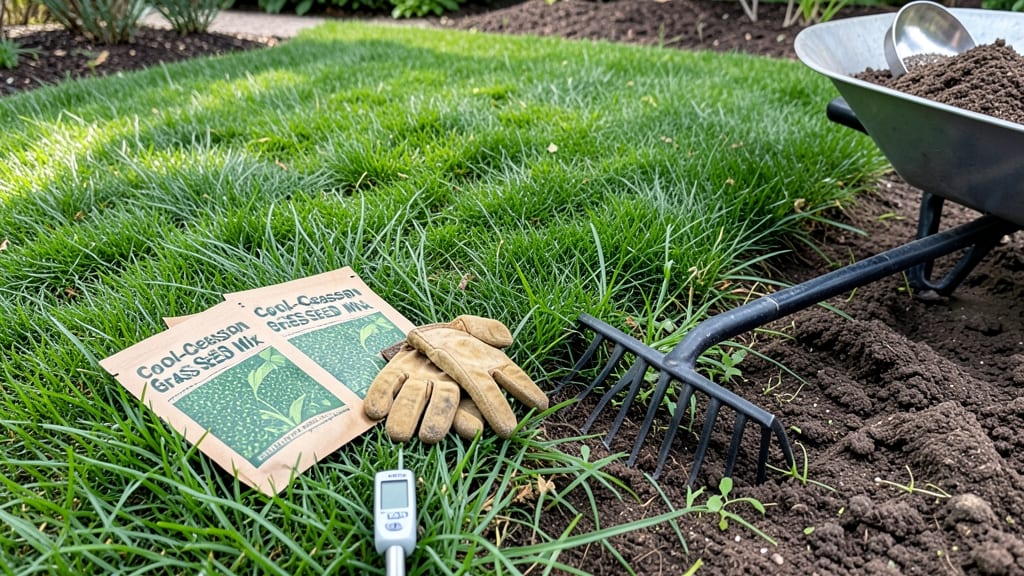
Planting your Grass Seed (Turfgrass) 🌱 at the wrong time in Wisconsin can mean wasted money and months waiting for a lush lawn—but getting the timing right transforms your yard into a vibrant, weed-resistant carpet that lasts.
With Wisconsin’s 4a-5b climate, you’ve got two prime windows: early spring after the last frost or early fall before the first freeze. But here’s the catch—soil temperature matters just as much as the calendar.
Plant too early, and your seeds will sit dormant; too late, and frost will kill them before they take root.
I’ll break down the exact months for your USDA zone, how to test soil readiness, and which grass types thrive in Wisconsin’s short growing season. No more guessing—just a foolproof plan for a lawn that impresses your neighbors.
Ready to stop second-guessing and start planting with confidence? Let’s dive into the perfect timing and steps to ensure your grass seed germinates like a dream.
Wisconsin grass seed planting calendar by USDA Zone & soil temperature
Wisconsin spans USDA Zones 3-6, meaning planting windows vary dramatically from north to south. The ideal soil temperature for grass seed germination is 50–65°F, but timing also depends on avoiding late spring frosts or early fall freezes.
Let’s break down the exact months for each zone to maximize your lawn’s success.
For northern Wisconsin (Zones 3-4), your planting window is shorter—focus on late April to early May for spring or mid-August to early September for fall. Southern Wisconsin (Zones 5-6) has more flexibility, with March-April for spring and August-October for fall.
The key is planting 4-6 weeks before the first frost in fall or after the last frost in spring.
🌱 Pro Tip: Use a soil thermometer to confirm readiness—if temps dip below 50°F, germination slows dramatically.
In Zone 3, where winters are harshest, fall planting is your best bet—seedlings establish roots before the ground freezes.
Meanwhile, Zone 6 gardeners can push fall planting into early November if soil temps stay above 50°F. Always check your local frost date averages—Wisconsin’s first frost can arrive as early as September 15th in the north or as late as October 30th in the south.
For spring plantings, wait until the soil stays above 50°F for 5+ days. In northern Wisconsin, this often means mid-to-late May, while southern regions can start as early as March. Cold soil slows germination and invites fungal diseases like Pythium.
🌡️ Warning: Planting too early in spring (before last frost) risks seed washout or frost damage. Fall plantings should finish 6 weeks before frost—any later, and your lawn may struggle to establish before winter.
If you’re unsure about your zone, use the USDA Plant Hardiness Zone Map or check with your local cooperative extension office. They’ll provide hyper-local advice, including microclimate variations (e.g., urban heat islands or shaded yards).
For cool-season grasses like Kentucky bluegrass, tall fescue, and perennial ryegrass—Wisconsin’s top choices—fall is the gold standard. These grasses grow best in 55–75°F soil and establish deeper roots before winter. Spring plantings work but require more frequent watering to compensate for faster evaporation.
💧 Key Takeaway: August-September is ideal for most of Wisconsin, but Zone 3 gardeners should prioritize late August to avoid early frosts. Use this calendar as your guide, but always verify with a soil thermometer—it’s your best tool for success.
How to check soil readiness before planting grass seed in Wisconsin
Before you rush to spread grass seed in Wisconsin, checking your soil’s readiness is the secret to avoiding wasted seed and patchy lawns. Cool soil or hidden frost can stall germination, while too-warm soil may dry out seeds before they sprout.
I’ve learned the hard way—planting too early in spring left my seeds sitting for weeks, and late fall plantings got nipped by frost.
Your soil needs to hit 50–65°F for optimal germination. In Wisconsin’s USDA zones 4a–5b, this usually means waiting until mid-April for spring or early September for fall. But don’t just guess—test your soil to be sure.
Soil temperature is your first clue. Use a soil thermometer (available for $10–$15) to check 2–4 inches deep. If it’s below 50°F, wait. Pro tip: Morning temps are cooler, so test in the afternoon for accuracy.
Moisture matters just as much. Damp but not soggy soil is ideal—like a wrung-out sponge. Stick your finger in: if it feels dry past 1 inch, water deeply before planting. Overwatering can suffocate seeds, though, so aim for consistent moisture, not puddles.
🌱Frost risk is the silent killer of grass seed. Even if your soil feels warm, a late spring freeze or early fall frost can wipe out new seedlings.
Check your local frost-free date (typically mid-April for spring, mid-October for fall) and plant 4–6 weeks before the first expected frost for fall seedings.
⚠️ Warning: Fall Planting Pitfalls
Planting too late in fall? Your seeds may germinate but get killed by frost before roots establish. Rule of thumb: If nighttime temps dip below 40°F, your seedlings are at risk. Use a row cover or straw mulch to protect new growth until roots are deep (about 3–4 weeks after sprouting).
Don’t overlook soil pH, either. Wisconsin’s clay-heavy soils often lean acidic (pH < 6.5), which can stunt grass growth. Test your pH with a kit (or send a sample to your local UW Extension office for free advice). Most grasses thrive in 6.0–7.0 pH. If yours is off, amend with lime (to raise pH) or sulfur (to lower pH) 4–6 weeks before planting.
Finally, clear debris and loosen the top 1–2 inches of soil with a rake or aerator. Compacted soil blocks roots and traps moisture, turning your lawn into a soggy mess. For best results, aerate in fall (September) or spring (April)—just before planting.
With these checks, you’ll avoid the heartbreak of failed germination and grow a lawn that’s the envy of your neighborhood. Next, let’s tackle which grass seed types work best for Wisconsin’s climate—and when to plant each for maximum success. 🌿