
How To
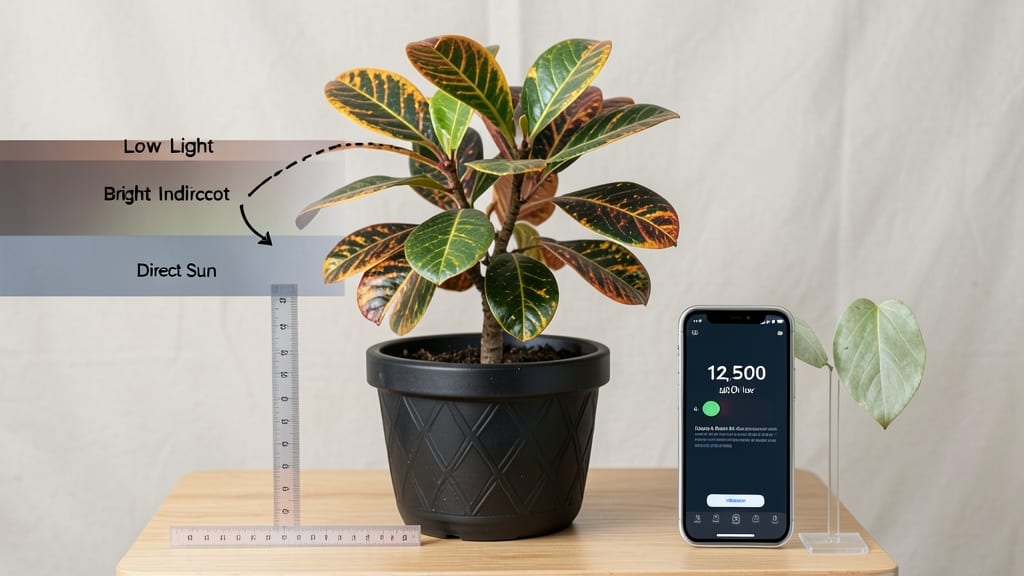
If you’re wondering how much light does a croton plant need, the answer lies in striking the perfect balance—bright indirect sunlight is what keeps these tropical beauties thriving, and getting it wrong can mean the difference between lush foliage and sad, leggy stems.
Crotons are sun-worshippers, but they hate harsh direct rays that can scorch their delicate leaves. Most experts recommend 4 to 6 hours of filtered light daily, whether from an east or west-facing window or a well-placed grow light.
Too little light dulls their colors, while too much turns them crispy—so finding that sweet spot is key.
In this guide, I’ll break down exactly how to meet your croton’s light needs year-round, from spotting signs of stress to adjusting for seasonal changes. Whether you’re dealing with winter’s weak sun or summer’s intense glare, you’ll learn how to keep your plant happy without guessing.
Ready to transform your croton from lackluster to showstopping? Let’s dive into the lighting secrets that’ll have your plant thriving in no time.


Croton plant light requirements: ideal bright indirect sunlight explained
A croton plant thrives under bright indirect sunlight, making it a perfect indoor plant for sunny windows. While it can tolerate direct sunlight, too much can scorch its stunning variegated leaves.
The key is finding that sweet spot where your croton gets enough light to stay vibrant without getting stressed.
Most crotons need 4-6 hours of bright light daily. This means placing them near an east-facing or west-facing window works best, while a south-facing window may require some distance to prevent leaf burn.
If your home lacks natural light, grow lights can bridge the gap—just keep them 6-12 inches away for optimal growth.
Here’s what happens when light needs aren’t met: Too little light causes leaves to lose their bold colors, turning dull or pale, while too much direct sun leads to crispy brown edges. The goal is to mimic the dappled shade of their native tropical forests.
| Light Requirement | Ideal Conditions | Signs of Stress |
|---|---|---|
| Bright Indirect Light | 4-6 hours daily, 2-3 ft from window | Vibrant, colorful leaves |
| Low Light | Less than 4 hours/day | Pale, stretched leaves (etiolation) |
| Direct Sunlight | More than 6 hours/day | Brown, crispy leaf edges |
If you’re unsure about your home’s light levels, try the shadow test: Place a piece of paper near your croton’s spot. If the shadow is sharp and dark, the light is too intense.
For softer shadows, it’s likely just right. Rotate your plant quarter-turns weekly to ensure even growth and prevent lopsided foliage.
For outdoor crotons, morning sun with afternoon shade is ideal. If you move your plant outside during summer, acclimate it gradually over 1-2 weeks to avoid shock. Sudden exposure to full sun can cause irreversible damage to the leaves.
Grow lights are a game-changer for winter months when natural light fades. A full-spectrum LED grow bulb (6,500K color temperature) works best. Keep it on for 12-14 hours daily to mimic daylight and maintain your croton’s energy levels.
Pro tip: Watch your croton’s leaf orientation. Healthy leaves grow outward, while stressed leaves may cup or droop. This is your plant’s way of communicating its light needs—listen closely!
Remember, every croton is unique. Some varieties, like the Petra croton, handle more light than others, such as the Mammy croton. Experiment with placement and observe how your specific plant responds to find its perfect light balance.
Signs your croton isn’t getting enough (or too much) light
Your croton’s leaves tell a story—yellowing or browning edges scream for help, while dull, pale foliage means it’s craving more brightness. These visual cues are your plant’s way of saying, “Adjust my light now!” Let’s decode what each symptom means and how to fix it fast.
When your croton stretches toward the light with long, leggy stems and sparse leaves, it’s begging for more bright indirect sunlight. This “etiolation” happens when the plant searches for light, weakening its structure.
Move it closer to a south-facing window or add a grow light 12-18 inches away for 6-8 hours daily.
Scorched or crispy leaf tips? That’s your croton getting a sunburn from too much direct afternoon sun. Unlike tropical natives, crotons can’t handle harsh rays—especially between 10 AM and 4 PM. Try placing it 3-5 feet back from a window or use a sheer curtain to diffuse the light.
🌿
🌱 Pros & Cons: Croton Light Fixes
- Rotate pot weekly for even growth
- Use east/west windows for gentle light
- Add a sheer curtain for south windows
- Supplement with LED grow lights in winter
- Place near cold drafts with strong light
- Use direct midday sun without acclimation
- Ignore yellow leaves for more than 2 weeks
- Overwater stressed plants (wait until soil dries)
For new croton owners, start with 3-4 hours of morning sun and gradually increase exposure. Watch for new leaf growth—healthy crotons produce bright, glossy foliage with vibrant patterns. If your plant’s colors fade to green-only, it’s definitely light-deprived.
Pro tip: Test your light setup by placing a white sheet of paper near your plant. If you can’t read text clearly, the light’s too dim. Crotons need at least 500 foot-candles of light to thrive—most indoor spaces only get 100-300 near windows.
🪴