
Plants
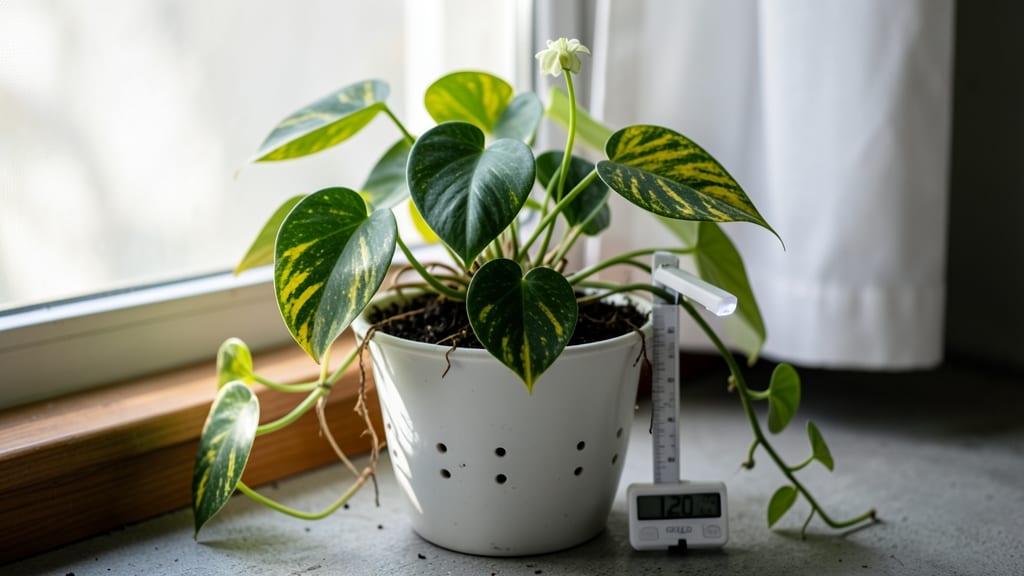
You’ve probably heard that pothos plants 🌿 are nearly indestructible—but even these resilient vines need the right light to truly shine.
The secret to keeping yours lush and thriving lies in understanding how much light it actually needs, because too little or too much can turn your green friend into a sad, leggy shadow of itself.
Most people assume pothos plants will survive anywhere, but the truth is, they’re not as flexible as you’d think. Too little light and you’ll end up with stretched-out stems and pale leaves; too much direct sun, and those beautiful variegated patterns will fade to a sad, sun-bleached green.
The good news? Finding that sweet spot is easier than you’d imagine—and once you get it right, your pothos will reward you with rapid growth and vibrant foliage.
Whether you’re dealing with a dim corner of your home or a bright south-facing window, I’ll show you exactly how to position your pothos for success. We’ll cover the ideal light conditions, how to spot when things are off, and even some clever workarounds for tricky spaces.
By the end, you’ll know exactly where to place your plant to keep it happy year-round.
Ready to stop guessing and start growing? Let’s dive into the simple secrets that’ll transform your pothos from struggling survivor to showstopping centerpiece.


Pothos light requirements: the ideal spectrum for healthy growth
Pothos plants are famous for their adaptability, but even they need the right amount of light to thrive. Unlike sun-loving plants, pothos prefers bright indirect light, making it perfect for offices, bathrooms, or dimmer corners of your home.
Too little light slows growth, while too much can scorch those gorgeous heart-shaped leaves. Let’s break down the perfect lighting conditions to keep your pothos lush and vibrant.
In nature, pothos grows as a trailing vine in the understory of tropical forests, where sunlight filters through dense foliage. This means it’s evolved to handle low to medium light without stress.
However, it still needs enough light to perform photosynthesis efficiently. Aim for 2-4 hours of bright indirect light daily—think of it as the "goldilocks zone" for your plant’s health.
Here’s how light intensity impacts your pothos: Low light (under 1,000 foot-candles) causes slow growth and pale leaves, while bright indirect light (1,000-2,500 foot-candles) promotes healthy, glossy foliage.
Direct sunlight (over 2,500 foot-candles) can burn leaves, turning them crispy or yellow at the edges. Understanding these thresholds helps you avoid common mistakes.
If you’re unsure about your space’s light levels, try this simple test: Hold a sheet of white paper near your pothos during the day. If you can easily read text on it, the light is likely too bright.
If the paper looks dim, your plant needs more light. This quick trick saves you from guesswork and keeps your pothos happy.
Now, let’s dive into the specifics. The table below summarizes the ideal light conditions, growth responses, and how to adjust your setup for optimal results.
Notice how bright indirect light is the sweet spot for your pothos? This range ensures your plant gets enough energy for photosynthesis without risking damage. For example, placing your pothos 2-3 feet away from a north-facing window provides the perfect balance.
North-facing windows offer consistent, gentle light that mimics its natural habitat.
Seasonal changes can also affect your pothos’s light needs. During winter, shorter daylight hours might require you to supplement with a grow light or rotate your plant to different windows for even exposure.
Conversely, in summer, intense afternoon sun can become harsh—use sheer curtains to diffuse the light and protect those delicate leaves.
Pro tip: Rotate your pothos quarter-turn every 2-3 weeks to ensure all sides get equal light exposure. This prevents lopsided growth and keeps your plant looking full and symmetrical. Even a small adjustment like this can make a big difference in your pothos’s overall health and appearance.
If you’re still unsure about your home’s lighting, observe your pothos’s leaves. Healthy leaves are deep green and glossy, while struggling leaves may show signs of stress like yellowing or browning.
We’ll cover these symptoms in detail in the next section, but for now, remember: moderation is key when it comes to light for pothos.
With the right light, your pothos will reward you with vibrant foliage, faster growth, and fewer pests. It’s all about finding that perfect balance—just like Goldilocks, your plant wants it not too bright, not too dim, but just right.
Pothos light requirements: the ideal spectrum for healthy growth
Your pothos plant 🌿 thrives in bright indirect light, but what does that actually mean? Think of it as the perfect balance between sunlight and shade—like sitting in a sunlit room with sheer curtains filtering the rays.
This vine can tolerate low-light conditions, but it won’t reach its full potential without enough illumination. The key is avoiding harsh direct sun, which can scorch those delicate leaves, while ensuring it gets enough light to fuel photosynthesis.
Most pothos plants do best with 2-4 hours of indirect light daily, though they can adapt to as little as 1-2 hours if placed in a dim corner. The magic happens when you position it near a north-facing window, where light is soft and diffused.
South-facing windows can work too, but only if you place the plant 3-5 feet away to prevent leaf burn. Even east or west-facing windows are fine, as long as the light isn’t too intense during peak hours.
Here’s the science behind it: pothos leaves contain chlorophyll and other pigments that absorb light efficiently, but too much direct UV can break down those pigments, causing the variegated patterns to fade to plain green.
The ideal light spectrum for pothos falls between 100-1,000 foot-candles—think of a well-lit office or a bathroom with natural light. If your home lacks windows, don’t worry; we’ll cover artificial lighting solutions next.
| Light Condition | Ideal Placement | Growth Impact |
|---|---|---|
| Low Light (1-2 hrs/day) | North-facing window, 5+ ft away | Slow growth, leggy stems, pale leaves |
| Bright Indirect (2-4 hrs/day) | East/west window, 2-3 ft away | Healthy growth, vibrant variegation |
| Direct Sun (4+ hrs/day) | South-facing window, no filter | Brown patches, faded variegation, crispy edges |
One common mistake I see is assuming all pothos varieties have the same light needs. While they’re generally low-maintenance, variegated pothos (like 'Golden Pothos' or 'Marble Queen') need slightly more light to maintain their stunning patterns.
These cultivars require at least 2-3 hours of bright indirect light to keep their leaves colorful. If you notice your variegated pothos turning all green, it’s a clear sign it’s not getting enough light for its needs.
Seasonal changes can also throw off your pothos’s light balance. During winter months, shorter daylight hours might mean your plant isn’t getting enough light, even in a sunny window. This is when you’ll see those telltale leggy stems stretching toward any available light. The fix?
Rotate your plant every few weeks so all sides get even exposure, or supplement with a grow light for 6-8 hours daily. In summer, when days are long, watch for signs of overlighting—like crispy leaf edges—and move your plant back from the window if needed.
Pro tip: If you’re unsure whether your space is too dim, do this quick test. Place your hand near your pothos’s leaves during the day. If you can’t easily read a book by that light, your plant needs more illumination.
Conversely, if the air near the plant feels noticeably warmer than other rooms, it’s getting too much direct sun. Adjusting these factors will keep your pothos thriving year-round.