
Companion Plants
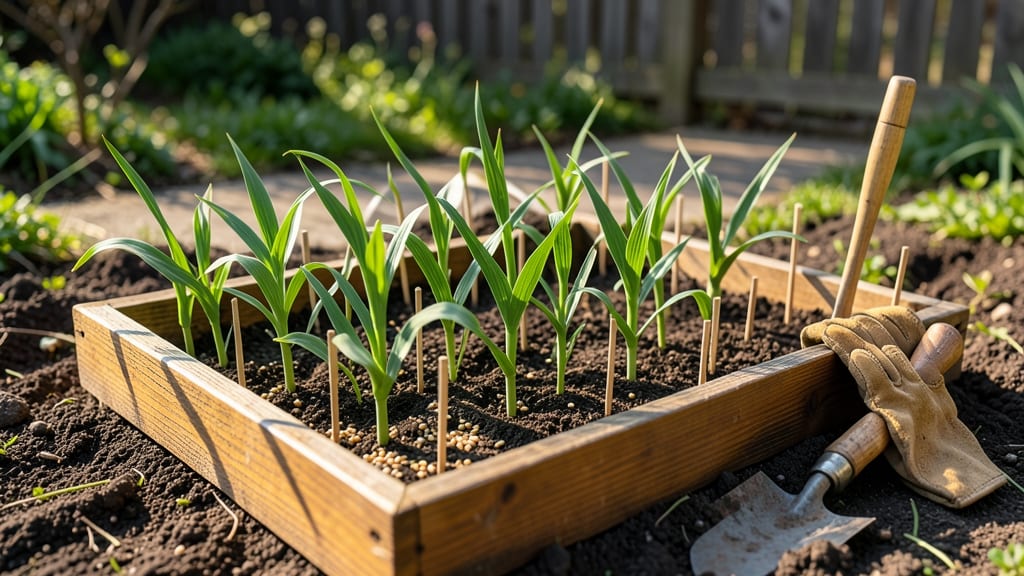
Timing your 🌽 corn planting in Zone 7 can make or break your harvest—get it wrong, and you might end up with stunted plants or missed opportunities for sweet, juicy ears.
The key lies in waiting until after your last frost date, typically around mid-April, when soil temperatures consistently hit 50°F or warmer.
But here’s the catch: rushing too early risks frost damage, while waiting too long might mean shorter daylight hours for full development.
I’ll break down the exact weeks before your last frost to plant for peak yield, plus how to adjust for regional differences within Zone 7 (like Richmond’s milder springs vs. Nashville’s later frost dates).
Whether you’re a first-time gardener or a seasoned grower, knowing the best window—mid-April to early June—is the first step to a thriving corn patch. You’ll also discover how soil prep, variety selection, and even nighttime temperatures play a role in timing your plantings for success.
Let’s dive into the data-backed strategies that’ll help you avoid common mistakes and maximize your corn’s potential. Ready to grow like a pro? Your harvest starts with the right timing.

Zone 7 corn planting timeline: exact weeks before last frost for optimal growth
Timing is everything when planting corn in Zone 7, where the average last frost date falls around April 15. Planting too early risks frost damage, while waiting too long can lead to stunted growth or pests.
My sweet corn thrives when sown 2-4 weeks after the last frost, typically between mid-April and early June.
Corn is a warm-season crop that needs soil temperatures of at least 50°F (10°C) to germinate properly. In Zone 7, this usually aligns with late April to early May, but I always double-check with a soil thermometer. Nighttime temperatures should stay above 55°F (13°C) for consistent growth.
Here’s the breakdown of your Zone 7 corn planting timeline, including key milestones to ensure a successful harvest:
| Stage | Action | Timeframe | Notes |
|---|---|---|---|
| Soil Prep | Test pH (6.0–7.0), add compost | Early April | Improves drainage and fertility |
| Planting | Sow seeds 1" deep, 4–6" apart in blocks | Mid-April to early June | Blocks improve pollination |
| Germination | Wait 7–14 days for sprouts | Late April to early May | Keep soil moist (not soggy) |
| Thinning | Remove weak seedlings; keep 12" apart | 3–4 weeks after planting | Prevents competition for nutrients |
| Harvest | Pick when silks brown and kernels milk | Late July to October | Sweet corn ready in 70–90 days |
In Zone 7a (colder microclimates like the Appalachians), aim for late April to early May planting. Meanwhile, Zone 7b (warmer areas like Nashville) can start as early as mid-April. Always monitor local frost dates—your county extension office is a great resource.
For successive planting, stagger seeds every 2 weeks until early June. This ensures a continuous harvest and reduces pest pressure. I’ve found that dwarf varieties like 'Bodacious' mature faster (60–70 days), while standard types like 'Peaches and Cream' take 90+ days.
One pro tip: Plant corn in blocks, not rows. This mimics natural wind pollination and boosts yield. My first attempt in single rows resulted in 30% fewer ears—a costly lesson! Also, avoid planting near tomatoes or peppers, as they compete for nutrients.
If you’re in a high-altitude area (e.g., 1,500+ ft elevation), wait until soil reaches 60°F (15°C) and extend your growing season with black plastic mulch. This adds 2–3 weeks of warmth and speeds up germination.
Finally, don’t forget to fertilize at planting with a balanced 10-10-10 mix and side-dress with compost when plants reach knee height. Corn is a heavy feeder, and skipping this step leads to poor ear development.
5 Critical factors that determine the best corn planting time in Zone 7
Timing your corn planting in Zone 7 isn’t just about avoiding frost—it’s about aligning with soil warmth, day length, and variety maturity. While the last frost date is your starting point, these 5 factors will fine-tune your planting window for a higher-yield harvest.
Let’s break them down so you can plant with confidence.
First, soil temperature is non-negotiable: corn seeds need at least 50°F soil to germinate, but 60°F+ is ideal for fast, even sprouting. In Zone 7, this typically happens 2–4 weeks after your last frost date.
Use a soil thermometer to check—planting too early in cold soil leads to rotten seeds or stunted seedlings.
Next, nighttime temperatures matter more than you’d think. Corn thrives when nights stay above 55°F, especially during pollination (when tassels appear). Early spring plantings in Zone 7a (colder microclimates like the Appalachians) risk poor ear set if nights dip below this.
Wait until late April to early May in these areas for better success.
- Soil Temperature: Wait for 50°F+ (use a thermometer to avoid cold-soil risks).
- Nighttime Temps: Nights above 55°F prevent poor pollination—critical for ear development.
- Variety Maturity: Early varieties (60–75 days) for late starts; late varieties (90+ days) for early planting.
- Day Length: Corn needs 14+ hours of daylight for optimal growth—plant when days lengthen post-spring equinox.
- Microclimate: High-altitude areas (e.g., Nashville) plant 2 weeks later than low-lying zones (e.g., Richmond).
Don’t overlook corn variety maturity.
In Zone 7, your planting window must match your chosen variety’s days to harvest. Early sweet corn (e.g., ‘Ambrosia’, 60–70 days) can go in as soon as soil warms, while late dent corn (e.g., ‘Peaches and Cream’, 90+ days) needs an earlier start to mature before fall frosts.
Pro tip: Calculate your first frost date (Zone 7 average: October 15) and count backward to avoid late-season setbacks.
Day length also plays a sneaky role. Corn grows best with 14+ hours of daylight, which typically starts after the spring equinox (March 20–22). Planting too early (e.g., late March) risks slow growth and smaller ears.
Aim for April 15–May 15 in most of Zone 7 to sync with increasing daylight.
Finally, microclimate matters. Zone 7 spans diverse regions—from Richmond’s coastal warmth to Nashville’s inland coolness. High-altitude areas (e.g., Blue Ridge Mountains) may need to delay planting by 1–2 weeks compared to low-lying zones.
Check your local frost maps (like Almanac.com) and adjust: if your area has a later last frost, push planting to mid-May for safety.