
Companion Plants
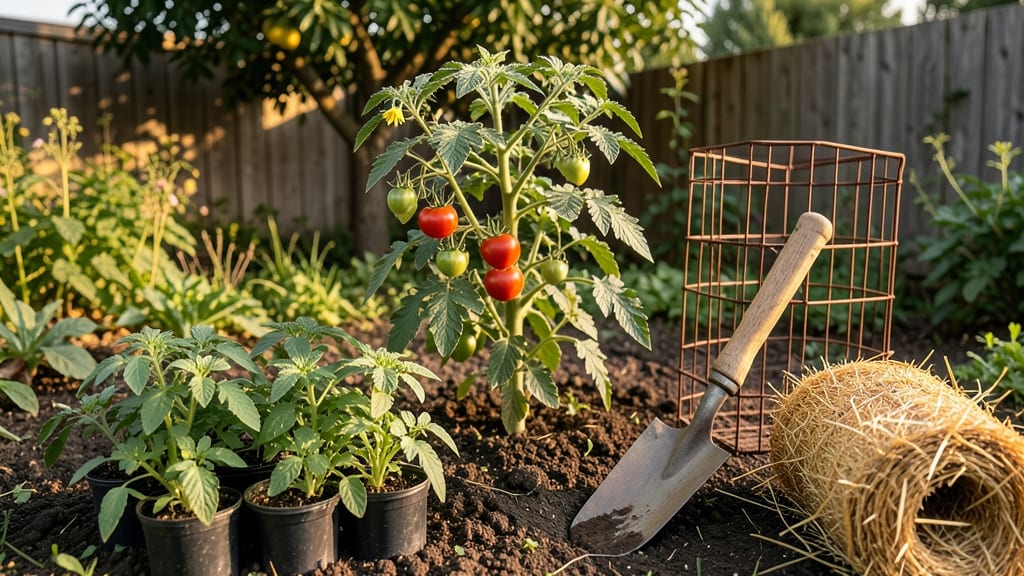
If you’ve ever wondered when to plant tomatoes in NC, the answer isn’t just about dates—it’s about beating frost, soil warmth, and your specific region’s quirks.
Whether you’re in the Piedmont’s rolling hills or the Coastal Plain’s humid stretch, timing makes the difference between a bountiful harvest and a sad, wilted 🍅 disappointment.
North Carolina’s last frost typically lingers until mid-April, but that doesn’t mean you should rush to plant. The real secret? Waiting until soil temperatures hit at least 60°F—usually 4-6 weeks after that final frost warning.
For most gardeners, that means mid-May is the sweet spot, but varieties like early ‘Celebrity’ tomatoes can go in sooner if you’re brave enough to gamble on warmer microclimates.
Here’s what I’ll break down for you: the exact weeks before last frost to plant by variety, how NC’s microclimates (yes, even within the state!) change the game, and whether you should start seeds indoors or buy sturdy seedlings.
Spoiler alert: Coastal areas can plant 2-3 weeks earlier than the mountains, and black plastic mulch is your best friend for speeding up soil warmth.
Ready to turn your NC garden into a tomato powerhouse? Let’s dive into the science—and the shortcuts—so you can enjoy vine-ripened tomatoes from June to October without the guesswork.
North Carolina frost dates & best weeks to plant tomatoes by variety
North Carolina spans USDA zones 6b-8a, meaning frost dates vary dramatically from the mountains to the coast. The average last frost ranges from March 15 in the Piedmont to April 15 along the coast.
For tomatoes, this means your planting window shifts by 3-4 weeks depending on where you live. Most gardeners aim to plant 2-4 weeks after the last frost, but soil temperature matters more than calendar dates.
Tomatoes thrive when soil reaches at least 60°F. In NC, this typically aligns with mid-April in the mountains and early May near the coast. Use a soil thermometer to confirm—cold soil delays germination and weakens seedlings.
If your area has a history of late frosts, err on the side of planting later rather than risking damage to tender young plants.
Here’s how to calculate your exact planting window:
| Region | Last Frost Date | Ideal Planting Window | Soil Temp Goal |
|---|---|---|---|
| Mountains (Asheville) | March 15 | April 15–May 1 | 60°F+ |
| Piedmont (Raleigh) | March 30 | April 15–April 30 | 60°F+ |
| Coastal (Wilmington) | April 15 | May 1–May 15 | 65°F+ |
🌱 Pro Tip: Use black plastic mulch to warm soil faster in cooler regions.
Tomato varieties also influence planting time. Determinate varieties (bush tomatoes like 'Celebrity') grow to a fixed size and ripen quickly—ideal for early planting. Indeterminate varieties (vining types like 'Solar Fire') produce fruit all season but need warmer soil and longer growing windows.
For determinate tomatoes, plant 2-3 weeks earlier than indeterminate types to maximize yield.
If you’re starting seeds indoors, begin 6-8 weeks before your last frost date. For example, Raleigh gardeners should start seeds by February 15, while Wilmington gardeners can wait until March 15. Use grow lights to prevent leggy seedlings—natural light alone may not be sufficient in early spring.
For transplanting seedlings, harden them off for 7-10 days before moving them outdoors. Acclimate gradually by placing them in partial shade for a few hours each day, then increasing exposure. This reduces transplant shock and helps seedlings adjust to NC’s humid summers, which can stress unhardened plants.
Extend your growing season with row covers or cold frames if late frosts threaten. These protect young plants and allow you to plant 2-3 weeks earlier in spring or harvest later into fall.
In NC’s Zone 8a (eastern coast), you might even squeeze in a second planting in July for a fall harvest!
Monitor local weather forecasts and use frost-free date maps from your Cooperative Extension Service for precise timing. For example, the NC State Extension provides hyper-local frost data—a game-changer for avoiding frost damage.
Remember: Tomatoes hate cold feet. Even if air temperatures rise, soil temperature dictates success. Use a soil thermometer and wait for consistency at 60°F+ before planting. Patience here means bigger yields and healthier plants all season.
How to adjust planting time for NC’s microclimates & soil conditions
North Carolina’s diverse geography means Coastal regions like Wilmington experience warmer springs than the Piedmont (Raleigh) or Mountain areas (Asheville). A 2-4 week difference in planting time can mean the difference between a bumper crop and a failed harvest.
For example, coastal gardeners can often plant determinate varieties as early as mid-March, while mountain zones should wait until mid-May for safety.
Urban heat islands in cities like Charlotte or Greensboro can also shorten your frost-free window. If your garden sits in a pavement-heated area, consider planting heat-tolerant varieties like 'Solar Fire' 2 weeks earlier than the general guideline.
Always check your local Cooperative Extension Service for hyper-local frost data—it’s the most reliable source for adjustments.
Soil type plays a huge role in timing. Sandy soils (common in Coastal NC) dry out faster and warm up quicker, so you can plant 1-2 weeks earlier than in clay-heavy Piedmont soils.
Amend clay with compost or peat moss to improve drainage, and consider raised beds if your native soil is too dense. A simple jar test (fill a jar with soil and water—if water drains in 1 hour, it’s sandy; if it takes 4+ hours, it’s clay).
If you’re in a short-season area (like the Mountains), extend your harvest with row covers or cold frames. These can push your last harvest date by 2-3 weeks in fall.
For example, if your first frost is October 15, a cold frame might let you harvest until November 1. Just remove covers during the day to prevent overheating—tomatoes need at least 6 hours of sunlight daily.
For container gardening, plant 1-2 weeks later than in-ground tomatoes because pots cool faster at night. Use 5-gallon containers minimum and place them in south-facing locations to maximize warmth. If your balcony or patio gets morning shade, opt for early-maturing varieties like 'Patio Princess' (60 days to harvest).
Finally, watch for local weather patterns. If your area had an early spring (like 2024’s record warmth), you might safely plant 2 weeks early. But if forecasts predict late frosts, delay until after May 10.
Use the NC State Climate Office’s frost probability maps to stay ahead of surprises.