
Plants
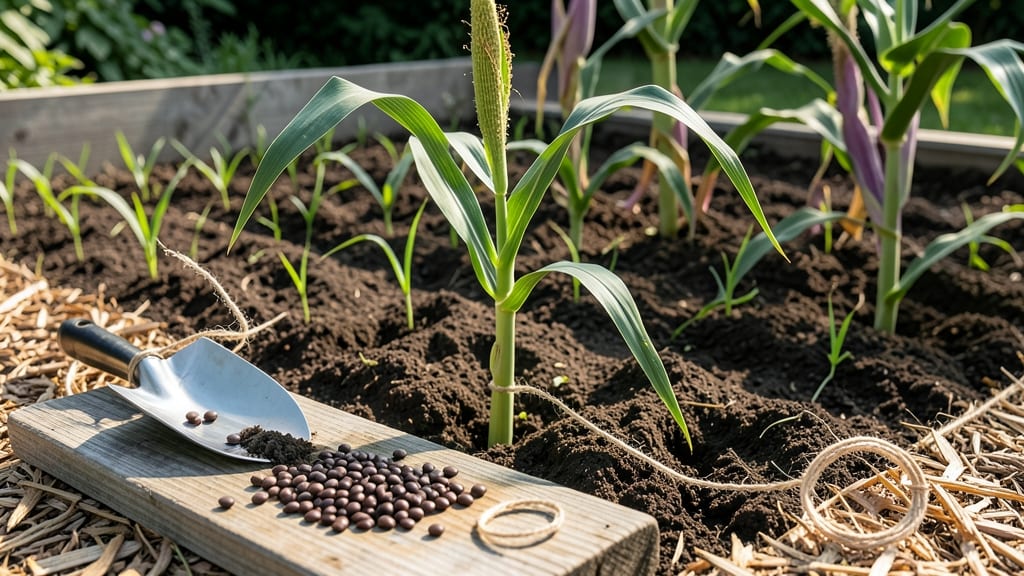
Planting corn in Kansas isn't just about dropping seeds in the dirt—it's about timing them perfectly to beat frost and drought while maximizing yield. The exact window between April 15 and May 10 (depending on your region) separates a thriving crop from a wasted effort.
With Kansas' unpredictable weather, knowing your last frost date is only half the battle. Soil temperature—at least 50°F—and local microclimates can shift planting by weeks. Whether you're a small-scale gardener or a large-scale farmer, getting this right means the difference between 50-bushel and 100-bushel yields.
I'll break down the precise planting schedule for North, Central, and South Kansas, plus how to adjust for early varieties, drought risks, and even late starts. No guesswork—just data-backed timing to ensure your 🌽 corn stands tall and productive all season.
Ready to turn your Kansas cornfield into a high-yielding powerhouse? Let's dive into the science and strategies that make all the difference.
Kansas corn planting timeline: weeks before last frost by region
Kansas’ diverse climate—from the cool northern plains to the warmer southern regions—means your corn planting window can vary by 3–4 weeks. The golden rule? Plant when soil temperatures hit 50°F+ and 2–3 weeks before your last frost date.
For most of Kansas, that lands between mid-April and early May, but let’s break it down by region to avoid frost damage or stunted growth.
Northern Kansas (e.g., Salina, Hays) has the latest frost dates, often around May 15. Here, aim to plant early sweet corn varieties by April 20–May 1. Southern Kansas (e.g., Wichita, Garden City) can start as early as mid-April, thanks to warmer soils.
Central Kansas (e.g., Manhattan, Topeka) falls in the middle, with ideal planting between April 25 and May 5.
But here’s the catch: soil temperature matters more than frost dates alone. Corn seeds rot below 50°F, even if frost isn’t a threat. Use a soil thermometer—plant when readings hit 55°F+ for 7–10 consecutive days.
In cooler years, this could push your planting date back by 1–2 weeks.
For home gardeners, check your county’s USDA Plant Hardiness Zone (Kansas spans Zones 5b–7a). Zone 5b (northern KS) may need to wait until after May 1, while Zone 7a (southwest KS) can start in late April.
Always verify with your local K-State Extension office for microclimate adjustments.
🌽
Pro tip: Stagger your planting in 2-week intervals to extend your harvest. For example, in central Kansas, plant 30% of seeds on April 25, another 30% on May 5, and the final 40% by May 15. This ensures continuous ear production through summer and early fall.
If you’re growing dent corn (for livestock or meal), opt for longer-maturity varieties (90+ days) and plant 1–2 weeks earlier than sweet corn. These varieties need the extra time to reach full yield potential before Kansas’ first fall frost (October 15–November 1).
For raised beds, warm up soil faster by covering with black plastic 1–2 weeks before planting. This can shave off 5–7 days from your planting timeline, especially in cooler northern regions. Just remove the plastic 24 hours before sowing to avoid overheating seeds.
Finally, monitor 7-day forecasts for late frosts. If a 28°F+ night is predicted within 10 days of planting, delay until soil warms further or use row covers for young seedlings. A frozen corn seedling won’t recover—prevention is key.
☀️
5 Critical factors that shift Kansas corn planting dates (and how to adjust)
Kansas corn growers face unique challenges that can push planting dates 1–3 weeks earlier or later than the standard timeline. Unlike many crops, corn is highly sensitive to soil temperature and early-season pests, which means your ideal planting window might shift based on local conditions.
Let’s break down the 5 critical factors that demand adjustments—and how to adapt without sacrificing yield.
First, soil temperature is non-negotiable. Corn seeds won’t germinate below 50°F, and even if they do, weak seedlings invite cutworm attacks. In North Kansas, where soils warm slower, wait until mid-to-late May for early-maturity hybrids (like Pioneer 32N33) to avoid stunted growth.
Use a soil thermometer to confirm consistency at 55°F+ for 10+ days—this is your green light.
Next, your corn hybrid’s maturity rating dictates flexibility. Early-maturity varieties (e.g., Silver Queen, Bodacious) can tolerate earlier planting (as soon as April 15 in South Kansas), while late-maturity types (like Golden Bantam) need delayed starts to avoid frost damage.
Check the days-to-maturity label—subtract 90 days from your first frost date to find your absolute latest planting window.
Drought is another game-changer in Kansas. If your area faces below-average rainfall (check Kansas Mesonet), plant 2 weeks earlier to give roots time to establish before summer dry spells hit. Deep tillage (12+ inches) and mulching with straw can buy you 1–2 extra weeks of moisture retention.
Pro tip: Drip irrigation at planting ensures consistent germination even in dry soil.
Early-season cutworms can decimate seedlings overnight, forcing delayed planting in some years. Scout your field 1–2 weeks before planting—look for silver-gray loops in soil or chewed-off stalks.
If pressure is high, use row covers or apply diatomaceous earth around seedlings. Planting after May 1 often reduces cutworm risk, but this trade-off depends on your hybrid’s maturity.
Finally, microclimates within Kansas can shift dates by 10+ days. River valleys (e.g., near Kansas City) warm faster than upland areas, while western Kansas may need delayed starts due to higher winds and cooler nights.
Use local extension office data (e.g., K-State Research) to fine-tune your schedule. For example, Hays and Garden City often plant 1 week later than Topeka or Wichita.
Adjusting for these factors isn’t just about yield protection—it’s about stress reduction. By monitoring soil temps, pest activity, and moisture levels, you’ll avoid the 3 biggest corn-killers: frost damage, drought stress, and cutworm loss.
Start with one adjustment (e.g., soil thermometer), then layer in the rest as you gain confidence.