
Plants
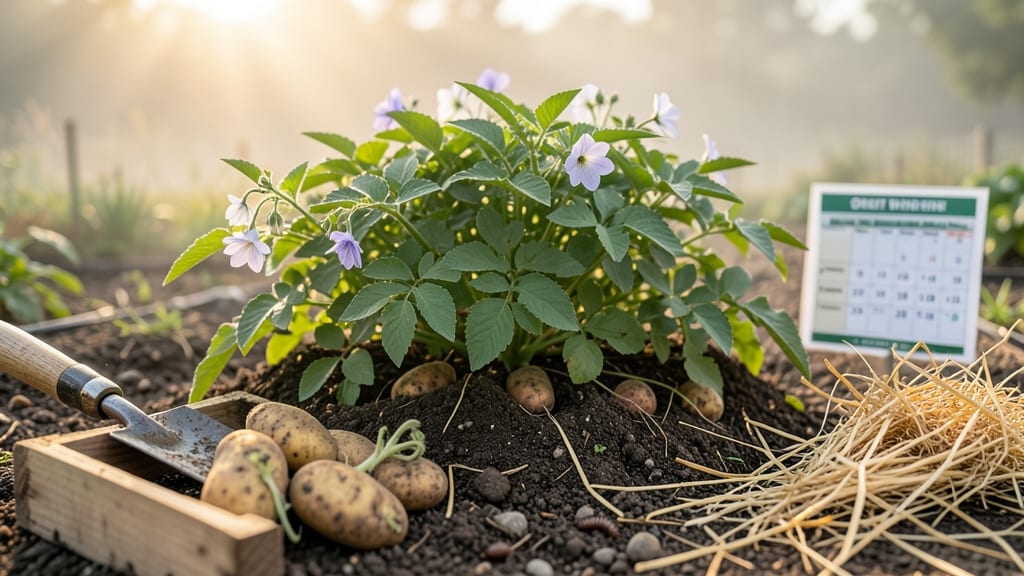
Timing when do you plant potatoes in Oregon isn’t just about following a calendar—it’s about beating frost, avoiding summer heat, and matching your variety to your microclimate.
Western Oregon’s milder winters let you start as early as February, while Eastern Oregon’s later frosts may push you to wait until April.
Why does this matter? Plant too soon, and a late frost could wipe out your crop. Wait too long, and your potatoes might struggle in Oregon’s 90°F+ summers.
The key is knowing your last frost date—whether you’re in Portland’s Zone 8b or Bend’s Zone 5b—and choosing the right variety for your region.
In this guide, I’ll break down the exact planting windows for early, mid-, and late-season potatoes, plus pro tips to stretch your season safely. You’ll learn how to prep your soil, space your plants, and even use row covers to protect your crop from Oregon’s unpredictable weather.
Ready to grow a bumper crop? Let’s get started with the timing that works for your corner of the state.
Oregon’s frost-free planting zones for potatoes: when to start by region
Oregon’s diverse climate—from the coastal fog of the Willamette Valley to the high desert of Eastern Oregon—creates wildly different last frost dates. In Western Oregon (USDA Zones 8b-9a), like Portland and Eugene, you’ll typically see your last frost between March 15 and April 15.
Meanwhile, Eastern Oregon (Zones 5b-7b), including Bend and La Grande, often waits until April 15 to May 15 for frost-free conditions. These differences mean your potato planting window shifts dramatically depending on where you garden.
For early varieties like Red Pontiac or Yukon Gold, you can start planting as early as late February to early March in Southern Oregon (e.g., Medford, Zone 8a), where winters are milder.
In cooler inland valleys like the Rogue Valley, aim for mid-March to avoid frost damage. The key is ensuring soil temperatures reach at least 45°F (7°C)—cold soil slows germination and invites rot.
Here’s how to match your region to the right planting window:
If you’re in Zone 9a (e.g., parts of the Willamette Valley), you can even plant new potatoes as early as February 1 under row covers or in a cold frame.
However, avoid planting too soon—cold, wet soil promotes disease like early blight. Aim for soil temps above 50°F (10°C) for best germination.
For main crop varieties like Russet or Kennebec, wait until 2–4 weeks after your last frost date. This ensures tubers have time to bulk up before Oregon’s summers heat up.
In Eastern Oregon’s high desert, where nights stay cool longer, you can push planting into early May for a late-season harvest.
Pro tip: Use Oregon State University’s frost maps (available via [OSU Extension](https://extension.oregonstate.edu)) to pinpoint your exact microclimate. A neighbor’s yard might be 2–3 weeks warmer than yours due to urban heat islands or elevation differences. Always plant a test row if you’re unsure—you can always harvest early!
Another critical factor is daylength. Potatoes in longer daylight (14+ hours), common by June, may produce fewer tubers but larger ones.
If you’re growing for storage potatoes, prioritize planting in April or early May to align with Oregon’s cooler summer nights, which slow tuber growth and improve flavor.
Finally, don’t forget that late-season planting (June–July) is possible for new potatoes or short-season varieties like Adirondack Blue. These can be harvested before Oregon’s first fall frosts (typically October 15–November 15 in Western Oregon).
Just be prepared for smaller yields and prioritize well-draining soil to prevent rot in the shorter growing window.
Best potato varieties for Oregon’s climate: planting timing by maturity type
Oregon’s diverse microclimates mean your potato variety choice directly impacts planting timing. Early varieties like Red Norland thrive when planted in late February to March, while late-season Yukon Gold need a May planting to avoid blight.
Matching your variety to Oregon’s 180-220 frost-free days in the west and 120-160 days in the east ensures maximum yield.
For Western Oregon (USDA Zones 8b-9a), prioritize early-maturing varieties (60-90 days) like Russian Banana or Kennebec for February-March planting. These complete their cycle before summer heat stress.
In Eastern Oregon (Zones 5b-7b), focus on mid-season (90-120 days) varieties such as Fingerling potatoes planted in late March to April to align with later frost dates.
🌱 Key Tip: Plant seed potatoes when soil reaches 45°F (7°C)—use a soil thermometer to avoid cold damage. In coastal areas, this may be as early as February, while inland valleys often wait until late March.
| Variety | Days to Maturity | Best Planting Window | Oregon Region Fit | Harvest Window |
|---|---|---|---|---|
| Russian Banana | 70-90 days | Late February - March | Western Oregon | June - Early July |
| Yukon Gold | 90-110 days | Late March - April | All regions | July - August |
| Fingerling (e.g., Purple Peruvian) | 85-105 days | Late March - Early April | Eastern Oregon | July - Mid-August |
| Kennebec | 110-130 days | April - Early May | Western Oregon | August - September |
Avoid planting late varieties (120+ days) like Idaho Russet in Oregon unless you’re in Southern Oregon’s high desert, where longer growing seasons exist. These need May planting and risk blight if harvested after mid-August.
Instead, opt for early or mid-season varieties that align with Oregon’s shorter frost-free windows.
For coastal gardeners, consider succession planting every 2-3 weeks from March to April. This extends your harvest window and reduces blight risk by staggering maturity dates. Always rotate planting locations yearly to prevent soil-borne diseases like verticillium wilt, common in Oregon’s humid summers.
Test your soil’s pH (5.0-6.5 ideal) before planting—Oregon’s volcanic soils often need compost or sulfur adjustments. Pair your variety with well-draining soil and full sun (6-8 hours) to maximize tuber formation. With the right timing, you’ll harvest bountiful potatoes before summer heat sets in! 🌱