
Trees
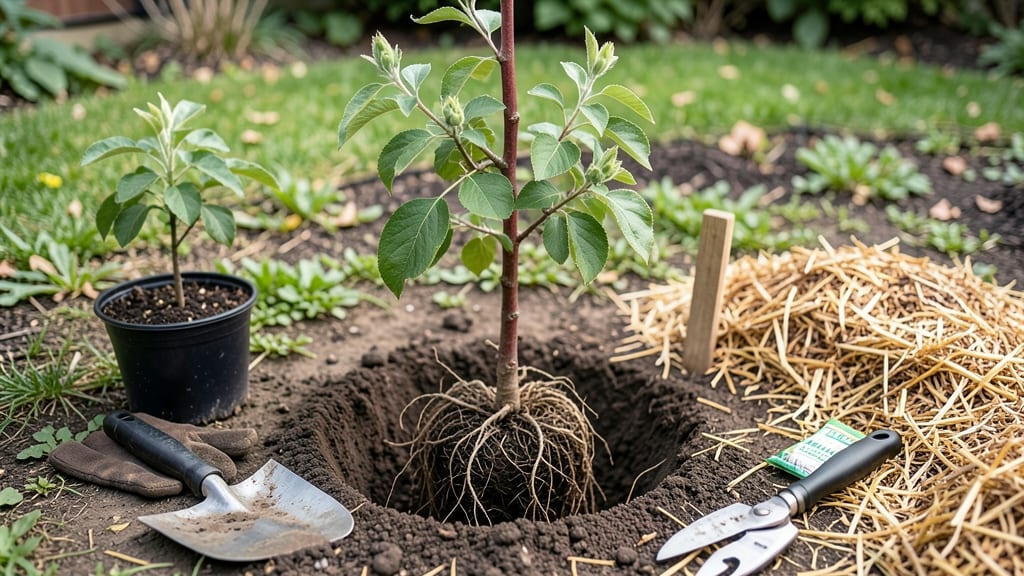
Planting your 🍎 Apple Tree in Illinois isn’t just about grabbing a shovel—it’s about timing it just right to match your hardiness zone with the tree’s chill-hour needs. Get it wrong, and you might end up with a tree that struggles to fruit or worse, fails to survive the winter.
The good news? With the right approach, you can set your tree up for success from day one.
In Illinois’ 5b-6b zones, the best windows to plant are late winter through early spring (February to April) or fall (October to November). These periods give your tree the best shot at establishing strong roots before extreme temperatures hit.
Whether you’re planting bare-root saplings or container-grown trees, understanding your zone’s frost dates is the key to avoiding common mistakes.
Why does timing matter so much? Apple trees need a specific number of chill hours—400 to 1,000+, depending on the variety—to produce fruit. Illinois’ climate delivers these, but planting too early or late can disrupt that balance.
I’ll walk you through the exact months to plant, which varieties thrive in your zone, and how to prep your soil for maximum growth.
Ready to get started? Let’s break down the game-changer steps—from choosing the right spot to post-planting care—to ensure your 🍎 Apple Tree grows strong and bountiful for years to come.
Best planting months for apple trees in Illinois hardiness zones 4-6
Planting your apple tree in Illinois at the right time ensures strong root establishment and fruit production. The ideal window is late winter to early spring (February–April) or fall (October–November), when the tree is dormant but the ground isn’t frozen.
Illinois spans USDA Zones 5b–6b, so timing varies slightly by region.
For bare-root trees, plant in late winter or early spring before buds swell—this gives roots time to establish before summer heat. If you prefer container-grown trees, fall planting (October–November) works best, allowing roots to settle before winter dormancy.
Avoid planting in mid-summer, as extreme heat stresses young trees.
Soil temperature is critical: aim for 40–50°F at planting. In northern Illinois (Zone 5b), wait until mid-April to avoid late frosts, while southern Illinois (Zone 6b) can plant as early as March.
Always check your local last frost date—Illinois ranges from mid-April (north) to early April (south).
Spring planting gives trees a full growing season to establish roots before winter, while fall planting benefits from cooler temperatures and moisture retention. If you’re in Zone 5b, prioritize bare-root trees in spring—they adapt faster to local conditions.
For container-grown trees, fall is ideal because they’re less stressed from transplant shock.
Illinois’ climate variability means late frosts can damage young trees if planted too early. Use frost cloth or row covers for the first 2–3 weeks after planting in spring.
In fall, mulch heavily (3–4 inches) to insulate roots from winter temperature swings, which can range from 10°F to 30°F in northern Illinois.
Choose your planting method based on your timeline: bare-root trees are cheaper and easier to plant in spring, while container-grown trees offer flexibility for fall planting. Both require well-draining soil—Illinois’ clay-heavy soils often need amendments like compost or sand to prevent root rot.
Test your soil’s pH (6.0–7.0) and adjust with lime or sulfur if needed.
After planting, water deeply once a week for the first month to encourage root growth. Avoid overwatering, which can suffocate roots. In Zone 6b, where summers are hotter, mulch with wood chips to retain moisture.
Monitor for pests like apple maggots—Illinois’ humid summers create ideal conditions for them, so use organic sprays preventatively.
Timing isn’t just about the calendar—it’s about local microclimates. If you’re near a lake or river, plant 2–3 weeks later to avoid early spring warmth that can trick trees into blooming too soon. Conversely, urban areas with heat islands may need earlier planting to compensate for warmer soil.
Pro tip: Mark your planting date on a calendar and track tree growth over the first year. A healthy apple tree should grow 12–24 inches in its first season.
If growth stalls, it may need fertilizer or better drainage. Adjust your approach for Zone 5b vs. 6b—northern trees need more chill hours and may bloom later.
Apple tree chill-hour requirements by Illinois Zone and top varieties
Understanding chill-hour requirements is critical for Illinois apple growers. Most Illinois zones (5b-6b) need 400-1,000 chill hours—the number of hours below 45°F (7°C)—for successful fruit production.
If you plant a variety needing 800 chill hours in a 500-chill-hour zone, your tree may bloom but fail to set fruit.
Northern Illinois (Zone 5b) typically gets 600-800 chill hours, while southern Illinois (Zone 6b) averages 800-1,000+ hours. Matching your zone to the right variety ensures reliable fruit production and avoids wasted effort.
| Variety | Chill Hours Needed | Best Illinois Zones | Fruit Maturity |
|---|---|---|---|
| Honeycrisp | 700-900 | 5b-6b | Late August |
| Gala | 500-700 | 5a-6a | Mid-September |
| McIntosh | 600-800 | 5b-6b | Early September |
| Fuji | 800-1,000 | 6a-6b | Late September |
| Jonathan | 400-600 | 4a-5b | Mid-September |
For northern Illinois (Zone 5b), prioritize varieties like McIntosh or Jonathan, which thrive with 600-800 chill hours. Southern Illinois (Zone 6b) can handle Honeycrisp or Fuji, which require 800+ chill hours.
Always check your local chill-hour map—some microclimates in Illinois may vary by 100-200 chill hours.
If you’re unsure about your chill hours, use a chill-hour calculator or consult your county extension office. They can provide precise data for your specific location, helping you avoid costly mistakes.
Pro tip: Pair low-chill varieties (like Gala) with high-chill pollinizers (like Honeycrisp) to ensure cross-pollination and better fruit set. Plant them 20-30 feet apart for optimal pollination.
Once you’ve matched your zone to the right variety, focus on soil preparation and planting timing—both are just as critical as chill-hour compatibility. 🍎