
Plants
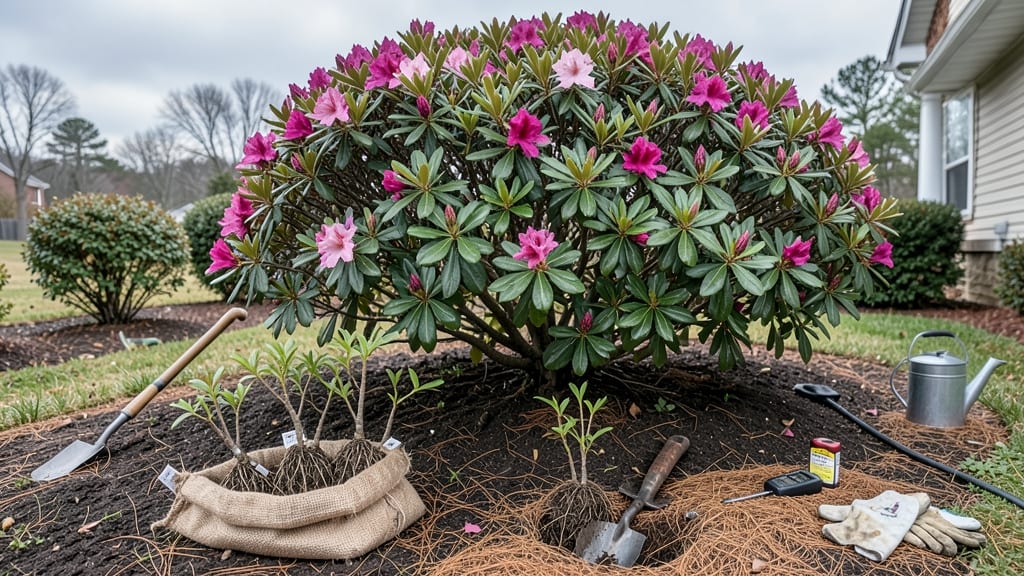
Knowing when to plant azaleas in Arkansas isn’t just about picking a month—it’s about matching your variety to the state’s chill hours for those showstopping spring blooms.
Get it right, and you’ll enjoy vibrant 🌸 displays year after year; get it wrong, and you might end up with weak growth or no flowers at all.
Arkansas’ climate—spanning zones 7a-8b—means timing matters. Planting in fall (October-November) or early spring (February-March) gives azaleas the ideal window to establish roots before summer heat or winter frost sets in. But here’s the catch: not all azaleas thrive equally in Arkansas’ humidity and soil acidity.
In this guide, I’ll break down the best planting months for your region—whether you’re in the cooler Ozark Mountains or the warmer Delta—and how to prep your soil for azaleas’ finicky needs.
You’ll also learn how to avoid common mistakes that sabotage blooms, like planting too early or ignoring pH levels.
Ready to transform your yard into a 🌸 paradise? Let’s dive into the secrets of Arkansas azalea success—from chill hours to soil prep and everything in between.
Arkansas chill-hour zones: how to match azalea varieties for perfect blooming
Arkansas spans USDA zones 7a-8b, but the real secret to azalea success lies in chill hours—the accumulated hours below 45°F your plants need to bloom. Most Arkansas regions fall between 4,000-8,000 chill hours, but this varies dramatically from the Ozark Mountains to the Arkansas Delta.
Choosing the wrong variety for your chill zone means skipping spring blooms entirely.
Southern Indica azaleas, like 'George Lynn' or 'Hershey Red', thrive in 4,000-6,000 chill hours—perfect for southern Arkansas. Deciduous types, such as 'Ralph S. Moore', need 6,000-8,000 chill hours, ideal for northern Arkansas.
Evergreen varieties like 'Formosa' adapt to 5,000-7,000 chill hours, making them versatile for most of the state.
Here’s how to match your chill hours to the perfect azalea variety:
| Variety Type | Chill Hours Needed | Best Arkansas Regions | Bloom Time | Height at Maturity |
|---|---|---|---|---|
| Southern Indica | 4,000-6,000 | South Arkansas (Zones 7b-8a) | Late March-April | 3-6 ft |
| Deciduous Azalea | 6,000-8,000 | North Arkansas (Zones 6b-7a) | April-May | 6-12 ft |
| Evergreen Azalea | 5,000-7,000 | Central Arkansas (Zones 7a-7b) | March-April | 4-8 ft |
| Knaphill Hybrid | 6,500-8,000 | Ozark Mountains (Zones 6b-7a) | April-May | 5-10 ft |
If you’re unsure about your chill hours, check your local Cooperative Extension Service or use a chill hour calculator with your area’s weather data. For example, Fayetteville (Zone 7b) averages 6,500 chill hours, while Little Rock (Zone 7a) sees about 5,800 hours.
Planting a Southern Indica in Fayetteville might result in poor blooming because it needs fewer chill hours.
Pro tip: Evergreen azaleas are the most adaptable, but they still need the right chill hours. If you’re in Zone 8b, like in the Arkansas Delta, stick to low-chill varieties like 'Southern Charm' or 'Coral Bells' to avoid disappointment.
Once you’ve matched your variety to chill hours, the next step is planting timing. Fall is ideal because it gives roots time to establish before winter, but early spring works too—just avoid planting when frost is forecasted within 2 weeks.
In northern Arkansas, aim for October-November; in southern Arkansas, November-December or February-March is safer.
Remember, soil acidity (pH 4.5-6.0) is just as critical as chill hours. Arkansas’ native soil is often alkaline, so amend with peat moss or sulfur before planting. A simple soil test kit (available at local nurseries) will save you from guessing.
With the right variety and timing, your azaleas will reward you with vibrant blooms for weeks—and maybe even attract hummingbirds to your garden! 🌸
Best planting months in Arkansas by region: north vs. south timing differences
Arkansas' diverse climate means your azalea planting window depends heavily on where you live. In the Ozark Mountains (USDA Zone 7a), cooler temperatures extend your fall planting season, while the Arkansas Delta (Zone 8b) demands earlier action to avoid summer heat stress.
Let's break down the best months for each region.
For northern Arkansas, aim to plant between October 15 and November 15. This gives roots time to establish before winter while avoiding late-season frost risks. Southern Arkansas gardeners should plant between September 15 and October 30 to beat the summer heat that can stress young plants.
🌱 Arkansas Azalea Planting Guide by Region
| Region | Best Planting Window | Soil Prep | Key Consideration |
|---|---|---|---|
| Northern Arkansas (Zone 7a) | October 15 - November 15 | Amend with peat moss | Longer chill hours for Southern Indica |
| Central Arkansas (Zone 7b) | October 1 - November 10 | Test pH (4.5-6.0) | Transition zone for varieties |
| Southern Arkansas (Zone 8b) | September 15 - October 30 | Add pine fines for acidity | Heat-sensitive root establishment |
| All Regions (Spring) | February 15 - March 15 | Mulch heavily | Avoid late frosts |
Spring planting (February-March) works statewide but requires careful monitoring of frost dates. In northern Arkansas, wait until after March 15 when last frost averages occur. Southern gardeners can plant as early as February 15 but should protect new plants with frost cloth if late frosts threaten.
Microclimates matter too! If you live near a lake or river, you may experience 2-3 weeks earlier planting conditions than inland areas. Test your soil's acidity (pH 4.5-6.0) before planting—Arkansas' naturally alkaline soils often need amendment with sulfur or pine needles.
For container-grown azaleas, you can plant up to 2 weeks later than bare-root varieties since their roots are less sensitive to transplant shock. Just ensure containers are well-draining and water thoroughly after planting.
Remember: The key to azalea success in Arkansas is cool roots and warm tops. Planting in fall gives roots time to establish while tops remain dormant—perfect for our mild winters. Spring planting works but requires more vigilance against late frosts.