
Plants
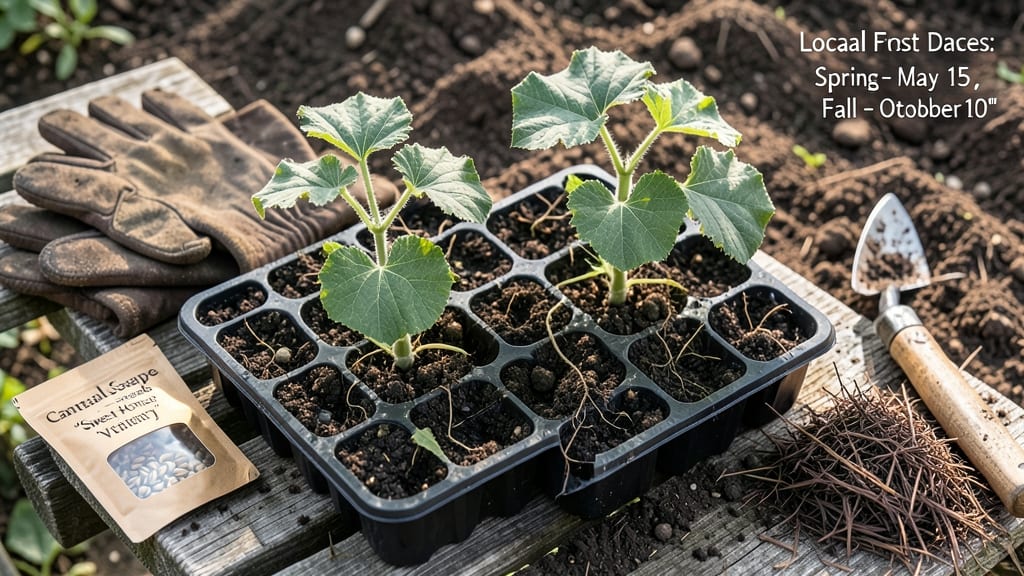
Planting cantaloupe in Illinois at the wrong time can turn your summer garden into a sad, wilted mess instead of a sweet harvest. The key to juicy, ripe 🍈 melons lies in knowing when to get those seeds in the ground—because Illinois' unpredictable spring weather demands precision.
Most Illinois gardeners in Zones 5b-6b should wait until mid-April to early June, after the last frost has passed and soil temperatures hit at least 70°F. But here's the catch: rushing too early means frost damage, while planting too late cuts your harvest window short.
Let me show you exactly how to time it right for maximum sweetness.
We'll cover the frost-free timeline for your specific zone, soil prep tricks to speed up warming, and even how to stretch your cantaloupe season with simple protective gear.
Whether you're a first-time gardener or a seasoned pro, these Illinois-specific tips will help you avoid common mistakes and grow melons that taste like summer.
Ready to transform your garden into a cantaloupe paradise? Let's dive into the perfect planting schedule that actually works for Illinois' climate—no guesswork required.
Illinois frost-free dates for cantaloupe planting by Zone 5-6
Cantaloupe is a heat-loving crop that won’t tolerate frost, so timing your planting is critical in Illinois. The last frost date typically falls between mid-April and early May, but soil temperature matters just as much as air temperature.
Cantaloupe seeds need soil temps of 70°F (21°C) or warmer to germinate properly. In Zone 5b, this usually means waiting until late May, while Zone 6b gardeners can plant as early as mid-May.
Using a soil thermometer is the best way to confirm readiness. If your soil hasn’t warmed enough by late May, consider starting seeds indoors under grow lights 4-6 weeks before transplanting.
This gives you a head start on the season and helps avoid the 60-90 day growing window challenge in Illinois’ short summers. My own experience shows that transplanting too early often leads to stunted growth or even plant death when unexpected late frosts hit.
Here’s a quick rule of thumb: Count backward from your first expected frost date (usually mid-October in Illinois) and aim to have your cantaloupe fully mature 4-5 months before that date. This ensures you’ll harvest before cooler weather sets in.
For example, if your first frost is October 15, you should aim to harvest by September 1, meaning your plants need to be established by late June at the latest.
Another key factor is microclimates within Illinois. Southern Illinois (Zone 6b) enjoys 10-14 extra frost-free days compared to northern areas (Zone 5b).
If you’re in Chicago or the northern third of the state, err on the side of caution and wait until late May or early June to plant. In contrast, gardeners in St. Louis or southern Illinois can often plant by mid-May without risk.
| Zone | Last Frost Date | Ideal Planting Window | Soil Temp Requirement | Harvest Window |
|---|---|---|---|---|
| Zone 5b (Northern IL) | Mid-April to early May | Late May to early June | 70°F+ (21°C+) | Late July to early September |
| Zone 6b (Southern IL) | Early to mid-April | Mid-May to late May | 70°F+ (21°C+) | Early July to mid-September |
| Chicago Area (Zone 5b) | Late April to early May | Late May to early June | 70°F+ (21°C+) | Late July to early September |
| St. Louis Area (Zone 6a/6b) | Early April to mid-April | Mid-May to late May | 70°F+ (21°C+) | Early July to mid-September |
If you’re unsure about your exact last frost date, check resources like the Midwest Regional Climate Center or your local Cooperative Extension Service. For example, the University of Illinois Extension provides historical frost data by county, which can help you fine-tune your planting schedule.
I’ve found that even a 1-2 week delay can make the difference between a bountiful harvest and a failed crop in Illinois’ unpredictable climate.
Another pro tip: Use black plastic mul
Illinois frost-free dates for cantaloupe planting by Zone 5-6
Cantaloupe in Illinois demands precise timing—plant too early, and frost will kill tender seedlings; too late, and your growing season cuts harvests short.
The USDA Zone 5b-6b average last frost dates range from mid-April in northern Illinois to early April in southern regions, but soil temperature matters more than calendar dates.
Cantaloupe seeds need soil temperatures of 70°F (21°C) to germinate. In Illinois, this typically aligns with late May for northern gardens and mid-May for southern zones.
If you're eager to start earlier, use black plastic mulch to warm the soil faster—this can shave off 1-2 weeks from your planting window.
For transplanting seedlings, aim for after Memorial Day (late May) in most of Illinois. Seedlings are more resilient than seeds but still need consistent warmth. If you're in Zone 5b, wait until June 1st to be safe, while Zone 6b gardens can plant by May 20th.
🌱 Illinois Cantaloupe Planting Timeline
| Stage | Zone 5b (Northern IL) | Zone 6b (Southern IL) | Key Tip |
|---|---|---|---|
| Last Frost Date | Mid-April | Early April | Wait 2 weeks after last frost for seeds. |
| Soil Temp for Seeds | 70°F (late May) | 70°F (mid-May) | Use mulch to warm soil faster. |
| Transplant Window | June 1st | May 20th | Hardier than seeds; plant after Memorial Day. |
| Harvest Window | Late July - Early Sept | Early July - Mid-Sept | Earlier varieties ripen faster. |
First frost in Illinois typically arrives mid-October, giving cantaloupe a 165-day growing window. Choose fast-maturing varieties like 'Hale’s Best' (70 days) or 'Athena' (65 days) to maximize yields. If your season feels too short, consider succession planting—sow seeds every 2 weeks until early June for staggered harvests.
For extra insurance, monitor local frost forecasts from the Midwest Regional Climate Center or your county extension office. In northern Illinois, a late frost in May can delay planting by 3-4 weeks, so flexibility is key.
Use row covers if early blooms appear before the first frost date to protect tender flowers.
Pro tip: Test your soil temperature with a soil thermometer before planting. If it’s below 65°F (18°C), wait—cantaloupe roots won’t develop properly in cool soil. Patience here means healthier vines and sweeter fruit later in the season.