
Plants
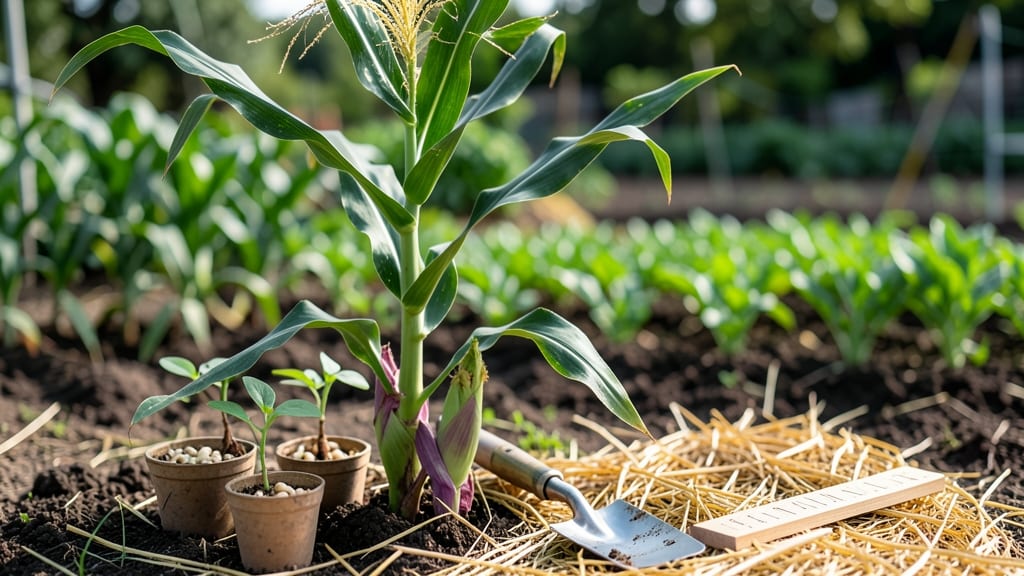
Timing your 🌽 corn planting in Montana isn’t just about waiting for spring—it’s about catching that 50°F soil temperature window before summer’s short season slips away. Plant too early, and cold soil stalls germination; too late, and your harvest might never mature before Montana’s first frost.
The difference between a bountiful yield and a disappointing one often comes down to these precise triggers.
Most Montana gardeners wait until late May or early June, but the real secret lies in monitoring soil warmth—not just air temperature. In zones 4-6, where most of the state falls, corn seeds need consistently warm soil to germinate quickly.
That means checking temperatures daily and adjusting your schedule based on your specific microclimate, whether you’re in the Western plains or the higher elevations of the Rockies.
What you’ll discover here are the exact steps to time your planting for fast germination, from testing soil temperature to choosing the right corn varieties for Montana’s shorter growing season.
We’ll also cover common mistakes that can sabotage your harvest—like planting too close to frost dates—and how to avoid them with simple adjustments.
Ready to grow healthier, more productive corn? Let’s break down the science behind Montana’s planting calendar and give your garden the competitive edge it needs to thrive.
Montana corn planting calendar: soil temperature zones by region
Montana’s diverse climate means your corn planting timeline should match your specific USDA hardiness zone and elevation. Western Montana’s milder zones (5-6) allow earlier planting, while Eastern regions (3-4) face shorter seasons.
The key trigger? Soil temperature must consistently hit 50°F or warmer—corn seeds won’t germinate below this threshold.
Use these regional guidelines to time your planting after the last frost date. Lower elevations (like Missoula or Billings) can plant as early as late April to early May, while higher elevations (like Bozeman or Glacier National Park) should wait until mid-to-late May.
The goal? 120-150 frost-free days to maturity.
Here’s how Montana’s three main regions break down for optimal planting windows:
| Region | USDA Zone | Last Frost Date | Ideal Planting Window | Soil Temp Trigger |
|---|---|---|---|---|
| Western Montana | 5-6 | Late April - Early May | Late April - Early May | 50°F+ (after April 15) |
| Central Montana | 4-5 | Mid-May | Mid-May - Early June | 50°F+ (after May 1) |
| Eastern Montana | 3-4 | Early June | Early June - Mid-June | 50°F+ (after May 15) |
For high-altitude gardens (above 5,000 feet), adjust planting dates 2-3 weeks later than your zone’s average. Corn grows slower at higher elevations, so prioritize short-season varieties like ‘Early Sunglow’ (85 days) or ‘Golden Bantam’ (75 days) to ensure maturity before frost.
Pro tip: Check your local Cooperative Extension Service for hyper-local frost data. For example, Great Falls (Zone 5) may see frost as late as May 20, while Helena (Zone 5) averages May 10. These nuances can mean the difference between a bountiful harvest and stunted plants.
If you’re in a transition zone (like near the Rocky Mountains), consider using black plastic mulch to warm soil faster. This can shave off 1-2 weeks of your planting timeline by raising soil temps by 5-10°F. Just
For container-growing corn, start seeds indoors 2-3 weeks before your outdoor planting date. Use biodegradable pots to transplant seedlings directly into the garden, minimizing root disturbance. This trick extends your growing season by 10-14 days in Montana’s shorter zones.
Finally, account for Montana’s unpredictable weather. A late frost in June can wipe out young corn plants. Use frost cloth for the first 2 weeks after planting as a safety net, especially in Zone 4 or colder areas.
Timing your corn planting isn’t just about dates—it’s about soil readiness, microclimate nuances, and variety selection. Master these, and you’ll outpace Montana’s challenges with a golden harvest every season. 🌽
How to test soil temperature for corn germination success
Corn seeds need consistent soil temperatures above 50°F to germinate properly. In Montana’s variable microclimates, testing soil temperature isn’t just guesswork—it’s a critical step to avoid stunted plants or delayed growth. I’ve learned that even a 5°F difference can mean the difference between a thriving crop and wasted seeds.
Use a soil thermometer to check temperatures at a 4-inch depth, where corn roots will first emerge. Morning readings (between 8 AM and 10 AM) are most accurate because afternoon sun can artificially raise temperatures.
For high-altitude areas like Missoula or Bozeman, soil may stay cooler longer—sometimes 1-2 weeks later than lower elevations.
- 1. Choose the right tool: Use a digital soil thermometer (accurate to ±1°F) or a glass-stem thermometer for analog lovers.
- 2. Test at planting depth: Insert the probe 4 inches deep in 3-5 spots across your garden bed for an average reading.
- 3. Time it right: Check temperatures morning and evening for 2-3 days to account for daily fluctuations.
- 4. Adjust for altitude: Subtract 1°F for every 300 feet above sea level (e.g., Helena at 3,900 ft may need adjustments).
- 5. Wait for consistency: Plant only when temps stay above 50°F for 5+ days—corn seeds won’t germinate in cooler, fluctuating soil.
If your soil is too cold, try these quick fixes: Cover the bed with black plastic mulch 1-2 weeks before planting to absorb heat, or plant in raised beds, which warm up 1-2 weeks faster than in-ground soil.
I’ve also had success with straw mulch in early spring to insulate and retain warmth.
For Montana gardeners, short-season varieties like ‘Early Sunglow’ (85 days) or ‘Golden Bantam’ (70 days) are your best bets—they mature before the first frost. But even these need warm soil to kickstart growth. Pro tip: Soak seeds overnight in water before planting to jumpstart germination in cooler conditions.
Watch for uneven sprouting, which often signals inconsistent soil temps. If only half your seeds germinate, your soil was likely too cool or unevenly warmed. In my Zone 5 garden, I’ve seen this happen when planting too early in late May—always double-check with your thermometer!
Once your soil hits 55°F or warmer, germination speeds up dramatically. Corn seeds typically sprout in 7-14 days under ideal conditions, but in Montana’s cooler climates, it can take 2-3 weeks.
Patience is key—don’t replant if you don’t see sprouts within 3 weeks unless you’ve had a hard frost or pest damage.