
Planting
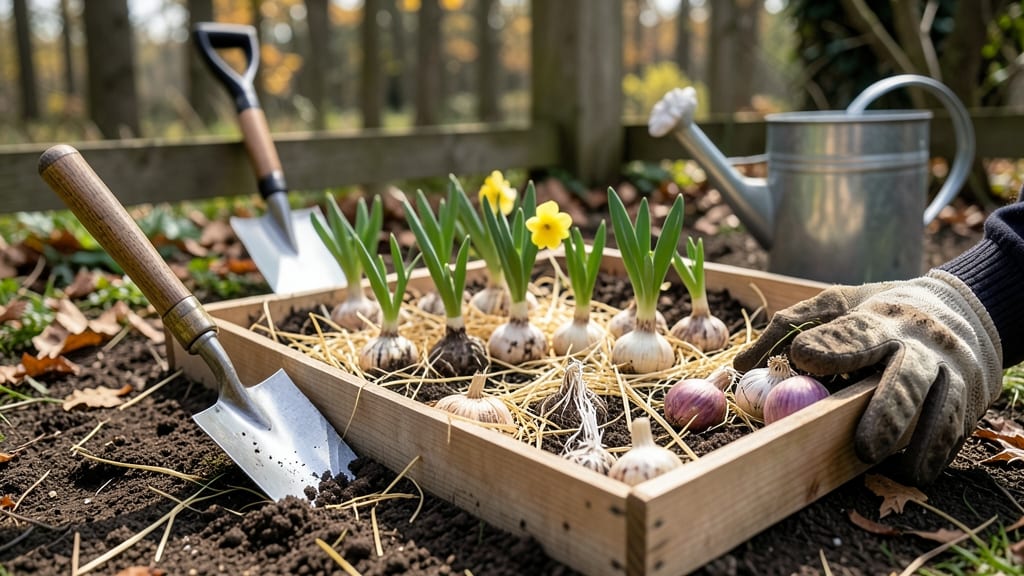
Planting your flower bulbs 🌷 at the wrong time in fall can mean the difference between a spring garden bursting with color and a season of disappointment.
The key lies in understanding your local frost dates and the chill-hour needs of each bulb variety—because not all tulips or daffodils follow the same schedule.
I’ve learned the hard way that timing matters more than most gardeners realize. Too early, and your bulbs might sprout before winter sets in, only to freeze back. Too late, and they won’t establish strong roots before the ground hardens.
The ideal window? 4-6 weeks before your first frost, when soil temperatures hover around 60°F—but this varies wildly depending on where you live.
In this guide, I’ll break down exactly when to plant in your specific USDA zone, which bulbs need 6 weeks of cold versus 12+ weeks, and how to adjust for warm climates where winter barely chills.
Plus, I’ll share my top tips to avoid common mistakes that kill bulbs before they even bloom.
Whether you’re a first-time planter or a seasoned gardener, getting this right ensures your garden will reward you with vibrant blooms next spring—without the guesswork. Let’s get those flower bulbs 🌷 in the ground the right way.
Fall planting timeline by USDA hardiness Zone: exact weeks before first frost
Planting flower bulbs in the fall is all about timing—specifically, how many weeks before your first frost date you should plant. The goal? Give bulbs enough time to establish strong root systems before the ground freezes.
In USDA Zones 3-7, this typically means planting 4-6 weeks before frost, but warmer zones (8-10) have more flexibility.
For example, in Zone 5 (like Chicago or Denver), with an average first frost around October 20th, aim to plant bulbs by September 15th.
In Zone 9 (Los Angeles or Phoenix), where frosts are rare, you can plant as late as December—but only for cold-hardy varieties like daffodils or crocuses.
Here’s the critical rule: Soil temperature should be around 60°F (15°C) when you plant. Use a soil thermometer to check—cooler soils slow root growth, while warmer soils (above 70°F) can stress bulbs.
In northern climates, this often aligns with late September; in southern climates, it might be November or even December.
Pro tip: Check your local frost dates using the National Weather Service or Old Farmer’s Almanac. These tools provide historical averages that help you plan with confidence.
For instance, Zone 6 gardeners (like those in New York or Colorado) should plant by mid-October, while Zone 4 (Minneapolis, Detroit) need to finish by early October.
🌱 Fall Planting Timeline by USDA Zone
| Zone | First Frost Date | Planting Window | Soil Temp Goal | Notes |
|---|---|---|---|---|
| 3-4 | Late Sept–Oct | Early Aug–Sept 15 | 55–60°F | Early planting needed; short growing season |
| 5-6 | Mid–Late Oct | Sept 15–Oct 15 | 60°F | Ideal for tulips, daffodils, hyacinths |
| 7-8 | td style="padding: 8px; border: 1px solid #297c4d;">Nov–DecOct–Nov 15 | 60–65°F | Later planting; extend to Dec in Zone 8 | |
| 9-10 | Jan–Feb (rare) | Nov–Dec | 65–70°F | Only cold-hardy bulbs; avoid tender types |
Regional variations matter! For example, Pacific Northwest gardeners (Zone 7-8) can plant later due to milder winters, while Midwest gardeners (Zone 5) must act faster.
If you’re in a transition zone (like Zone 7b), err on the side of earlier planting—better to have roots established than risk late frosts.
Don’t forget about microclimates. A south-facing slope warms up faster than a north-facing garden bed, so adjust your timing accordingly. For instance, bulbs in a sunny, sheltered spot might handle a later planting date by 1-2 weeks compared to shady or windy areas.
One common mistake? Planting too early in warm climates. Bulbs like tulips can sprout prematurely in Zone 9 if planted in September, only to be fried by winter heat. Instead, wait until November and choose heat-tolerant varieties like rain lilies or spider lilies.
For container gardeners, the rules shift slightly. Potted bulbs need to be planted in well-draining containers and moved to a protected location (like a garage) before winter.
In Zone 5-6, this means digging up and storing bulbs after the first frost, while Zone 7+ may allow overwintering with mulch protection.
Use these guidelines as your planting compass, but always double-check with your local cooperative extension service for hyper-local advice. After all, nothing beats firsthand expertise from gardeners in your exact area! 🌿
Chill-hour requirements for 20+ flower bulbs: which need 6 weeks vs. 12+ weeks of cold
Not all flower bulbs have the same cold requirements—some need just 6 weeks of chill, while others demand 12+ weeks to bloom reliably. Understanding these chill-hour needs ensures your bulbs won’t waste energy trying to grow in warm soil.
For example, tulips and hyacinths thrive with 12-16 weeks of cold, while crocuses and snowdrops only need 4-6 weeks. If you live in a mild climate, you might need to extend cold exposure or choose low-chill varieties.
Chill hours are calculated by tracking temperatures between 32°F and 45°F. Most bulbs need at least 400-1,500 chill hours—think of it like a dormancy countdown. If you plant too early in warm soil, bulbs may sprout prematurely and get fried by frost.
Conversely, planting too late in cold soil can leave them root-bound before winter, reducing next year’s blooms.
| Bulb Type | Chill Hours Needed | Best for Zones | Notes |
|---|---|---|---|
| Tulips | 1,200-1,500 | 3-8 | Needs deep chill; avoid warm climates |
| Daffodils | 600-1,200 | 4-9 | Tolerates partial shade; deer-resistant |
| Hyacinths | 1,000-1,200 | 4-8 | Fragrant; plant in groups for impact |
| Crocuses | 400-600 | 3-10 | Early bloomers; great for lawn edges |
| Alliums | 600-1,000 | 5-9 | Drought-tolerant; bold globe shapes |
| Snowdrops | 300-500 | 4-8 | Blooms in late winter; shade-tolerant |
| Fritillaria | 800-1,200 | 5-8 | Checkered blooms; needs well-draining soil |
For gardeners in Zones 9-10, where winters are mild, you’ll need to trick bulbs into dormancy. Try planting in shaded beds or using refrigeration tricks—like storing bulbs in a cool garage for 6-8 weeks before planting.
Alternatively, opt for low-chill varieties like daffodils or alliums, which handle shorter winters better. Even in cold zones, late-fall planting (just before soil freezes) can work if bulbs get enough chill.
Pro tip: If you’re unsure about your local chill hours, check your USDA zone and cross-reference with a chill-hour map