
Flowers
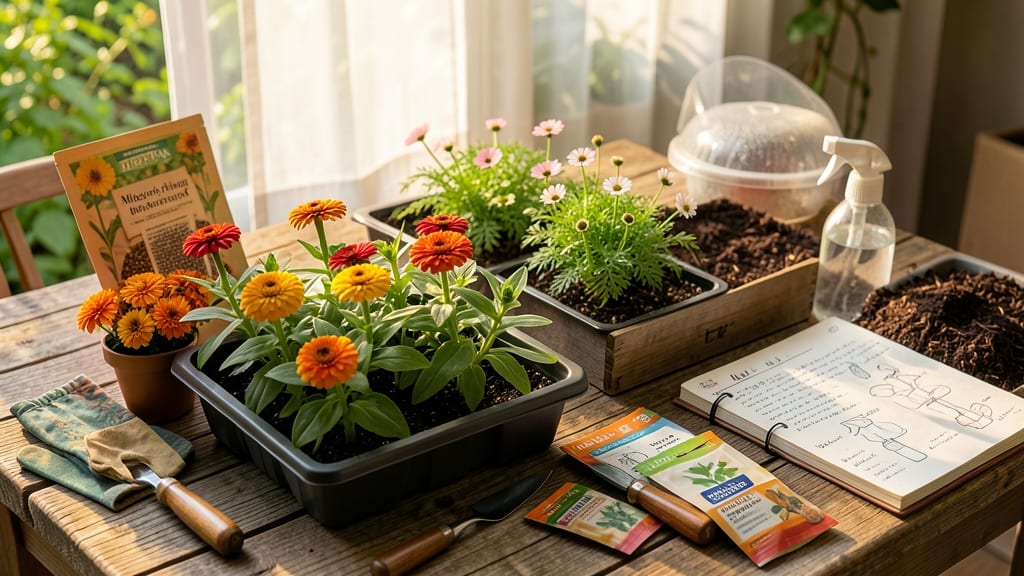
Timing your flower seeds planting in Michigan could mean the difference between a garden bursting with 🌸 color and a season of disappointment. With USDA Zones 5b-6b, getting the window right—especially after that tricky last frost—isn’t just helpful, it’s essential for strong starts.
Let’s face it: Michigan’s weather plays hard to get, and waiting too long can leave your seeds struggling in the heat. But planting too early? Frost will be their worst enemy.
The secret lies in knowing when soil warms up and how to work with Michigan’s two main planting seasons—spring and fall.
In this guide, I’ll break down the exact deadlines for annuals, perennials, and everything in between, so you can avoid common mistakes. Whether you’re starting seeds indoors or sowing directly outside, you’ll learn how to adjust for Michigan’s unpredictable swings—because even the best gardeners need a backup plan.
Ready to turn your backyard into a showstopper? Let’s dive into the planting schedule that’ll have your flowers thriving from May through October—and maybe even beyond.
Michigan flower seed planting deadlines by USDA zone 5-6 variety type
Michigan’s USDA Zones 5b-6b mean your flower seeds face a tight window between late frosts and scorching summer heat. The key is planting at the right time to avoid frost damage or bolting (premature flowering).
Most gardeners aim for after the last frost date, typically mid-April to early May, but this varies by region. For example, Detroit’s last frost is usually April 15, while Traverse City may wait until May 1.
Annual flowers—like marigolds and petunias—thrive when planted after soil warms to 60°F, usually late May to early June. Perennials, such as black-eyed Susans and coneflowers, can handle cooler soil and often do best when sown in early spring or even late summer for fall blooms.
Cool-season flowers like pansies and snapdragons can even tolerate light frosts, making them ideal for early spring or fall planting.
🌱 Did You Know? Michigan’s frost-free season averages 150 days, so timing is critical for maximizing blooms. A late frost in May can delay planting by 2-4 weeks, while an early frost in September may cut your fall season short. Always check your local Michigan State University Extension frost date map before planting.
Here’s the breakdown of planting deadlines by flower type to ensure vibrant blooms all season:
For Michigan gardeners, the last frost date is your golden rule. Use a soil thermometer to confirm soil is at least 60°F before planting heat-loving seeds. In northern Michigan (Zone 5b), wait until late May, while southern Michigan (Zone 6b) can start as early as mid-April.
Always err on the side of caution—a late frost can wipe out tender seedlings overnight.
Pro tip: Succession planting is your secret weapon for continuous blooms. Sow fast-growing annuals like zinnias or cosmos every 2-3 weeks from May to July to enjoy flowers until first frost. This strategy works especially well for cut flower gardens, ensuring you always have fresh blooms for arrangements.
If you’re unsure about your local frost dates, bookmark the Michigan State University Garden Guide or use the National Weather Service’s frost prediction tool. These resources provide hyperlocal data to help you adjust planting times.
For example, Grand Rapids might be ready by May 10, while Marquette could still see frost until May 25.
Don’t forget about fall planting! Many cool-season flowers thrive when sown in late summer. Pansies, <
How to adjust planting times for Michigan’s unpredictable weather patterns
Michigan’s late frosts and early heatwaves can throw off even the most experienced gardener’s timing. The key to success lies in flexibility—knowing how to extend seasons, protect seedlings, and adjust planting dates based on real-time conditions.
Unlike milder climates, Michigan’s USDA Zones 5-6 demand a proactive approach to avoid losing your entire crop to a single unexpected frost.
Start by monitoring local frost dates—they can vary by 1-2 weeks across the state. For example, Detroit’s last frost often arrives by May 10th, while Traverse City might see frost as late as May 25th.
Use the National Weather Service or Michigan State University Extension for updates, and always plant 2-3 weeks after the average last frost date to stay safe.
🌱
⚠️ Late Frost Alert: Protect Your Seeds!
If frost is forecasted after planting:
- ✅ Use frost blankets or row covers to shield seedlings
- ✅ Opt for heat-loving annuals (like zinnias or marigolds) that tolerate warmer soil
- ❌ Avoid cool-season flowers (e.g., pansies, snapdragons) until soil warms to 50°F+
Pro Tip: Plant fast-growing annuals (e.g., cosmos, sunflowers) in late May for a second flush of blooms if spring is slow.
For early springs, consider starting heat-sensitive seeds indoors (like impatiens or petunias) 6-8 weeks before your target outdoor date. Use grow lights to simulate long daylight hours, and harden off seedlings gradually to prevent shock.
If you’re planting outdoor-hardy perennials (e.g., coneflowers, black-eyed Susans), sow them directly in the ground in early spring—they thrive in cooler soil and won’t mind a late frost.
Conversely, late springs call for succession planting. Instead of committing to one planting date, stagger seeds every 2 weeks from late May through June. This ensures continuous blooms and reduces the risk of losing your entire garden to a single cold snap.
For example, plant cosmos seeds every 3 weeks from May to July—they self-seed easily and will reward you with nonstop color all summer.
Don’t overlook microclimates—your garden isn’t uniform! South-facing slopes warm up 1-2 weeks earlier than shaded areas, while low spots hold frost longer. Use these pockets wisely: plant early bloomers (like sweet peas) in warm microclimates and late-season flowers (like asters) in cooler spots to extend your blooming season naturally.
Finally, soil temperature is your best friend. Use a soil thermometer to confirm conditions—most flower seeds need soil at 60°F+ to germinate. If your soil is still chilly, wait or use black plastic mulch to warm it faster.
For fall planting (August-September), aim for soil temps below 75°F to avoid stressing seedlings before winter.
☀️✂️