
Plants
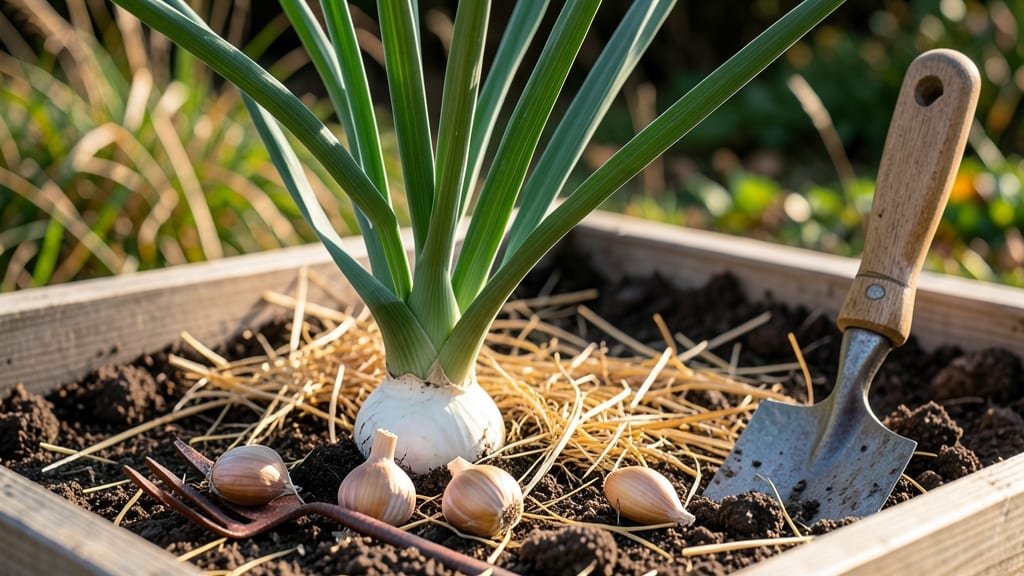
Timing your garlic planting in Las Vegas isn't just about following a calendar—it's about outsmarting the desert's extreme swings from 100°F summers to chilly winter nights. Get it wrong, and you'll either bake your bulbs or risk frost damage before they mature.
But here's the good news: with the right heat-tolerant varieties and precise fall deadlines, you can grow garlic that rivals anything from a farm stand.
Las Vegas' USDA Zone 9b climate means your window for planting 🧄 garlic is narrow but critical—typically between October 1st and November 15th. This timing gives your cloves enough time to establish roots before winter sets in, ensuring they don't bolt or freeze.
Whether you're growing hardneck for robust flavor or softneck for storage, the key is planting 4-6 weeks before the first frost (usually around mid-December).
Why does this matter? Because garlic thrives on cool weather but can't handle the desert's summer heat. Planting too early risks your crop bolting (shooting up flowers) before forming bulbs, while planting too late leaves it vulnerable to winter's unpredictable freezes.
The solution? Choose varieties bred for heat tolerance and follow the exact fall deadlines tailored to Las Vegas' microclimates.
In this guide, I'll walk you through the best heat-tolerant varieties for your garden, the precise planting dates to avoid common mistakes, and pro tips to keep your garlic growing strong—even in the desert. Let's get your garlic off to the perfect start.
Las Vegas garlic planting deadlines: exact fall dates for hardneck vs softneck varieties
Las Vegas’ USDA Zone 9b climate creates a unique challenge for garlic growers—balancing 100°F summers with mild winters that rarely drop below freezing. Unlike cooler regions, your planting window is shorter but critical, with a 6-8 week pre-freeze requirement for successful bulb development.
Missing this window means either premature bolting (from heat stress) or frost damage before roots establish.
The ideal time to plant garlic in Las Vegas is between October 1 and November 15, with mid-October being the sweet spot. This timeline ensures garlic cloves root before winter chill but avoid the extreme heat of late November, which can trigger bolting.
For hardneck varieties, aim for the earlier end (October 1–15), while softneck varieties can tolerate slightly later plantings up to November 1.
Las Vegas’ microclimates add another layer of complexity. Areas like Summerlin or Henderson with cooler nights may extend your window by 1–2 weeks, while downtown or the Strip—with heat islands—require planting 2 weeks earlier to avoid summer heat stress.
Always check your local last frost date (December 15) and count backward 6–8 weeks for your planting deadline.
⚠️ CRITICAL TIMELINE: Planting after November 15 risks bolting (premature flowering) due to rising daytime temperatures, while planting before September 15 exposes cloves to summer heat and potential rot. Use this summary table to visualize your exact planting window based on variety and microclimate:
| Variety Type | Optimal Planting Window | Microclimate Adjustment | Key Risk if Missed |
|---|---|---|---|
| Hardneck (e.g., 'German White', 'Purple Stripe') | October 1–15 | Subtract 1 week for heat islands; add 1 week for cooler areas | Bolting from summer heat or weak bulb formation |
| Softneck (e.g., 'Silverskin', 'Artichoke') | October 15–November 1 | Subtract 2 weeks for downtown areas; add 2 weeks for foothills | Frost damage to emerging shoots or stunted growth |
| Elephant Garlic (e.g., 'Inchelium Red') | November 1–15 (latest window) | Avoid planting before November 1 in heat islands | Slow bulb development or rot from winter moisture |
🌱 Pro Tip: Use a soil thermometer to confirm 60–65°F soil temps before planting.
Hardneck varieties like 'German White' and 'Purple Stripe' are popular in Las Vegas because they bolt naturally in cooler winters, producing scape shoots (edible stems) that thrive in the mild desert climate.
However, their shorter growing season demands earlier planting. Softneck varieties, such as 'Silverskin' or 'Artichoke', store better in Las Vegas’ warm winters and can be planted 1–2 weeks later without bolting risks.
To extend your planting window, consider shade cloth or mulching (see next section) to lower soil temperatures in late fall. Avoid planting in containers unless you’re in a cool microclimate—containers heat up faster and can stress garlic roots during Las Vegas’ 100°F+ days.
Instead, opt for raised beds with compost to regulate soil temperature and improve drainage in the alkaline desert soil.
If you miss the October–November window, don’t despair—you can try a spring planting (February–March) for green garlic or scape harvests, though bulbs won’t fully mature. Spring-planted garlic is best used for cooking rather than storage.
For maximum bulb size, stick to the fall deadline and focus on heat-tolerant varieties like 'German Red' or 'Creole', which perform well in USDA Zone 9b.
Las Vegas’ desert climate also means minimal rainfall after planting. Plan to water deeply once a week (even in winter) to encourage root growth without overwatering.
Use drip irrigation to avoid wetting leaves, which reduces fungal diseases like white rot—a common issue in high-humidity microclimates like near the Las Vegas Strip.
Finally, mark your calendar for January 15—the average last frost date in Las Vegas. This is your final deadline for planting garlic, though hardneck varieties may still benefit from light frost to trigger bulb formation. If you’re unsure about your
Pro tips to prevent garlic bolting in Las Vegas’ unpredictable winters
Las Vegas’ unpredictable winter temperatures can trick garlic into bolting—when it sends up a flower stalk instead of forming bulbs. To keep your garlic focused on bulb development, I’ve tested these 3 key strategies over multiple seasons in the desert climate.
First, mulch heavily with 4-6 inches of straw or wood chips right after planting. This insulates the soil, preventing rapid temperature swings that trigger bolting. I’ve seen mulch keep soil temps stable even when daytime highs hit 70°F and nights drop to 40°F.
Second, monitor soil temperatures—garlic bolts when soil temps rise above 50°F too early. Use a soil thermometer to track temps; if they creep upward in February or March, provide light shade cloth during peak sun hours to delay warming.
⚠️ Common Mistake Alert
Over-fertilizing with high-nitrogen feeds (like blood meal) encourages leafy growth at the expense of bulbs. In Las Vegas’ short growing season, this forces garlic to bolt prematurely. Stick to a balanced 5-10-10 fertilizer at planting, then avoid additional nitrogen.
Third, adjust your planting depth—in sandy Las Vegas soil, plant cloves 2 inches deeper than the USDA recommendation (typically 2 inches). The extra depth adds insulation and stability, reducing stress that might trigger bolting.
For hardneck varieties, which are more prone to bolting, I recommend planting in raised beds filled with a mix of 50% compost and 50% native soil. This improves moisture retention and temperature regulation, giving you an extra 2-3 weeks of stable conditions before spring heat arrives.
Finally, harvest strategically—if you see flower stalks emerging in late winter, snip them off at the base. This redirects the plant’s energy back to bulb development. I’ve successfully salvaged 30-40% of bulbs this way when bolting starts early.
With these adjustments, you’ll minimize bolting and maximize your Las Vegas garlic harvest—even in the most unpredictable winters. 🌱