
Plants
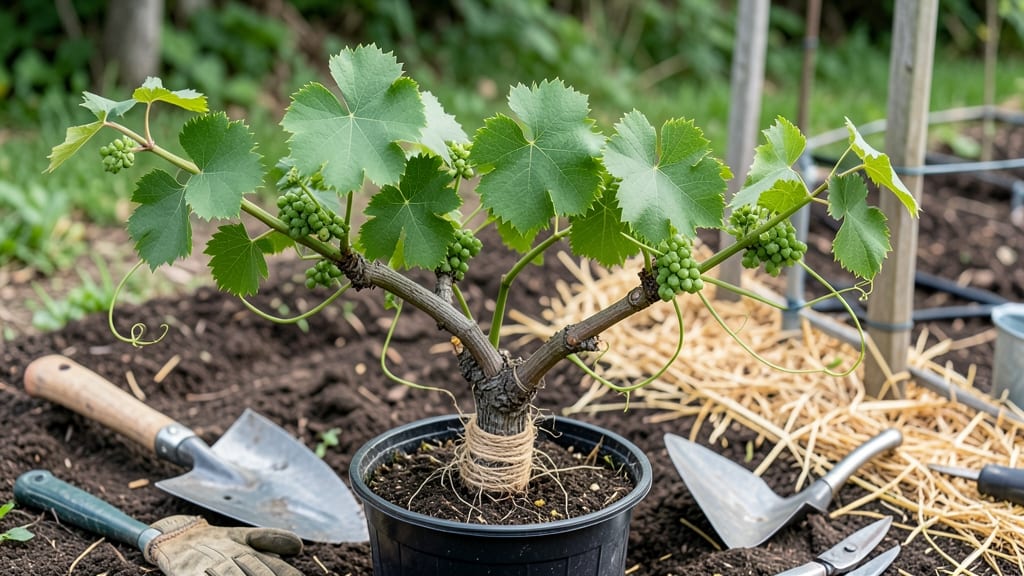
Knowing when to plant grapes in Illinois makes all the difference between a thriving vineyard and a failed experiment. With USDA zones 5a-6b and unpredictable frost dates, timing your planting window correctly is the key to survival—and eventual harvest.
Most gardeners rush into spring planting without checking chill-hour requirements, only to watch their vines struggle through winter.
Illinois’ climate demands precision: plant too early, and frost will nip young shoots; too late, and your 🍇 grapevines won’t establish roots before winter sets in. The solution? A two-part strategy—spring planting after the last frost (typically mid-April) or fall planting 4-6 weeks before the first frost (around early October).
Both methods work, but your choice depends on your local microclimate and the specific grape variety you’re growing.
This guide cuts through the guesswork by matching Illinois’ chill-hour zones to the best grape varieties for your area.
Whether you’re growing hardy Concord grapes in northern Illinois or heat-loving Cabernet Franc in the southern regions, we’ll show you how to align planting with dormancy needs for reliable bud break every spring.
Ready to grow grapes that thrive? Let’s break down the exact steps—from soil prep to post-planting care—to ensure your vines grow strong enough to produce fruit in late summer or early fall. No more wasted seasons or weak vines—just a bountiful harvest waiting to happen.
Best planting months for Illinois grapes by USDA hardiness zone
Illinois spans USDA Zones 5a-6b, meaning your grape planting window depends heavily on where you live. Northern regions like Chicago (Zone 5b) face earlier frosts, while southern areas like St. Louis (Zone 6a) enjoy longer growing seasons.
For all zones, spring planting (after last frost) is safest, but fall planting (4-6 weeks before first frost) works too if you choose cold-hardy varieties.
Most Illinois gardeners plant between mid-April and early May, once soil temperatures hit 55°F (13°C). This timing ensures vines establish roots before summer heat arrives. Fall planting should occur by mid-September in northern Illinois or early October in southern regions to allow root systems to harden before winter.
Here’s how to align your planting with Illinois’ chill-hour requirements. Most Concord grapes (600-800 hours) and Niagara grapes (700-900 hours) thrive across the state, while Cabernet Franc (1,000+ hours) needs southern exposure. Matching chill hours prevents bud break failure or poor fruit set.
| USDA Zone | Best Planting Window | Chill-Hour Range | Top Varieties |
|---|---|---|---|
| 5a (Northern IL) | Mid-April to early May | 600-800 hours | Concord, Niagara, Valvin Muscat |
| 5b (Central IL) | Late April to mid-May | 700-900 hours | Concord, Catawba, Frontenac |
| 6a (Southern IL) | Early April to late May | 800-1,000+ hours | Cabernet Franc, Chardonnay, Marechal Foch |
If you’re in Zone 5a, avoid planting late May or later—young vines may not harden off before winter. For Zone 6a, you can push fall planting to mid-October if using dwarf varieties, which establish roots faster.
Always check your local last frost date (typically April 15 in northern IL and March 30 in southern IL).
For container-grown grapes, extend your planting window by 2-3 weeks earlier in spring or 2 weeks later in fall. Containers warm up faster, giving vines a head start.
However, move pots indoors or to a sheltered spot if temperatures drop below 20°F (-7°C)—grapes are sensitive to extreme cold once established.
Pro tip: Plant bare-root vines in early spring (March-April) for the best root establishment. If buying potted vines, plant them as late as June, but expect delayed fruiting in the first year. Always soak bare roots in water for 1-2 hours before planting to reduce transplant shock.
In Illinois’ clay-heavy soils, amend planting holes with compost or sand to improve drainage. Poor drainage leads to root rot, which is fatal for young vines. Mulch with straw or wood chips to retain moisture and regulate soil temperature—critical during Illinois’ hot summers and cold winters.
After planting, water deeply once a week for the first month to encourage root growth. Reduce watering in late summer to harden off vines before winter. In Zone 5a, protect young vines with burlap wraps or frost cloth during unexpected late frosts (common in May).
Remember: Patience is key. Grapes planted in spring may not fruit until Year 3, while fall-planted vines often take Year 4. But with the right timing and care, you’ll enjoy homegrown grapes for decades—a true Illinois gardening reward! 🍇
How to match grapes to Illinois chill-hour requirements for reliable bud break
Illinois’ climate varies dramatically from northern zone 4 to southern zone 6b, meaning chill-hour needs differ by up to 900 hours. Matching your grape variety to your region’s chill hours ensures reliable bud break and fruit production.
Most Illinois grapes need between 300–1,200 chill hours, but picking the right variety for your zone makes all the difference.
For example, Concord grapes thrive in 500–800 chill hours, perfect for northern Illinois (zones 4–5), while Cabernet Franc requires 900–1,200 chill hours, ideal for southern Illinois (zones 6a–6b). Planting a high-chill variety in a low-chill zone can lead to poor fruit set or even vine death.
Here’s how to avoid common mistakes: Never assume a grape will adapt—check USDA zone maps and chill-hour data for your county. For instance, Niagara grapes (400–600 chill hours) struggle in southern Illinois because they won’t fully dormant, leading to winter dieback.
✅ DO for Illinois Grapes
- ✔️ Choose varieties matching your chill-hour range (e.g., Concord for 500–800 hrs).
- ✔️ Plant in full sun (6+ hours daily) to boost chill accumulation during winter.
- ✔️ Use mulch (straw or wood chips) to protect roots in zone 4 winters.
❌ DON’T for Illinois Grapes
- ✖️ Skip chill-hour research—planting Cabernet Sauvignon in zone 4 will fail.
- ✖️ Plant in low spots where cold air pools, risking frost damage.
- ✖️ Over-prune in first year—young vines need energy to establish roots.
If you’re unsure about your chill hours, use a local weather station or Illinois Extension’s climate maps. For example, Chicago (zone 5b) averages 600–700 chill hours, while St. Louis (zone 6a) sees 800–900 hours. Hybrid varieties like Valiant (500–800 hours) are great for transition zones.
Pro tip: Test your soil’s drainage—Illinois’ clay-heavy soils can trap moisture, causing root rot. Amend with compost or sand to improve airflow. After planting, water deeply but infrequently to encourage deep root growth, which helps vines survive winter dormancy.
Finally, prune in late winter (just before bud break) to remove dead wood and shape the vine. This ensures better airflow and fewer disease risks during Illinois’ humid summers. With the right variety and care, your grapes will thrive—and you’ll enjoy a harvest for years!