
Plants
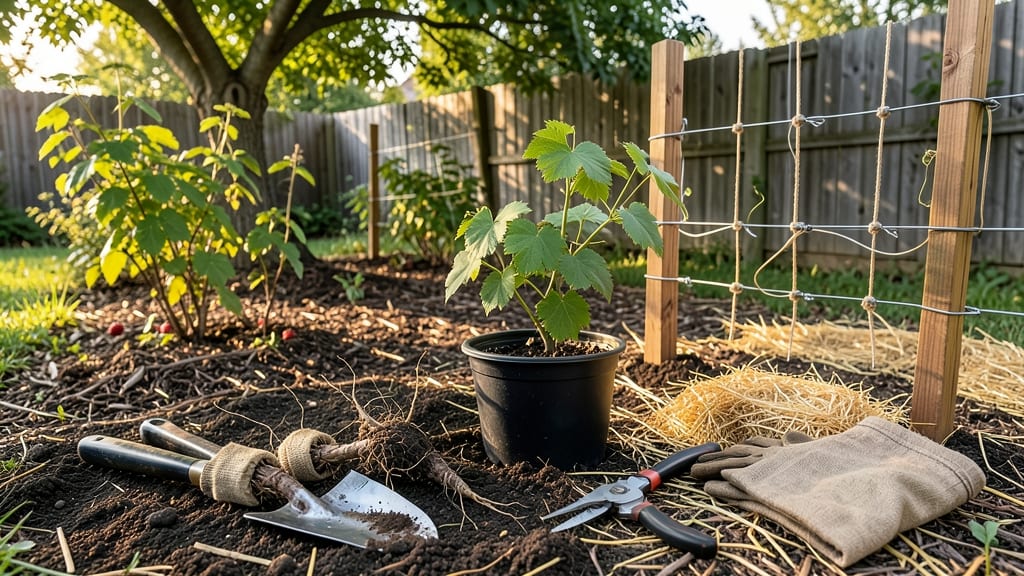
Planting grapes in Michigan isn't just about grabbing a vine and sticking it in the ground—it's about timing it perfectly to beat the 5b-6b zone's unpredictable frosts and ensure those 🍇 clusters thrive.
The difference between a thriving vineyard and a sad, frozen experiment often comes down to matching your grape variety to Michigan's chill hours and planting windows.
Most gardeners make the mistake of planting too early, only to watch their tender shoots get nipped by late frosts. But here's the thing: some varieties need 200 chill hours while others demand 1,000+—and getting that wrong means no blooms, no grapes.
I'll show you exactly when to plant for your specific variety, whether you're in Detroit or Traverse City.
We're talking two ideal windows—early spring when the soil warms or fall when vines establish roots before winter. The key is understanding your microclimate and soil temperature, not just checking a calendar. Let me walk you through the precise timing that'll have your grapevines growing strong from day one.
Ready to grow grapes that actually produce fruit? You'll learn how to choose the right planting month for your variety, prepare your soil properly, and avoid the common mistakes that kill Michigan grape plantings before they even begin. Let's get those vines in the ground the right way.
Michigan grape planting timeline by chill hour requirements
Michigan’s hardiness zones 5b-6b demand careful timing for grape planting, where chill hours (0°F to 45°F) determine variety success. Most Michigan grapes need 200-1,000 chill hours—skipping this match means poor blooming or no fruit. Let’s break down the perfect planting windows for your region.
For spring planting (most common), aim for April 15-May 15 when soil temps hit 50°F+. Fall planting (September 1-October 10) works too but requires 6-8 weeks before first frost. Both methods rely on last-frost dates, which vary by 2-3 weeks across Michigan.
Here’s the critical rule: Plant bare-root vines when they’re dormant. Never plant when buds swell or leaves emerge—this guarantees root establishment before summer heat. Northern Michigan (e.g., Traverse City) should plant 2 weeks later than Southern Michigan (e.g., Detroit).
Soil temperature is non-negotiable. Use a soil thermometer to confirm 50°F+ at 4” depth. Cold soil stunts roots, while warm soil (above 70°F) stresses young vines. Pro tip: Mix in compost to warm soil faster—critical for early spring plantings.
Now, let’s match your grape variety to Michigan’s chill hours. Concord grapes (600-800 hours) thrive statewide, while Marquette grapes (1,000+ hours) need Northern Michigan’s colder winters. Niagara grapes (500-700 hours) work in Southern Michigan but may struggle in the UP.
🍇 Chill Hour Chart 🍇
| Variety | Chill Hours | Best Planting Window | Notes |
|---|---|---|---|
| Concord | 600-800 | April 20-May 10 | Statewide favorite; needs trellis |
| Niagara | 500-700 | April 15-May 5 | Southern MI only; early ripener |
| Marquette | 1,000+ | May 1-15 | Northern MI cold-hardy; disease-resistant |
| Valvin Muscat | 300-500 | April 25-May 15 | Southern MI; needs winter protection |
| Frontenac | 800-1,000 | April 20-May 10 | Statewide; disease-resistant |
Southern Michigan’s earlier last-frost dates (around April 15) let you plant 2 weeks ahead of Northern Michigan (around May 1). Use your local Cooperative Extension frost maps to pinpoint your exact window.
For example, Detroit’s Concord grapes can go in by April 20, while Traverse City’s need to wait until May 5.
Fall planting offers one key advantage: Vines establish roots before winter, giving them a head start in spring. However, plant 6-8 weeks before first frost (typically September 1-October 10).
Avoid planting too late—vines need time to harden off before cold sets in. Pro move: Mulch heavily after fall planting to insulate roots.
Container growing extends Michigan’s planting window by 3-4 weeks. Move potted vines outdoors in late May (after frost risk) and bring them in by October 15. This works best for dwarf varieties like Valvin Muscat, which thrive in 15-gallon pots with well-draining soil.
Remember: Soil prep is 50% of success. Test your soil’s pH (6.0-6.5 ideal) and add compost or aged manure for nutrients. Grapevines are heavy feeders, so don’t skimp on organic matter. Last tip: Plant on a slight slope to prevent winter waterlogging, which rots roots.
Timing your grape planting to Michigan’s chill hours and frost patterns isn’t just about the calendar—it’s about giving your vines the perfect start. With the right variety and window, you’ll be harvesting juicy grapes in August-September instead of struggling with failed plantings. 🌱
How to adjust planting time for Michigan’s microclimates
Michigan’s diverse climate—from Detroit’s urban warmth to Traverse City’s lake-effect chill—means one-size-fits-all planting advice fails.
Southern Michigan’s longer frost-free windows (180+ days) let you plant Concord grapes as early as late March, while Northern Michigan’s shorter seasons (140-160 days) demand fall planting for Marquette grapes by early September. The key? Adjusting for local last-frost dates and microclimates like south-facing slopes or lake buffers.
For Southern Michigan gardeners (Zones 5b-6a), aim for spring planting between April 15–May 15 when soil temps hit 55°F. Use row covers if late frosts linger—these can add 2-4 weeks to your growing season.
In Northern Michigan (Zones 5a-5b), fall planting (September 1–15) is safer, letting vines establish roots before winter. Container growing extends options: move pots indoors during hard freezes (below -10°F) or use heated grow bags for early starts.
🌱
| PROS | CONS |
|---|---|
| ✅ Longer growing season (180+ days) | ❌ Late spring frosts can damage early blooms |
| ✅ Spring planting (April 15–May 15) | ❌ Humidity increases fungal risks (e.g., black rot) |
| ✅ Warmer microclimates near buildings/lakes | ❌ Urban heat islands may stress vines in summer |
| PROS | CONS |
| ✅ Fall planting (Sept 1–15) avoids spring frosts | ❌ Shorter season (140–160 days) limits variety choices |
| ✅ Cooler summers reduce heat stress | ❌ Lake-effect snow can damage winterized vines |
| ✅ Container options for patio growing | ❌ Limited root zone in pots restricts large varieties |
Lake-effect microclimates near Lake Michigan or Lake Huron add another layer of complexity. Areas like Muskegon or Saugatuck experience warmer winters and cooler summers, ideal for Niagara grapes (which need 500+ chill hours).
Test your microclimate by tracking local frost dates for 3 years—Michigan State University’s Weather Stations provide free data. For container gardeners, choose dwarf varieties like ‘Frontenac’ (6–8 ft mature height) and use 5-gallon pots with gravel drainage.
If you’re in Zone 5a (Northern Lower Peninsula or Upper Peninsula), prioritize cold-hardy varieties like ‘Marquette’ or ‘Valvin Muscat’, which tolerate -25°F with proper winterization. Mulch heavily (6–8 inches of straw) and train vines to a fan-shaped trellis to protect buds.
In Southern Michigan’s Zone 6a, ‘Concord’ or ‘Catawba’ thrive with spring planting and summer pruning to manage vigor.
🌿
Pro tip: Start vines in containers 4–6 weeks before your target planting date. Harden them off by gradually reducing shade and increasing wind exposure—this mimics Michigan’s unpredictable spring weather and boosts survival rates.
For urban gardeners, vertical trellises save space, but ensure they’re 6+ feet tall to support mature vines. Always space vines 6–10 feet apart to prevent disease spread from poor air circulation.