
Plants
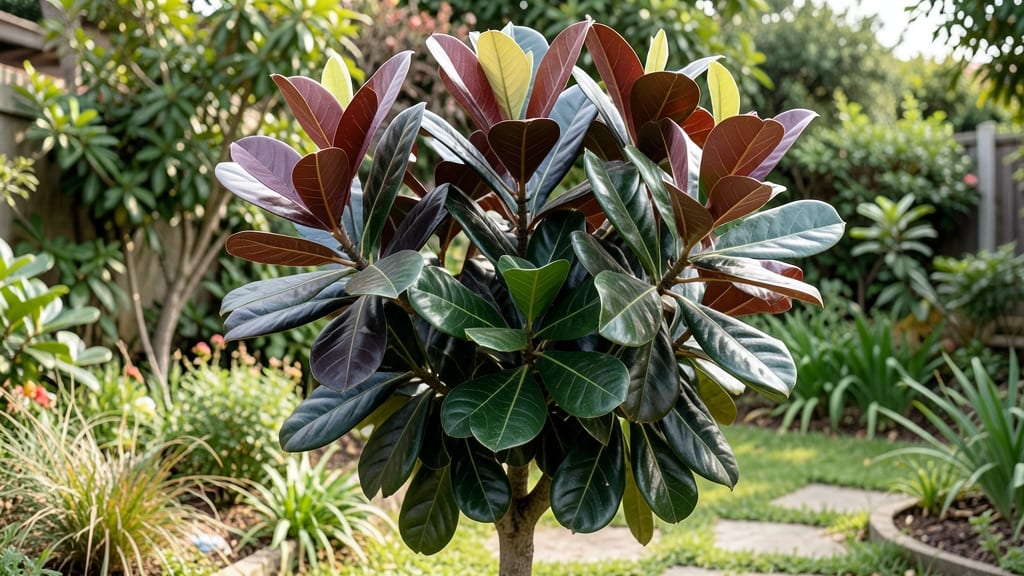
Wondering how tall does a rubber plant grow before it needs a ceiling hug? These glossy-leaved giants can reach 10 feet indoors with proper care—but don’t worry, they’re just as happy staying compact if you guide them right.
Your rubber plant’s 🌿 height depends on its variety, light exposure, and how you prune it. Some types like 'Decora' stay manageable at 3-5 feet, while 'Black Prince' can shoot up toward the sky.
The key is understanding their growth habits so you can shape them to fit your space.
Light is the biggest factor—too little slows growth, while bright indirect light fuels those vertical ambitions. But here’s the game-changer: pruning isn’t just for trimming wilted leaves. It’s how you control height, encourage bushiness, and even propagate new plants.
Ready to turn your rubber plant into a statement piece without it taking over your living room? I’ll break down the science of growth, plus 3 simple pruning tricks to keep it at your ideal height—whether that’s countertop chic or a towering indoor tree.


Average height of rubber plants by popular variety (indoor growth chart)
Rubber plants (Ficus elastica) are prized for their striking foliage and impressive height potential. Indoors, their mature size can range from 3 feet to over 10 feet, depending on the variety and growing conditions.
Understanding these differences helps you choose the perfect plant for your space—whether you have a cozy apartment or a spacious sunroom.
Most rubber plants grow slowly at first, reaching 1-2 feet in their first year, then accelerating to 3-5 feet by year two. With proper care, they can continue climbing toward the ceiling over time.
The key to managing their height lies in selecting the right variety and providing optimal growing conditions.
Below is a detailed indoor height comparison for popular rubber plant varieties, including their mature sizes, growth rates, and space requirements. This chart will help you visualize how each type will fit into your home.
If you're working with limited vertical space, varieties like 'Robusta' or 'Tineke' are ideal, as they typically stay under 5 feet. For bold statements, 'Decora' or 'Black Prince' will thrive in rooms with 10-foot ceilings or higher.
Always consider your plant's growth rate—some varieties grow 1-2 feet per year once established, while others take their time.
Light exposure plays a crucial role in height. Rubber plants grown in bright indirect light tend to grow taller and fuller, while those in low-light conditions may stay shorter but become leggy. Place your plant near an east or west-facing window to encourage balanced growth and vibrant foliage.
Pot size also affects height. A root-bound rubber plant in a small pot will focus energy on upward growth rather than bushiness. Upgrading to a 1-2 gallon pot when roots circle the drainage holes can help manage height and encourage a fuller shape.
Pro tip: Rotate your rubber plant quarter-turns every 2-4 weeks to ensure even light exposure on all sides. This simple habit prevents lopsided growth and keeps your plant growing uniformly tall and sturdy.
For those worried about ceiling collisions, don't fret—pruning is your best friend. You can easily trim back overgrowth to maintain your desired height while propagating new plants from cuttings. We'll dive deeper into pruning techniques in the next section!
How to control rubber plant height: pruning and training techniques
If your rubber plant (Ficus elastica) is reaching for the ceiling faster than expected, don’t worry—you can easily manage its height with simple techniques. Pruning isn’t just about trimming; it’s about shaping growth and encouraging bushiness.
I’ve found that regular pruning not only controls height but also promotes fuller foliage, making your plant look more vibrant and intentional.
Start by identifying the right time to prune. The best seasons are late winter or early spring, just as new growth begins. Avoid heavy pruning in fall or winter, as your plant is entering dormancy and needs energy to recover.
If you must prune outside this window, do it lightly to avoid stressing the plant.
Here’s how I approach pruning to keep my rubber plant at my desired height:
Use sterilized pruning shears or sharp scissors to make clean cuts. Avoid tearing the stems, as this can damage the plant and invite pests.
Choose a spot just above a leaf node—this is where new branches will sprout. For height control, cut 1/4 inch above the node to encourage bushier growth.
Trim the top 2-3 inches of the main stem to slow vertical growth. For a fuller look, also prune side branches to encourage lateral shoots.
Don’t throw away those cuttings! Place them in water or moist soil to root, and you’ll have new plants to share or replant.
After pruning, place your plant in bright indirect light and keep the soil slightly moist to encourage new growth.
Another technique I love is training with supports. If your rubber plant is tall but you want to keep it compact, use a bamboo stake or trellis to guide its growth.
Gently tie the stem to the support as it grows, encouraging it to grow upward in a controlled manner. This works especially well for variegated varieties like 'Tineke,' where you want to showcase the striking foliage.
For dwarf varieties like 'Burgundy,' pruning is less critical, but a light trim every few months keeps the plant tidy. Always remember: less is more. Over-pruning can stress your plant, so start conservatively and adjust based on how it responds.
With the right approach, you’ll have a rubber plant that fits perfectly in your space—whether it’s a floor-standing giant or a bushy tabletop centerpiece.
🌿