
Plants
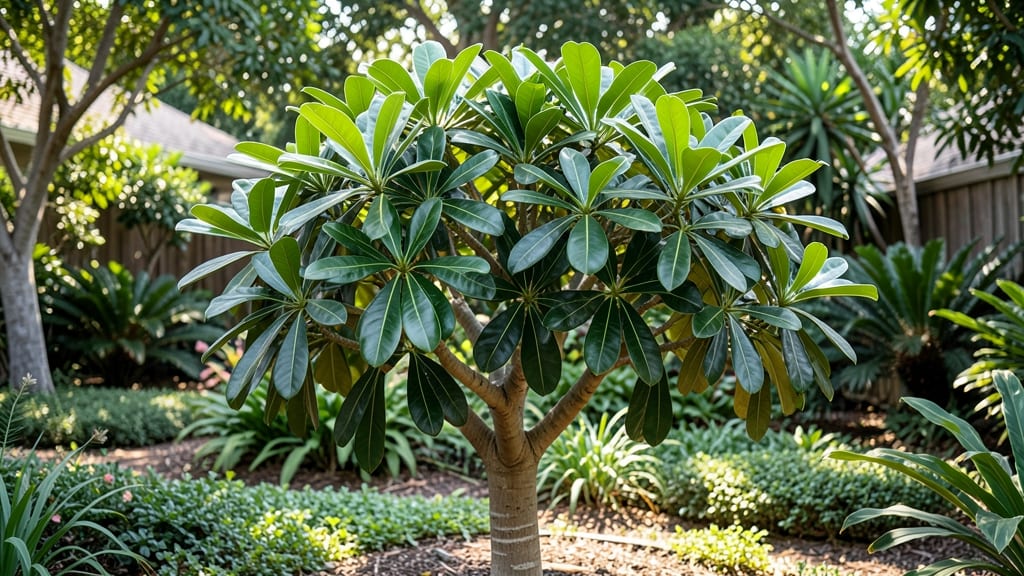
Wondering how tall does a schefflera plant grow before it becomes a ceiling-height challenge? This glossy-leaved beauty can range from a compact 3 feet to a towering 12 feet, depending on the variety and where you grow it.
If you're eyeing a 🌿 Schefflera actinophylla (umbrella tree) for your living room, expect it to climb toward the sky—outdoors, it can hit 12 feet in ideal conditions, while indoors, it often stays between 6-10 feet with proper care.
But don't worry: dwarf varieties like Schefflera arboricola stay manageable at 3-6 feet, perfect for smaller spaces.
The key to controlling its height lies in light, pruning, and pot size. Too much sun? Your schefflera might shoot up faster than expected. Skip the pruning, and you could end up with a jungle canopy instead of the tidy shrub you envisioned.
I'll show you exactly how to guide its growth—whether you want a statement piece or a compact accent plant.
Ready to pick the perfect schefflera for your space? Let's break down the varieties, growth factors, and care tips to keep your plant at the height you love—without any surprises along the way.


Schefflera varieties and their mature heights: a complete guide
Choosing a schefflera isn’t just about its stunning leathery leaves—it’s also about understanding how tall each variety grows. Some stay compact enough for small apartments, while others become towering indoor trees that need ceilings to match.
Let’s break down the most popular types and their mature heights to help you pick the perfect fit for your space.
Scheffleras are versatile, thriving both indoors and outdoors in the right USDA zones (6-11). However, their growth habits differ dramatically between varieties. For example, the Schefflera actinophylla (umbrella tree) can reach 10-12 feet tall outdoors but stays shorter indoors due to limited light.
Meanwhile, the Schefflera arboricola (dwarf schefflera) typically maxes out at 6-10 feet, making it a favorite for homes with lower ceilings.
Here’s a quick visual guide to compare the most common schefflera varieties and their mature heights in both indoor and outdoor settings:
| Variety | Indoor Height | Outdoor Height | Growth Habit | Best For |
|---|---|---|---|---|
| Schefflera actinophylla (Umbrella Tree) | 6–10 ft | 10–12 ft | Tree-like, upright | Large spaces, outdoor gardens |
| Schefflera arboricola (Dwarf Schefflera) | 3–6 ft | 6–10 ft | Bushy, multi-stemmed | Apartments, offices, patios |
| Schefflera elegantissima (Octopus Tree) | 5–8 ft | 8–12 ft | Unique branching, sprawling | Tropical gardens, large pots |
| Schefflera heptaphylla (Seven-Leaf Schefflera) | 4–7 ft | 7–10 ft | Compact, dense foliage | Small spaces, collectors |
| Schefflera capitata (Dwarf Umbrella Tree) | 3–5 ft | 5–8 ft | Slow-growing, rounded | Bonsai-style, small gardens |
The Schefflera actinophylla is the tallest variety, often reaching ceiling heights in indoor settings if not pruned. If you love its dramatic look but have lower ceilings, opt for the Schefflera arboricola, which stays bushier and more manageable.
For a unique statement plant, the Schefflera elegantissima (octopus tree) adds visual interest with its sprawling branches, though it needs space to thrive.
If you’re a collector or love rare plants, the Schefflera heptaphylla is a stunning choice with its seven-leaf clusters. It’s slower-growing but perfect for small spaces or as a tabletop centerpiece.
Meanwhile, the Schefflera capitata is ideal if you want a miniaturized version of the umbrella tree—great for bonsai-style pruning or tiny gardens.
Pro tip: Always check the light conditions in your home or garden. Scheffleras grown in bright indirect light (like an east-facing window) will stay smaller than those basking in full sun outdoors. For indoor varieties, expect 20-30% less height compared to outdoor growth.
Ready to pick your schefflera? Consider your space, sunlight, and whether you want a tall statement plant or a compact bushy friend. Each variety brings something unique to your garden or home! 🌿
Factors that influence Schefflera growth height: light, pruning, and pot size
Your schefflera’s final height isn’t set in stone—it’s shaped by three key factors: light exposure, pruning habits, and container size. Understanding these will help you grow a schefflera that fits your space perfectly, whether you want a compact 3-foot bush or a towering 10-foot indoor tree.
Let’s break down how each factor plays a role.
Sunlight is the primary driver of schefflera growth. Bright indirect light (like an east-facing window) encourages steady, controlled growth, keeping heights manageable. In contrast, low-light conditions slow growth but may lead to leggy, stretched stems that reach for light—sometimes doubling the expected height.
For example, a Schefflera arboricola in dim corners might grow 6 feet tall with sparse foliage, while the same plant in a sunroom stays 4-5 feet with dense leaves.
Pruning is your secret weapon for height control. Regular pinching back (snipping the tips of new growth) promotes bushier, wider growth instead of vertical stretching. For a tree-like schefflera, like Schefflera actinophylla, avoid heavy pruning—this encourages upward growth.
But if you want a compact shape, trim back 1/3 of the stem in early spring to redirect energy outward. Just remember: prune just above a leaf node for the best regrowth.
| Factor | Effect on Height | Actionable Tip |
|---|---|---|
| Light Exposure | Low light = leggy, tall growth; bright indirect = compact, bushy | Rotate plant quarterly for even light exposure |
| Pruning Frequency | Less pruning = taller; more pruning = bushier | Trim back 1/3 of stems in spring for controlled height |
| Pot Size | Small pot = slower growth; large pot = faster, taller growth | Choose a pot 1-2 inches larger than the root ball |
| Fertilizer Use | Over-fertilizing = rapid, unchecked growth | Use balanced fertilizer every 6-8 weeks, not monthly |
Pot size is often overlooked but critical for height control. Scheffleras grow faster in larger containers because they have more room to expand roots and absorb nutrients. If you’re aiming for a shorter schefflera, keep it in a smaller pot (just 1-2 inches larger than its root ball).
For outdoor varieties, like Schefflera elegantissima, this means upgrading pots every 2-3 years to manage height. Pro tip: Use a terracotta pot—it dries out faster, encouraging slower growth compared to plastic.
Seasonal changes also play a role. Scheffleras grow most aggressively in spring and summer, which is when they can reach their fastest height gains. To slow growth during these months, reduce fertilizer to half-strength and avoid repotting.
In fall and winter, growth naturally slows, making it the perfect time to prune if you want to reset height. For example, if your Schefflera actinophylla hits 8 feet by summer, a hard prune in October can reduce it to 5-6 feet by spring.
Want a specific height? Combine these factors strategically. Place your schefflera in medium indirect light, prune back 20% of growth in spring, and use a medium-sized pot to keep a Schefflera arboricola at a manageable 4-5 feet.
For taller varieties like Schefflera heptaphylla, embrace full indirect light and minimal pruning to let it reach its natural 10-12 foot potential. The key is consistency—adjust just one factor at a time to see how your plant responds.