
Watering
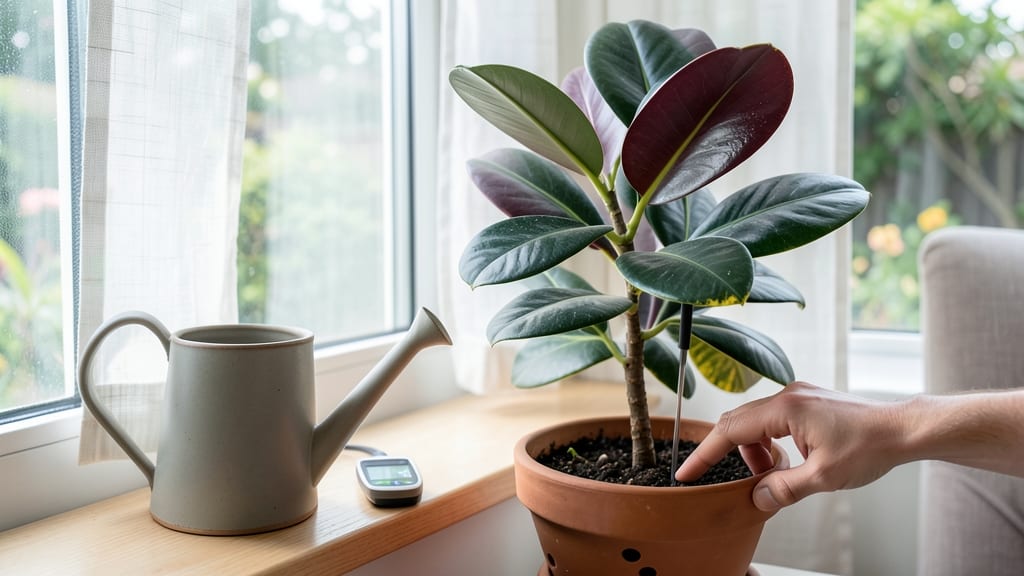
Figuring out how much water your rubber plant 🌿 needs can feel like solving a mystery—one wrong move, and those stunning glossy leaves start drooping or turning yellow.
The truth? Your rubber plant (Ficus elastica) thrives when you water it less than you think, but nailing that balance is easier than you’d expect.
Most gardeners overdo it, thinking more water equals happier plants, but rubber plants are tougher than they look. They’d rather go thirsty for a few extra days than sit in soggy soil.
I’ve watched mine bounce back from near-death dry spells, proving that patience (and the right techniques) beats guesswork every time.
In this guide, you’ll learn the exact watering routine—including when to check soil moisture, how seasonal changes affect your schedule, and what those telltale leaf signals mean. No more second-guessing whether your plant is parched or drowning.
Ready to master the art of watering? Let’s skip the guesswork and get your rubber plant back to its vibrant best with just the right amount of moisture.

How often to water a rubber plant based on soil dryness (not a schedule)
Your rubber plant doesn't need a rigid watering schedule—it needs you to read its soil like a book. The key is waiting until the top 1-2 inches of soil feel completely dry to the touch.
Stick your finger in the soil up to your first knuckle: if it's dry, it's time to water. If it's still damp, wait another day or two. This method prevents the two biggest killers of rubber plants: overwatering and underwatering.
Rubber plants are native to tropical rainforests, but their roots need air almost as much as water. When soil stays soggy, roots suffocate and turn mushy, leading to yellow leaves and a plant that wobbles like it's drunk.
On the flip side, letting the soil dry out completely can cause crispy brown edges on leaves—a sign your plant is thirsty. The sweet spot is consistently moist but never soggy.
Here's a pro tip: use your fingers or a moisture meter instead of guessing. Many gardeners make the mistake of watering on a fixed schedule (like every Monday), but rubber plants grow at different rates depending on temperature, humidity, and pot size.
A small 6-inch pot dries out faster than a large 12-inch container. Always check the soil first—your plant will thank you with glossy, vibrant leaves.
Seasonal changes dramatically affect your rubber plant's water needs. During spring and summer, when growth is most active, you'll likely water every 7-10 days. But in fall and winter, growth slows, and you can stretch waterings to every 2-4 weeks.
A good rule of thumb is to water half as often in winter as you do in summer.
Cold drafts from windows or AC units also dry out the air, so keep an eye on your plant's leaves—if they're crisping at the edges, it might need more humidity or less water.
Pot size plays a huge role in water retention. A small 6-inch pot may need watering every 5-7 days in summer, while a large 12-inch container could go 10-14 days between waterings. The bigger the pot, the more soil holds moisture.
If you've recently repotted your rubber plant into a larger container, you might not need to water as frequently. Always check the soil depth—larger pots stay moist longer because there's more soil to hold water.
One common mistake is watering based on the plant's appearance rather than soil conditions. If your rubber plant's leaves are drooping slightly, it might be thirsty—but it could also be reacting to low humidity or sudden temperature changes.
Always dig your finger into the soil first. And if you're unsure, it's better to underwater slightly than to overwater. Rubber plants are forgiving when slightly dry but can die quickly if their roots sit in water.
For extra peace of mind, consider using a self-watering pot or placing your rubber plant on a caching tray. These systems deliver water directly to the roots when the soil is dry, mimicking natural rainfall patterns.
Just be sure to empty any excess water from the tray after 30 minutes to prevent soggy roots. This method is especially helpful if you travel frequently or struggle with consistent watering habits.
Remember, rubber plants are resilient. Even if you slip up and overwater once, your plant can often bounce back if you catch it early. The key is to adjust your habits based on what you observe.
Keep a simple journal near your plant—note when you water and how the leaves respond. Over time, you'll develop an intuition for your rubber plant's perfect watering rhythm.
🌿 Your rubber plant's health depends on your ability to read its soil, not follow a calendar. With practice, you'll master the art of watering just enough—keeping those leaves lush and your green thumb proud.
Best watering techniques for rubber plants: pots, humidity, and seasonal adjustments
Your rubber plant’s watering needs change with the seasons, pot size, and even your home’s humidity. Unlike rigid schedules, mastering these adaptive techniques ensures your Ficus elastica stays lush year-round.
Let’s break down how to adjust your routine for different conditions—because one size never fits all when it comes to rubber plants.
First, the pot material makes a surprising difference. Terracotta pots dry out faster than plastic, so if you’re using terracotta, you’ll water 2-3 days sooner than with plastic. Always check soil moisture by sticking your finger 1-2 inches deep—if it’s dry, water thoroughly until it drains from the bottom.
This deep-watering method encourages strong root growth, which your rubber plant will thank you for later.
- 🌱 Morning watering prevents fungal growth by letting leaves dry overnight.
- 🪴 Use well-draining soil mixed with perlite or orchid bark to avoid soggy roots.
- ✂️ Trim yellowing leaves to redirect energy to healthy growth.
- 🌡️ In winter, reduce watering by half—growth slows dramatically.
- 💧 Always water until excess drains out the bottom of the pot.
Humidity plays a huge role in how often you water. Rubber plants thrive in 40-60% humidity, but most homes sit at 30% or lower in winter. If your plant’s leaves start curling or dropping, it’s a sign the air is too dry.
Place a pebble tray under the pot or use a humidifier nearby—this can cut watering needs by 30% because the soil stays moist longer.
Seasonal shifts demand big adjustments. During summer’s peak growth, your rubber plant may need water every 7-10 days, while winter dormancy might stretch that to every 3-4 weeks.
Pro tip: Group plants together to create a microclimate—they’ll share humidity and regulate moisture better than solo pots.
Reviving an underwatered rubber plant is easier than you think. Start by soaking the soil for 10-15 minutes until water runs freely from the drainage holes. Then, let it drain completely before placing it back in its spot.
Over the next week, gradually return to your normal watering schedule—this prevents root shock from sudden hydration changes.
Remember, your rubber plant’s leaves are its superpower. Glossy, firm leaves mean you’re nailing the watering balance. If they start yellowing or drooping, it’s time to reassess your routine. With these techniques, your Ficus elastica will reward you with vibrant growth for years to come.