
Plants
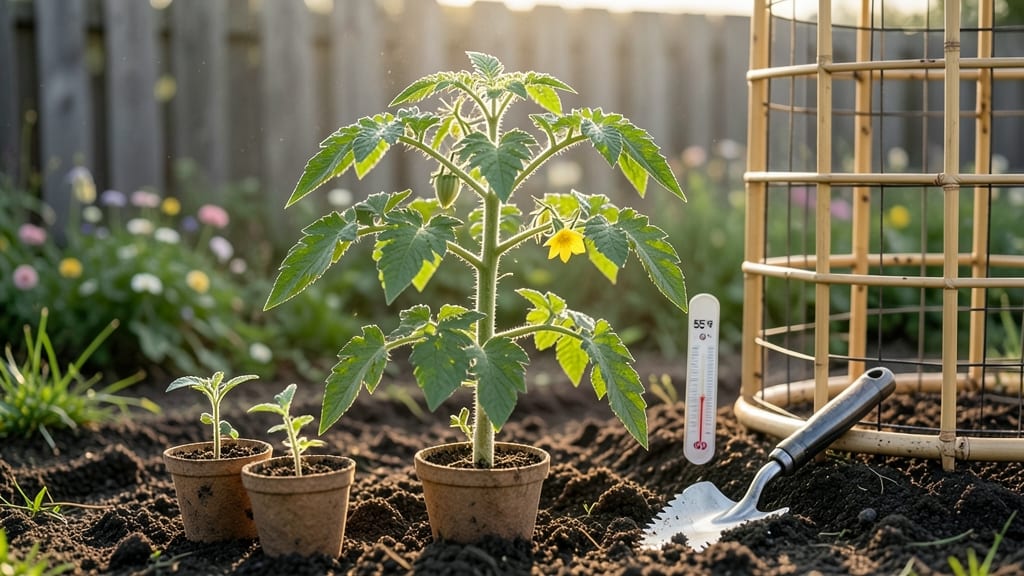
If you're asking "when can you plant tomatoes in Michigan", the answer isn't just about dates—it's about mastering soil temperature tricks to give your 🍅 plants a zero-frost head start.
Michigan's 5b-6b zones demand precision, and planting too early means frost will turn your hard work into sad, wilted leaves.
Most gardeners wait until mid-May, but with the right techniques, you can start 2-3 weeks earlier—just by checking soil temps and using protective covers. The key? Waiting until nighttime temps stay above 50°F consistently, even if daytime feels warm.
This small shift can mean the difference between a bountiful harvest and a disappointing season.
I'll show you exactly how to time your tomato starts—whether you're growing indeterminate vines or compact varieties—so you can enjoy fresh tomatoes from July through October. No more guessing games, just science-backed strategies tailored to Michigan's unpredictable spring weather.
Ready to transform your garden? Let's dive into the soil temperature secrets that will give your tomatoes the perfect early advantage—before the last frost even thinks about showing up.
Michigan’s last frost dates: the real timeline for planting tomatoes
Michigan’s last frost dates vary dramatically between the Upper Peninsula and Lower Peninsula, making precise timing critical for tomato success.
In southern Michigan (like Detroit), the average last frost falls between mid-April and late April, while northern regions (e.g., Traverse City) often see frost lingering until early May.
These dates create a 10-15 day window difference that can mean the difference between a bountiful harvest and a failed crop.
To pinpoint your exact frost-free date, consult the USDA Plant Hardiness Zone Map. Most of Michigan falls in zones 5b-6b, but even small shifts in elevation or proximity to lakes (like Lake Michigan) can delay frost by 3-7 days.
For example, Ann Arbor typically warms up 5 days earlier than Marquette in the UP.
Here’s the golden rule: Wait until the soil temperature consistently stays above 50°F at night and 60°F during the day. Cold soil slows germination and stresses young plants, making them vulnerable to fungal diseases like early blight.
Use a soil thermometer (available for $10-$15) to monitor conditions—this is your best defense against frost-related setbacks.
🌱
| Region | Avg. Last Frost | Safe Planting Window | USDA Zone |
|---|---|---|---|
| Southern Michigan (Detroit, Kalamazoo) | Mid-April | Late April – Early May | 6a-6b |
| Central Michigan (Lansing, Grand Rapids) | Late April | Early May – Mid-May | 5b-6a |
| Northern Michigan (Traverse City, Petoskey) | Early May | Mid-May – Late May | 5a-5b |
| Upper Peninsula (Marquette, Sault Ste. Marie) | Late May | Early June – Mid-June | 4b-5a |
⚠️ Pro Tip: Check your local Almanac frost calendar for 3-year averages—they’re more reliable than single-year data.
For zero-frost risk planting, aim to transplant 2-3 weeks after your region’s average last frost date. This buffer accounts for late spring cold snaps (a common issue in Michigan’s variable climate).
For example, if your last frost is May 1st, wait until May 15th to plant outdoors. This strategy aligns with Michigan State University Extension recommendations for tomato transplanting.
If you’re starting seeds indoors, begin 6-8 weeks before your target outdoor planting date. For southern Michigan, this means late February to early March, while northern gardeners should start in March to early April.
Use grow lights to ensure seedlings get 14-16 hours of light daily—without them, leggy seedlings will struggle to adapt to outdoor conditions.
Another Michigan-specific hack: Plant early-maturing varieties (like 'Stupice' or 'Early Girl') in black plastic mulch. This warms the soil 5-10°F faster than bare earth, letting you plant 1-2 weeks earlier without frost risk. Just remove the mulch once plants are established to prevent overheating.
🌿
Don’t forget to harden off your seedlings before transplanting. Over 5-7 days, gradually expose them to outdoor conditions (starting with 2 hours/day and increasing to full sun). This process reduces transplant shock by 70%, giving your tomatoes a stronger start.
Skip this step, and you’ll likely see wilting or stunted growth—a common mistake among Michigan gardeners.
Soil temperature secrets: how to plant tomatoes 2-3 weeks early without risking frost
Michigan’s short growing season means every extra day counts for tomatoes. The key to beating frost is soil temperature—not just air temperature. Tomatoes need soil that’s at least 60°F to thrive, and nighttime temps above 50°F to avoid stunted growth.
This means you can often plant 2-3 weeks earlier than traditional last-frost dates by using simple tricks like row covers or cold frames.
First, check your soil temperature with a soil thermometer (available for under $10). Stick it 4-6 inches deep—that’s where tomato roots will be. If it’s below 60°F, wait.
If it’s consistently warm, you’re ready to plant. Pro tip: Morning soil temps are 5°F cooler than afternoon temps, so check in the late morning for the most accurate reading.
Here’s how to extend your season without risking frost damage:
Use row covers or floating row covers to raise soil temps by 2-5°F. These lightweight fabrics trap heat during the day and protect against late frosts at night. Remove them when temps stay above 55°F consistently.
Plant fast-maturing varieties like 'Early Girl' (55 days) or 'Stupice' (50 days). These can produce fruit 3-4 weeks earlier than standard varieties, giving you a head start on the season.
Try a cold frame or mini greenhouse for a 2-3 week head start. These structures can raise soil temps by 10-15°F, letting you plant seedlings 4-6 weeks before the traditional last frost date.
Use heat mats under seedling trays to keep roots warm. These are especially useful for indoor starts or if you’re transplanting early. A 50-watt heat mat can raise soil temps by 10°F in cold conditions.
Choose black plastic mulch to absorb sunlight and warm the soil. Lay it down 1-2 weeks before planting to raise soil temps by 3-5°F. This also suppresses weeds and retains moisture.
Don’t forget to harden off your seedlings before transplanting. Gradually expose them to outdoor conditions over 5-7 days to avoid shock. Start with 2-3 hours of sunlight and increase daily. If frost is forecasted after planting, cover your tomatoes with a row cover or lightweight blanket for extra protection.
With these tricks, you can push your tomato harvest 2-3 weeks earlier than the average Michigan gardener—meaning more time to enjoy fresh, homegrown tomatoes before the first frost. Just remember: soil temperature is your best friend in beating Michigan’s unpredictable spring weather 🌱.