
Plants
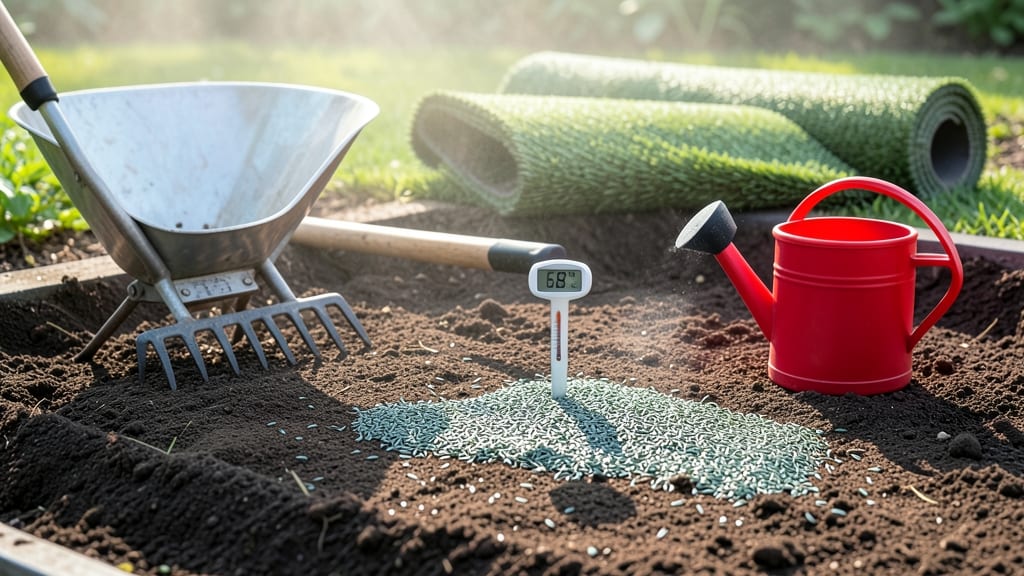
Timing your grass seed planting just right in spring could mean the difference between a lush, vibrant lawn and a patchy, frustrating mess.
The best time to plant grass seed isn't just about the calendar—it's about when your soil reaches that sweet spot of 60°F, ensuring your 🌱 sprouts grow fast and strong.
Most gardeners assume early spring is always ideal, but that’s not the full story. Planting too soon risks frost damage, while waiting too long can leave your lawn vulnerable to weeds.
In Zone 6a, aim for early to mid-spring when soil temperatures stabilize, typically around April or May, depending on your region.
Why does temperature matter so much? Grass seed needs warmth to germinate efficiently—cold soil slows it down, while heat can dry it out.
I’ll break down the science behind the 60°F rule, how to test your soil, and the best grass varieties for your climate to set you up for success.
Whether you're seeding a new lawn or repairing bare spots, getting this right saves time, money, and frustration. Let’s dive into the fastest, most reliable way to plant grass seed this spring so you can enjoy your green space all season long.
Optimal spring soil temperature for grass seed germination (60°F rule explained)
Timing your grass seed planting is all about soil temperature, not just air temperature. Grass seeds need the ground to reach at least 60°F to germinate properly.
Planting too early—when soil is still cold—can lead to slow germination or even seed rot, while waiting too long risks summer heat stress for seedlings. The 60°F rule is your golden benchmark for success.
Why does soil temperature matter so much? Grass seeds rely on microbes in warm soil to break down their outer coatings and kickstart growth. Below 50°F, these processes stall, leaving seeds dormant.
Meanwhile, above 70°F, seeds may dry out before sprouting. The ideal window is when soil hits 60-65°F consistently for 5-7 days—this signals it’s time to plant.
Here’s how to test your soil temperature accurately: Use a soil thermometer (not an air thermometer) and check 2-3 inches deep—this is where seeds will be. Take readings in the early morning for the most reliable data.
If your soil is still below 60°F, wait; if it’s above 70°F, consider late summer planting instead.
Regional variations play a huge role. In the Northern U.S. (Zones 3-5), soil may not warm up until late April or early May. Meanwhile, in the Southern U.S. (Zones 7-10), you might hit 60°F as early as February or March.
Always check your last frost date and adjust your timeline accordingly—planting 4-6 weeks before frost gives seeds time to establish before summer heat arrives.
| Spring Stage | Soil Temp Range | Best Planting Time | Risks if Planted |
|---|---|---|---|
| Early Spring | Below 50°F | Wait until soil warms | Seed rot, slow germination |
| Mid-Spring | 60-65°F | Ideal planting window | None (optimal conditions) |
| Late Spring | Above 70°F | Consider fall planting | Drought stress, weak roots |
| Summer | 75°F+ | Avoid unless shade-tolerant | Seed desiccation, poor growth |
If you’re unsure about your local soil temperature trends, check your USDA Plant Hardiness Zone and cross-reference with a local gardening extension service. They often provide weekly soil temperature updates for your area.
For example, in Zone 5, mid-April is typically the sweet spot, while in Zone 8, you might start as early as late February.
Pro tip: If your soil is too cold but you’re eager to plant, consider a lightweight row cover or black plastic mulch to warm the soil faster. Just remove it once seeds sprout to avoid overheating.
Conversely, if your soil is too hot, opt for shade-tolerant grass varieties like fine fescue or creeping red fescue, which handle heat better than Kentucky bluegrass.
Remember, consistency is key. Even if your soil hits 60°F for a day, wait until it stays in that range for 5-7 consecutive days before planting. This ensures your seeds have the stable conditions they need to germinate uniformly.
Once planted, monitor soil moisture closely—daily watering is critical during the first 2-3 weeks to keep seeds from drying out.
For a visual guide, track your soil temperature for a week using a thermometer. If it hovers around 60-65°F day and night, you’re ready to go. If nights dip below 50°F, delay planting until conditions stabilize. This simple check can save you from wasted seed and frustrating regrowth.
Finally, pair your soil temperature check with a moisture test. Stick your finger 2 inches deep—if the soil feels dry, water it thoroughly 24 hours before planting.
Grass seeds need consistent moisture to germinate, but soggy soil can suffocate them. Aim for damp, not waterlogged, conditions for the best start.
How to prepare your lawn for spring grass seed planting (step-by-step)
Preparing your lawn properly before planting grass seed is just as important as timing—skipping steps can lead to poor germination or weed takeover. Start by clearing debris and testing your soil pH, which should ideally be between 6.0 and 7.0 for most grass types.
If your soil is too acidic or alkaline, amendments like lime or sulfur will help balance it before seeding.
Next, remove existing weeds using a non-selective herbicide (like glyphosate) or manually pull them if your lawn is small. This ensures your new grass seedlings won’t compete with invasive plants. For stubborn weeds, apply the herbicide 2-3 weeks before planting to allow time for it to break down safely.