
Plants
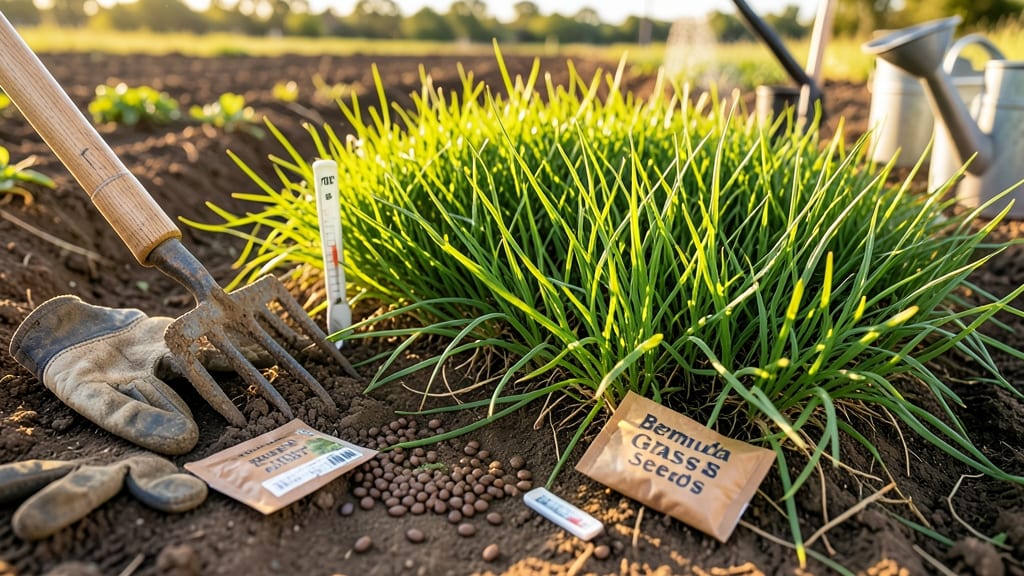
Planting Bermuda grass seeds in Texas at the wrong time can turn your dream green lawn into a patchy, weak disappointment. That’s because this heat-loving grass needs the perfect balance of soil warmth and moisture—not too early, not too late.
If you’ve ever watched your lawn struggle to take root or fade under Texas’s brutal sun, you know timing is everything.
The key lies in waiting for soil temperatures to hit 65°F or higher, which typically lands in late spring to early summer—but there’s more to it than just the calendar.
In this guide, I’ll break down exactly when to plant for your specific Texas region, whether you’re in the cooler 8a zones or the sweltering 10b areas. You’ll also discover how to prep your soil and care for your new grass to ensure it thrives—not just survives.
Let’s get your lawn off to the strongest start possible, so you can enjoy that lush, drought-resistant green all summer long.
Optimal planting windows for Bermuda grass seeds in Texas: soil temps and regional differences
Bermuda grass (Cynodon dactylon) loves Texas heat, but planting it at the wrong time can turn your dream lawn into a patchy nightmare. The key to success lies in soil temperatures and regional microclimates—not just calendar months.
In most of Texas, the ideal soil temperature for Bermuda grass seed germination is between 70-75°F, which typically aligns with late spring to early summer.
For North Texas (USDA Zones 7b-8a), aim for April to early May when daytime highs consistently reach 75°F. In Central Texas (Zones 8a-8b), you’ve got a slightly longer window—mid-April to early June.
Meanwhile, South Texas (Zones 9a-10b) can plant as early as March or as late as July, thanks to its warmer climate and longer growing season.
Here’s the catch: Planting too early in cooler soil (below 65°F) delays germination and invites fungal diseases like Pythium. Planting too late—after mid-June in most regions—risks exposing young seedlings to intense summer heat and drought stress before they establish strong roots.
Texas’s erratic rainfall patterns also play a role. In dry years, prioritize planting when consistent moisture is forecasted. In wet springs, you might need to adjust for soil saturation, which can suffocate seeds.
One common mistake? Waiting until July or August to plant. By then, the heat is relentless, and seeds often fail to sprout before going dormant.
The best window is when you’ve got warm soil, moderate temperatures, and predictable rainfall—usually late April to early June for most of the state.
If you’re in a cooler microclimate (like the Texas Hill Country), push planting to May to avoid late frosts. Conversely, in urban heat islands (like Houston or Dallas), you might extend planting into early July if you’re prepared for extra watering.
Pro tip: Use a soil thermometer to check depth (about 2 inches down). If the reading is below 68°F, wait a week or two. Patience here pays off with stronger root establishment and a thicker lawn.
For those in South Texas, late summer planting (August–September) can work if you’re establishing from sod rather than seed, but seeds planted this late rarely survive the winter without protection.
Remember: Bermuda grass is dormant in winter and goes brown in summer—but that doesn’t mean it’s dead. The roots stay alive, and with the right timing, your lawn will bounce back faster.
For best results, align your planting with local rainfall forecasts and avoid planting during extended dry spells or heavy rain periods.
If you’re unsure about your region’s microclimate, check with your local AgriLife Extension office for heat zone maps and seed-specific recommendations. They can also provide insights on local weed pressures, which can outcompete young Bermuda grass if not managed early.
Finally, consider hybrid Bermuda grass varieties like Tifway or TifSport, which are bred for faster germination and better heat tolerance—giving you a slight edge in Texas’s unpredictable climate. 🌱
Spring vs. fall planting: which offers stronger root establishment for Texas lawns?
Deciding between spring and fall planting for your Bermuda grass in Texas can feel overwhelming. Both seasons offer unique advantages, but understanding their differences helps you choose the best time for strong root establishment and long-term lawn health. Let me break down the key factors that influence your decision.
Spring planting (April–May) aligns with Texas’s warming soil temperatures, which are ideal for Bermuda grass germination. The grass benefits from longer daylight hours and consistent rainfall during late spring, giving it a head start before summer’s intense heat. However, planting too early can expose young seedlings to unpredictable spring storms or cool soil temperatures, slowing growth.
Fall planting (September–October) offers cooler temperatures and reduced weed competition, allowing the grass to focus on root development without competing with aggressive summer weeds. This season also provides steady moisture from occasional fall rains, which is crucial for seedling survival. But planting too late in fall risks exposing your lawn to early frost, which can stunt growth before dormancy sets in.
Here’s a quick comparison to help you weigh your options:
Spring Planting (April–May)
- Warmer soil (70–75°F) speeds germination
- Longer daylight hours boost growth
- Establishes before summer heat stress
- Risk of spring storms damaging seedlings
- Weed competition increases with warmth
- Requires frequent watering during dry spells
Fall Planting (September–October)
- Cooler temps reduce weed competition
- Steady fall rains aid establishment
- Stronger root growth before dormancy
- Late planting risks early frost damage
- Shorter daylight slows initial growth
- Less time to recover before winter
For North Texas, where winters are cooler, fall planting often yields better root establishment because the grass has more time to strengthen before dormancy.
In Central and South Texas, where winters are milder, spring planting can be just as effective, provided you start early enough to avoid summer heat stress.
Regardless of the season, consistent watering and proper soil prep are critical. Bermuda grass needs deep, infrequent watering to encourage deep root growth, and light fertilizing in the weeks after planting can give your lawn the boost it needs to thrive.
Don’t forget to mow high (3–4 inches) once the grass reaches 3–4 inches tall to shade the soil and retain moisture.
Ultimately, the best time to plant Bermuda grass seeds in Texas depends on your specific region and local climate patterns. Monitor your soil temperature (aim for 70–75°F) and rainfall forecasts to fine-tune your planting schedule.
With the right timing, you’ll be rewarded with a lush, drought-resistant lawn that stands up to Texas’s harsh summers. 🌱