
Companion Plants
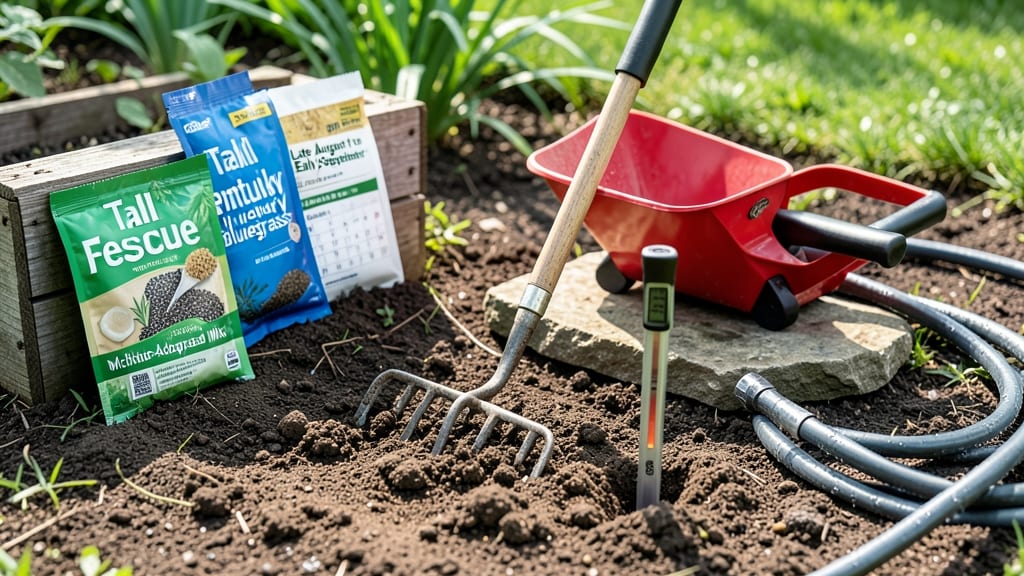
Timing your grass seed planting in Michigan can feel like guessing whether to pack an umbrella or sunglasses—because Michigan’s weather has a mind of its own.
But here’s the secret: the best results come when you plant during those narrow windows when soil temperatures and moisture align just right for fast germination.
Whether you’re in the Upper Peninsula or the Lower Peninsula, getting this right means the difference between a lawn that looks like a golf course and one that’s more patchwork quilt.
Most Michigan gardeners swear by two planting seasons: early spring (March-April) and early fall (August-September). Why? Because these months give your 🌱 grass seedlings the ideal conditions—warm soil but cool air—to establish strong roots before summer heat or winter frost hits.
Skip the middle of summer, though, and you’ll end up with seed that bakes in the heat or struggles to break through thick soil.
But here’s where it gets tricky: Michigan’s 5b-6b climate zones mean your neighbor’s perfect timing might not work for you. Soil temperature, frost dates, and even rainfall can shift your optimal window by weeks.
That’s why I’m breaking down exactly when to plant in your specific region—and how to tell if your soil is truly ready. Let’s get your lawn off to the right start.
You’ll also discover how to avoid common mistakes like planting too early (when frost can still sneak in) or too late (when weeds take over). Plus, I’ll share my go-to tips for prepping soil, watering schedules, and post-planting care that’ll have your lawn looking lush in no time.
Ready to turn that bare dirt into a green carpet?
Best months to plant grass seed in Michigan (by region & climate zone)
Michigan’s diverse climate zones—from the Upper Peninsula’s cold snaps to Southern Michigan’s milder springs—mean your ideal planting window depends on where you live. For cool-season grasses like Kentucky Bluegrass and Tall Fescue (the most common choices), timing is everything.
Plant too early, and frost will kill tender seedlings; too late, and summer heat stresses them before they establish.
The sweet spot for Michigan is early spring (March–April) or early fall (August–September), when soil temperatures hover between 50–65°F.
This range gives seeds enough warmth to germinate while avoiding the extreme heat of summer or freezing winter. Northern Michigan (USDA zones 4–5) leans toward late April–early May for spring planting, while Southern Michigan (zones 5b–6b) can start as early as March.
Fall planting is often superior in Michigan because cooler temps reduce weed competition, and seeds germinate slowly to develop deep roots before winter. Aim for late August–early September in the north and mid-September in the south, leaving enough time for roots to establish before the first frost (typically mid-October).
Here’s how your region breaks down for optimal planting:
If you’re planting warm-season grasses like Bermuda (less common in Michigan but used in some southern lawns), shift your timing to late spring (May–June) when soil temps consistently stay above 65°F.
These grasses thrive in heat but struggle with Michigan’s cold winters, so they’re not ideal for most of the state.
For cool-season blends (the best choice for Michigan), Kentucky Bluegrass germinates fastest in 55–65°F soil, while Tall Fescue and Fine Fescue tolerate slightly cooler temps (down to 50°F). Mixing varieties—like a Kentucky Bluegrass + Tall Fescue blend—gives you the best of both worlds: quick germination and durability.
One critical mistake Michigan gardeners make? Planting too early in spring and getting hit by a late frost. Check your local frost-free date (usually April 15 in the north, March 30 in the south) and wait 2–3 weeks after to be safe. Fall planting avoids this risk entirely.
🌿
How to tell if Michigan’s soil is ready for grass seed (critical signs & tools)
Planting grass seed in Michigan is a gamble if you miss the soil readiness window. The difference between a thriving lawn and wasted seed often comes down to three key factors: temperature, moisture, and weather forecasts.
Let’s break down how to check each one before you even open that seed bag.
First, grab a soil thermometer—this isn’t optional. Grass seed needs soil temps between 50°F and 65°F to germinate properly. In Michigan, this typically aligns with late April to early May for spring or mid-August to early September for fall.
Dig the thermometer 2 inches deep (where seeds will be) and wait for consistent readings in that range for at least 3-5 days.
⚠️ Warning: Late Frost Risk
Planting too early means frost damage to tender seedlings. Check the National Weather Service’s frost forecast for your area—avoid seeding if a hard freeze (below 28°F) is predicted within 7-10 days. Northern Michigan’s Upper Peninsula faces higher frost risk than Southern Michigan, so adjust your timeline accordingly.
Next, test soil moisture by squeezing a handful of dirt. It should hold together like a damp sponge—not crumble (too dry) or ooze water (too wet). If your soil is bone-dry, water it deeply 24 hours before planting to let moisture penetrate.
In Michigan’s clay-heavy soils, this might mean watering twice daily for a few days to prep the bed.
Don’t ignore the 7-day weather forecast. Aim for a stretch with consistent rainfall or your ability to water daily. Grass seed needs 1-1.5 inches of water per week during germination, and Michigan’s unpredictable spring showers can either help or hinder your efforts.
If drought is forecasted, hold off until conditions improve.
Finally, perform a quick pH test using a soil kit (available at garden centers). Michigan’s native soils often lean acidic (pH 5.5-6.5), but most grass varieties prefer neutral to slightly acidic (6.0-7.0).
If your soil is off-target, amend it with lime (to raise pH) or sulfur (to lower pH) at least 4-6 weeks before planting.
Pro tip: If you’re unsure, plant in fall—Michigan’s cooler autumn temps and steady rainfall create near-perfect conditions for grass seed. Just avoid seeding after mid-October, when frost becomes a threat. Timing is everything, and these checks will save you from costly mistakes.