
Companion Plants
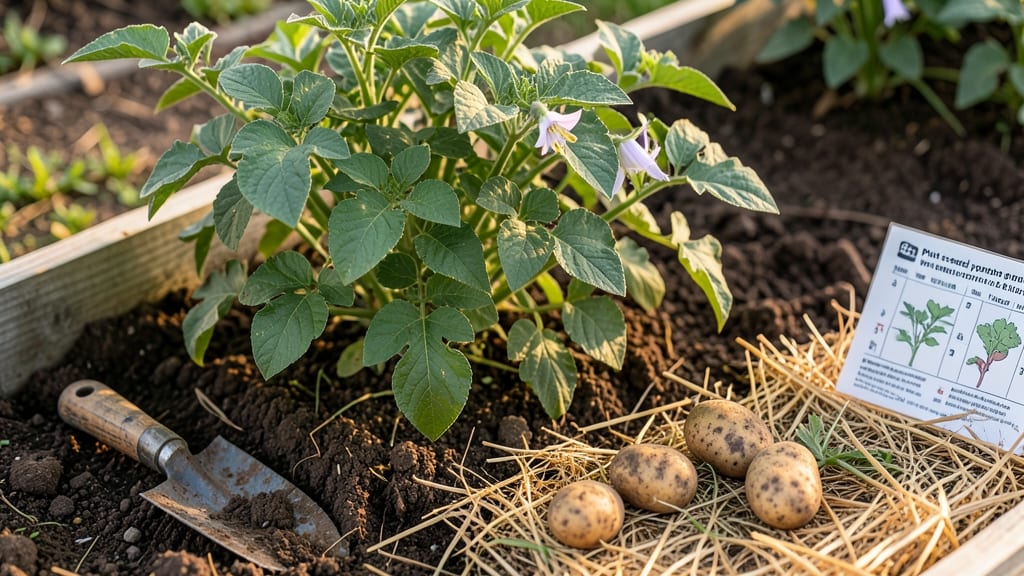
When should I plant potatoes in Michigan? Timing your potato planting isn’t just about the calendar—it’s about dodging frost, beating blight, and unlocking the sweet spot between mid-April and early May. Plant too soon, and a surprise frost will turn your sprouts into sad, mushy souvenirs. Wait too long, and you’ll be racing against late-season diseases that love Michigan’s humid summers.
I’ve grown potatoes in 5b-6b zones for years, and the difference between a bountiful harvest and a barely-there yield often comes down to knowing your last frost date—and adjusting for your potato variety.
Early varieties like ‘Red LaSoda’ can handle cooler soils, while late bloomers like ‘Russet Burbank’ need warmer temperatures to thrive. Let’s break down the exact windows you need to nail it.
You’ll also discover how to prep your soil like a pro, spot the 3 deadly mistakes Michigan gardeners make (hint: it’s not just about the date), and extend your harvest window with clever tricks for both early and late plantings.
Whether you’re a first-time grower or a seasoned veteran, these insights will help you grow potatoes that outshine the grocery store’s sad, waxy tubers.
Ready to turn your garden into a potato powerhouse? Let’s get those seed potatoes in the ground at the perfect moment—before Michigan’s weather throws you another curveball.
Michigan potato planting dates by variety: frost-date calculator guide
Michigan’s USDA Zones 4-6 mean your potato planting window hinges on last frost dates that shift from mid-April in southern Michigan to late May in the Upper Peninsula.
For most gardeners, this translates to planting between April 15 and May 15, but your exact timing depends on the potato variety you choose. Early varieties like ‘Yukon Gold’ can handle cooler soils, while late varieties like ‘Russet Burbank’ need warmer temperatures to thrive.
Soil temperature is your true planting trigger: aim for 45°F+ at a depth of 4 inches. Use a soil thermometer to check—cold soils delay sprouting and invite rot.
In northern Michigan, wait until May 1 or later, while southern Michigan gardeners can start as early as mid-April under row covers. Pro tip: Chit your seed potatoes (pre-sprout in light) 4-6 weeks before planting to jumpstart growth.
🌱
| Variety | Planting Window | Days to Maturity | Soil Temp Threshold | Notes |
|---|---|---|---|---|
| Early Varieties (Red Pontiac, Kennebec) | April 15–May 1 (Southern MI) / May 1–15 (Northern MI) | 90–110 days | 45°F+ | Cold-hardy; plant earliest for first harvest. |
| Mid-Season (Yukon Gold, Fingerlings) | April 20–May 10 (Southern MI) / May 10–25 (Northern MI) | 100–120 days | 50°F+ | Versatile; ideal for fresh eating and storage. |
| Late Varieties (Russet Burbank, Russet Norkotah) | May 1–15 (All Regions) | 120–150 days | 55°F+ | Best for baking; plant after frost risk passes. |
| Sweet Potatoes (Not True Potatoes) | May 20–June 1 (After soil warms) | 90–120 days | 60°F+ | Heat-loving; plant late for fall harvest. |
Depth matters just as much as timing: bury seed potatoes 4 inches deep with 12–15 inches between plants (rows should be 30 inches apart). Use loose, well-draining soil—Michigan’s clay-heavy soils benefit from adding compost or sand to improve drainage.
If your soil is still soggy in spring, wait until it’s crumbly and dries slightly between squeezes.
For container growing, choose 5-gallon pots with drainage holes and plant one seed potato per pot. Containers warm up faster than garden beds, so you can plant 2 weeks earlier than in-ground.
Just ensure pots get full sun (6+ hours) and water consistently—containers dry out 3x faster than garden soil.
🌿
Michigan’s late-spring frosts are the #1 enemy of early plantings. If frost is forecasted after you plant, protect seedlings with frost cloth or row covers. Remove covers during the day to allow sunlight.
Alternatively, opt for cold-hardy varieties like ‘Kennebec’ or ‘Red LaSoda’, which tolerate 32°F temperatures briefly. Monitor your local National Weather Service alerts—some years, frost lingers until May 10.
Once sprouts emerge (usually 2–3 weeks after planting), hill soil around the stems to encourage tuber formation. Repeat hilling every 2–3 weeks until the plant reaches 12 inches tall.
This protects new tubers from sunlight exposure (which turns them green and toxic) and improves yield by 20–30%. Use a straw mulch to retain moisture and suppress weeds—critical in Michigan’s humid summers.
🪴
Blight risk peaks in July and August, so time your harvest to beat the disease. Early varieties planted in April can be harvested by late June, while late varieties may need to wait until early October.
If blight appears (brown spots on leaves), harvest immediately—even if tubers aren’t fully mature. Store potatoes in a cool (40–50°F), dark, and humid (85–90%) environment
5 Critical signs your Michigan potatoes are ready to plant (and 3 deadly mistakes to avoid)
Timing your potato planting isn’t just about dates—it’s about reading your soil and sprouts. Michigan’s unpredictable spring demands you wait for these 5 key signals before digging in. First, check your seed potatoes: they should have 1–2 inch sprouts with firm, white flesh—no green or shriveled spots.
This means they’ve broken dormancy and are ready to grow.
Next, test your soil temperature. Use a soil thermometer to confirm it’s hit 45°F or warmer at 4 inches deep. Cold soil slows germination, leaving potatoes vulnerable to rot or frost damage.
If your thermometer reads below 45°F, wait another 7–10 days—patience here prevents wasted seed potatoes.
Now, focus on the weather forecast. Aim to plant when nighttime temps stay above 50°F for at least 5 consecutive days. Check the National Weather Service or your local MSU Extension office for frost warnings.
Even a light frost can kill young sprouts, setting back your harvest by weeks.
- 1-inch+ sprouts with firm, white flesh (no green or shriveled areas).
- Soil temp of 45°F+ at 4"—use a thermometer to confirm.
- 5-day forecast with nights above 50°F and no frost warnings.
- Workable soil: crumbles easily when squeezed (not muddy or rock-hard).
- Sun exposure: planting site gets 6+ hours of sunlight daily.
Here’s where Michigan gardeners often go wrong. Mistake #1: Planting after frost warnings appear. Even if your sprouts look ready, a single frost can kill emerging plants. Mistake #2: Ignoring soil pH. Test your soil—potatoes thrive in pH 5.0–6.5.
If it’s off, amend with sulfur (to lower pH) or lime (to raise it) 2–3 weeks before planting. Mistake #3: Overcrowding rows. Space potatoes 12–15 inches apart in rows 30 inches apart to prevent disease spread and ensure proper tuber growth.
Pro tip: Chit your seed potatoes 4–6 weeks before planting by placing them in a bright, cool spot (50–60°F). This jumpstarts sprout growth so you’re ready when Michigan’s frost-free window opens. Once planted, hill soil around stems as they grow to prevent greening and encourage larger tubers.
Finally, avoid planting in soggy soil. Potatoes need well-draining soil to prevent rot. If your garden held water after recent rains, wait until the top 6 inches dry out before planting.
With these signs and mistakes in mind, you’ll time your planting perfectly for Michigan’s short but sweet growing season.