
Companion Plants
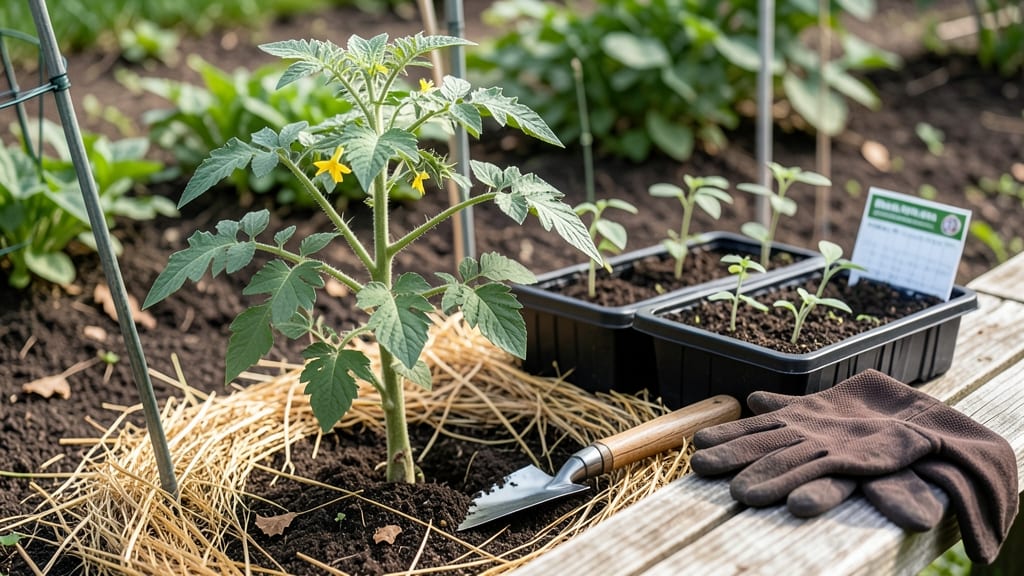
If you're asking "when should I plant tomatoes in Missouri", timing is the secret weapon between a thriving 🍅 harvest and a sad, wilted disappointment. Missouri’s 5b-6b climate zones mean your neighbors might be picking ripe tomatoes while you’re still waiting for seedlings to take root.
The key is planting after the last frost—typically late April to early June—but not so late that your 60-day varieties miss their prime growing window.
I’ve learned the hard way that rushing seedlings into cold soil or waiting too long can turn your garden dreams into a summer of regret.
In this guide, I’ll break down the exact frost dates by region, the best tomato varieties for Missouri’s short growing season, and pro tips to stretch your harvest from June to October.
Whether you’re a first-time gardener or a seasoned green thumb, these insights will help you maximize your yield without guessing.
Let’s get your tomatoes in the ground at the perfect moment—so you’re feasting on homegrown slices instead of dreaming about them.
Missouri last frost dates by region: when to plant tomatoes for high-yield seasons
Missouri’s diverse climate zones mean your tomato planting schedule should align with your specific region—not just the state average. The last frost date is your golden rule: plant tomato seedlings only after this date, when soil warms to at least 60°F.
In Missouri, this window spans from late April in southern regions to mid-May in northern areas.
For example, St. Louis (Central Missouri) typically sees its last frost around April 15, while Kansas City (Northwest) waits until April 25. Meanwhile, Southeast Missouri (like Cape Girardeau) can start as early as April 5.
These variations matter because tomatoes hate cold—even a light frost can kill seedlings or stunt growth.
| Region | Last Frost Date | Safe Planting Window | Tomato Variety Tips |
|---|---|---|---|
| Northwest (e.g., Kansas City) | April 25 | May 1–10 | Early varieties (45–55 days) like 'Early Girl' or 'Stupice' |
| Northeast (e.g., Columbia) | April 20 | April 25–May 5 | Mid-season (60–75 days) like 'Better Boy' or 'Celebrity' |
| Central (e.g., St. Louis) | April 15 | April 20–May 1 | Heat-tolerant varieties like 'Solar Fire' or 'Heatmaster' |
| Southwest (e.g., Springfield) | April 10 | April 15–25 | Disease-resistant like 'Mountain Merit' or 'Defiant PhR' |
| Southeast (e.g., Cape Girardeau) | April 5 | April 10–20 | Long-season (80+ days) like 'Brandywine' or 'Cherokee Purple' |
Missouri’s first frost usually arrives around October 15, but this can shift 1–2 weeks earlier in northern zones. If you’re growing late-season varieties, use row covers or cold frames to extend harvests into September.
For example, 'Big Beef' tomatoes need 85 days to mature, so plant them by May 1 in Central Missouri to avoid frost.
Pro tip: Check your local Cooperative Extension Service for hyper-local frost data. Their frost-free days calculator can adjust planting dates based on your exact ZIP code.
For instance, Joplin (Southeast) might have 10 extra frost-free days compared to Sedalia (Central), giving you a longer window for heirloom varieties.
Don’t forget soil temperature—it’s just as critical as air temperature. Use a soil thermometer to confirm readings of 60°F or higher before planting. Cold soil slows root growth, leaving seedlings vulnerable to damping-off disease.
In northern Missouri, this might mean waiting until early June for reliable soil warmth.
For container gardening, warm soil heats up faster, so you can plant 1–2 weeks earlier than in-ground. Place pots in south-facing spots and use black plastic mulch to raise soil temperatures by 5–10°F.
This trick works especially well for cherry tomato varieties, which mature quickly and benefit from early starts.
If you’re starting seeds indoors, begin 6–8 weeks before your last frost date. For Central Missouri, that means March 1–15. Use grow lights to prevent leggy seedlings, and harden them off for 1 week before transplanting.
Seedlings should have 4–6 true leaves and be 3–4 inches tall when you move them outside.
Missouri’s humidity and summer heat can stress tomatoes, so timing matters. Plant early varieties in late April to avoid July heat waves, while
Best tomato varieties for Missouri’s short vs. long growing seasons
Choosing the right tomato varieties for Missouri means balancing maturity time with your region’s frost-free window. In my 5b-6b climate, early-maturing varieties can mean the difference between a bountiful harvest and a disappointing yield.
For example, if you’re in northwest Missouri with only 160 frost-free days, a 60-day variety like ‘Early Girl’ is your best bet.
Mid-season varieties like ‘Better Boy’ or ‘Celebrity’ (70-80 days) thrive in central and southern Missouri, where the growing season stretches to 180 days. But even there, late starts can leave you scrambling.
I’ve seen gardeners in St. Louis swear by heat-tolerant hybrids like ‘Heatmaster’ to avoid blossom drop in 90°F+ temps.
Here’s how to match varieties to your local growing season:
Early-Maturing Varieties (45–55 Days)
- Perfect for short seasons (northwest/southeast MO)
- Early harvests reduce disease risk
- Great for container gardening
- Smaller fruit size
- Limited heat tolerance
- Fewer disease-resistant options
Mid-Season Varieties (60–75 Days)
- Balanced yield and size
- More disease-resistant options
- Adaptable to Missouri’s humidity
- Risk of late-season frost in north MO
- Need staking/caging for support
- Slower to mature than early types
Late-Season Varieties (80+ Days)
- Large, heirloom-quality fruit
- Extended harvest window
- Great for canning and sauces
- Only viable in south/southeast MO
- Requires longer growing season
- More susceptible to disease
For Missouri’s humidity, I always recommend disease-resistant hybrids like ‘Mountain Merit’ (VFN-resistant) or ‘Bush Early Girl’ for smaller spaces. And if you’re dealing with late spring frosts, consider ‘Stupice’, a cold-tolerant variety that can handle 45°F nights.
Pro tip: If you’re in northwest Missouri, pair early varieties with row covers to extend your season by 2-3 weeks. I’ve added 10 extra days to my harvest just by using floating row covers after transplanting.
Remember, soil temperature matters just as much as air temperature—aim for 60°F+ soil to avoid blossom end rot. Use a soil thermometer to check before planting.