
Plants
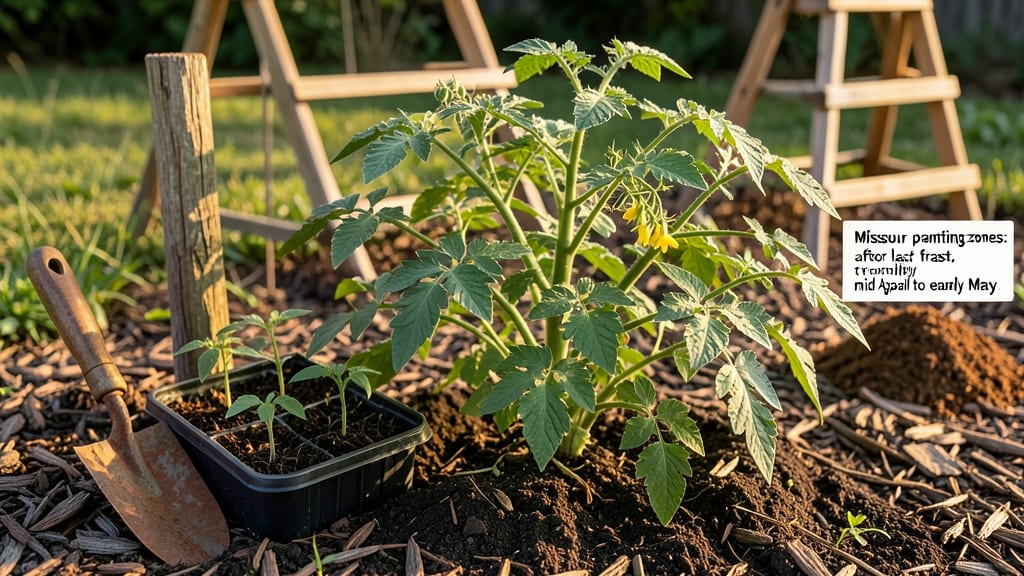
Planting tomatoes in Missouri at the wrong time can mean the difference between a bumper crop of juicy 🍅 and a season of disappointment.
The key isn't just waiting for spring—it's knowing the precise 4-6 week window before your last frost date to start seeds indoors or transplant seedlings, depending on your variety and microclimate.
Missouri's Zone 5b-6b climate throws some curveballs, with frost dates ranging from mid-April in southern regions to early May in northern areas. That means your planting timeline should shift 2-3 weeks depending on where you live in the state.
Get this wrong, and you'll either have stunted plants struggling with cool soil or miss the growing season entirely.
I've helped Missouri gardeners like you nail this timing for years, and the secret lies in understanding your specific variety's needs. Determinate tomatoes (bush types) can handle cooler soils better than their vining counterparts, while heirlooms often need more time to mature.
Let me show you exactly when to start each type for a harvest from June through October.
We'll cover everything from soil temperature requirements (60°F+) to adjusting for urban heat islands, so you can plant with confidence—no more guessing games. Ready to grow tomatoes that thrive in Missouri's climate? Let's get started.
Missouri tomato planting schedule by variety: weeks before last frost guide
Missouri’s Zone 5-6 climate means your tomato planting timeline depends on whether you’re in southern Missouri (Zone 6) or northern Missouri (Zone 5).
The average last frost dates range from April 15 in the south to May 1 in the north, but soil temperature is just as critical—tomatoes need 60°F+ soil to thrive. Start planning now to avoid the common mistake of planting too early and risking frost damage.
For determinate varieties (bush tomatoes like 'Roma' or 'Celebrity'), you’ll want to transplant 2-3 weeks before last frost since they mature faster. Indeterminate varieties (vining types like 'Brandywine' or 'Better Boy') need 4-6 weeks before last frost because they grow all season.
Heirlooms often fall in between, requiring 3-4 weeks of lead time. Let’s break down the exact weeks for each type.
| Variety Type | Weeks Before Last Frost | Indoor Seed Start | Transplant Window | Soil Temp Requirement |
|---|---|---|---|---|
| Determinate (Bush) | 2-3 weeks | 6-8 weeks before last frost | April 15 (south) - May 1 (north) | 60°F+ |
| Indeterminate (Vining) | 4-6 weeks | 8-10 weeks before last frost | April 30 (south) - May 15 (north) | 60°F+ |
| Heirloom | 3-4 weeks | 7-9 weeks before last frost | April 20 (south) - May 5 (north) | 60°F+ |
If you’re starting seeds indoors, begin 6-10 weeks before last frost depending on the variety. For example, in St. Louis (Zone 6), that means starting determinate seeds by March 1 and indeterminate seeds by February 15.
Use grow lights to provide 14-16 hours of light daily—tomato seedlings stretch toward weak light, becoming leggy and weak. Harden off seedlings for 7-10 days before transplanting to acclimate them to outdoor conditions.
For direct sowing outdoors, wait until soil temperatures consistently reach 60°F+, which typically aligns with mid-April in southern Missouri and late April to early May in northern areas. Use a soil thermometer to confirm—cold soil slows germination and weakens seedlings.
If you’re in doubt, opt for transplanting seedlings instead of direct sowing, as they’ll establish faster and outperform slower-starting seeds.
Missouri’s microclimates can shift planting windows by 1-2 weeks. Urban areas like Kansas City often experience warmer soils earlier than rural zones, while northern Missouri (e.g., Columbia or St. Joseph) may need to wait until mid-May for safe transplanting.
Check local Missouri Botanical Garden resources or your county extension office for hyper-localized frost date data.
One pro tip for Missouri gardeners: use black plastic mulch to warm soil and extend your planting window by 1-2 weeks. Lay it down 2-3 weeks before planting to raise soil temperatures faster.
Pair this with row covers if late frosts threaten—these can protect seedlings until May 10-15 in cooler zones. Just remove covers during the day once temperatures exceed 70°F to prevent overheating.
Timing isn’t just about frost—it’s also about nighttime temperatures. Tomatoes thrive when nighttime temps stay above 55°F. In northern Missouri, this often means waiting until May 15 to avoid stunted growth.
Use a minimum-maximum thermometer to track nighttime lows and adjust your planting date accordingly. Early varieties like 'Stupice' or 'Mountain Merit' are more cold-tolerant and can handle slightly cooler nights.
Finally, don’t forget to prep your soil 2-3 weeks before planting. Tomatoes thrive in well-draining, slightly acidic soil (pH 6.0-6.8). Amend your beds with compost or aged manure and avoid fresh nitrogen-rich fertilizers, which can lead to leafy growth at the expense of fruit.
If your soil is slow to warm, consider planting in raised beds
5 Critical factors that determine your Missouri tomato planting success
Missouri’s last frost dates (April 15 in southern regions to May 1 in northern areas) are just the starting point—not the only factor. Your tomato plants also need soil temperatures above 60°F and consistent nighttime temps above 55°F to thrive.
Without these, even well-timed seedlings can struggle, leading to blossom drop or stunted growth. I’ve planted tomatoes in Missouri for over a decade, and I can tell you: soil warmth matters more than frost dates.
Another game-changer is your microclimate. Urban areas like St. Louis often experience heat islands that warm up faster than rural zones, while valleys can stay cooler longer. Even a 10°F difference in nighttime temps can shift your ideal planting window by 1-2 weeks.
For example, if you’re in a cooler microclimate, indeterminate varieties (like 'Better Boy') may need extra time to mature before Missouri’s first frost in October.
Missouri’s soil pH (ideal: 6.2-6.8) and organic matter content also play a role. Heavy clay soils common in northern Missouri retain moisture but drain poorly, while sandy soils in southern regions dry out faster.
Amending your soil with compost or aged manure 4-6 weeks before planting ensures your tomatoes get the nutrients they crave—especially phosphorus for root development and potassium for fruit production.
🌱 Critical Factors for Missouri Tomato Success
- Soil Temperature: Must stay above 60°F for 7+ days before transplanting.
- Nighttime Temps: Avoid transplanting when nights dip below 55°F—this triggers blossom drop.
- Microclimate: Urban areas warm up 1-2 weeks earlier than rural zones. Check your local USDA Zone (5b-6b) for precision.
- Soil Type: Amend clay soils with sand/compost; sandy soils need organic matter to retain moisture.
- Pest Pressure: Missouri’s hornworms and early blight thrive in humid conditions—plant resistant varieties like 'Mountain Merit' if pests are a concern.
Don’t overlook pest and disease risks tied to Missouri’s climate. Early blight, a fungal disease, thrives in humid, rainy springs—common in southern Missouri. To mitigate this, use disease-resistant varieties (look for 'V' or 'F' prefixes, like 'Mountain Merit' or 'Defiant PhR').
Meanwhile, hornworms (those green caterpillars with white stripes) can devour your plants in days if left unchecked. Handpick them early in the morning when they’re sluggish, or introduce beneficial nematodes to your soil.
For gardeners in northern Missouri (Zone 5b), extending the season with row covers or a cold frame can add 2-3 weeks of growing time. I’ve used floating row covers to transplant tomatoes as early as mid-April in my St. Louis garden, shaving off 10-14 days from the typical timeline.
Just remember: remove covers during pollination (use a small mesh window) to avoid interfering with bees.
Finally, watering habits can make or break your tomatoes. Missouri’s summer heat (often exceeding 90°F) increases water needs, but overhead watering at night can promote fungal diseases. Instead, water deeply in the morning (1-2 gallons per plant) and mulch heavily with straw or shredded leaves to retain moisture.
Pro tip: Drip irrigation keeps foliage dry and reduces disease risk—worth the investment for heavy yields.