
Plants
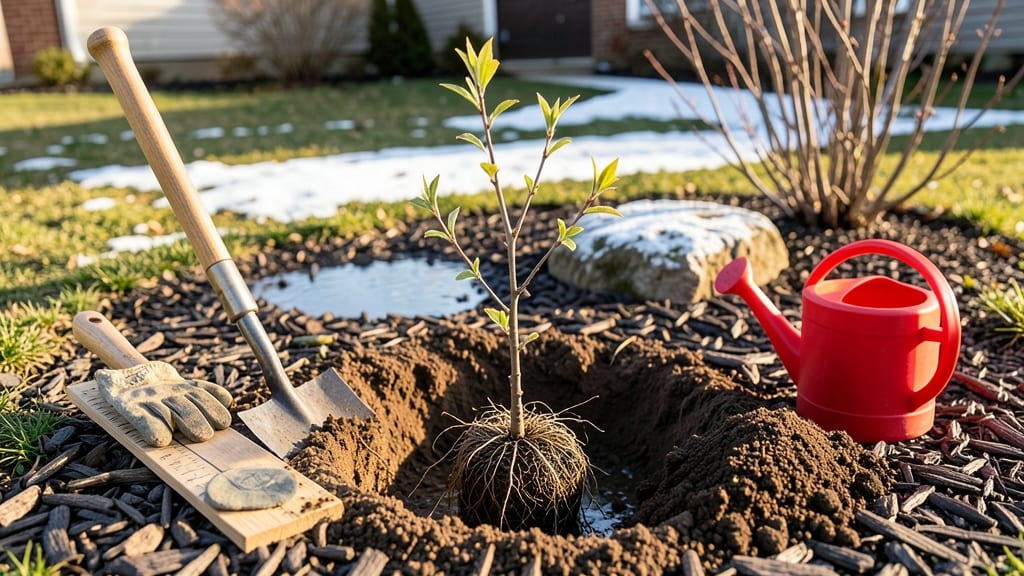
Timing your tree planting in Colorado can make or break your 🌳’s survival—especially when elevation zones shift from Denver’s 5b to Colorado Springs’ 6a. Plant too early, and a late frost will shock tender roots; too late, and your sapling might struggle to establish before winter.
The best window is narrow but critical: late spring to early fall, when soil temperatures rise and frost risks fade.
Why does this matter? Because Colorado’s microclimates create wildly different conditions—even within 50 miles. A tree planted in April in Denver might thrive, while the same timing in the mountains could spell disaster.
I’ll break down the exact months for your elevation zone, so you avoid common pitfalls like late frosts or drought stress.
You’ll also discover which tree species handle Colorado’s short growing seasons best—from drought-resistant pines to hardy oaks—and how to prep your soil for maximum root growth. Whether you’re a first-time planter or a seasoned gardener, getting this right means years of shade, wildlife support, and curb appeal without the guesswork.
Let’s dive into the optimal planting calendar, species recommendations, and pro tips to ensure your tree doesn’t just survive—it thrives. Your future shade (and wallet) will thank you.
Colorado tree planting calendar by elevation zone (with exact months)
Colorado’s three distinct elevation zones create wildly different planting conditions. At 3,000–6,000 feet (Denver, Fort Collins), spring arrives earlier, but 6,000–8,000 feet (Colorado Springs, Boulder) faces delayed soil warming. Above 8,000 feet (mountain towns), frost lingers until June.
I’ll break down the optimal planting windows for each zone, including critical deadlines to avoid frost damage or summer drought stress.
For lowland areas (3,000–6,000 ft), aim to plant 3–4 weeks after your last frost date—typically mid-April to early June. In Denver (Zone 5b), this means waiting until April 20–May 10 to ensure soil temperatures stay above 50°F.
Evergreens like Ponderosa pine can handle slightly earlier planting, but deciduous trees like American elm need warmer soil to root successfully.
Foothills (6,000–8,000 ft) shift your timeline 2–3 weeks later. Colorado Springs (Zone 6a) sees last frosts around May 1, so late May to early July is ideal. Russian olive and green ash thrive here but require well-draining soil to avoid root rot from spring snowmelt. Plant too early, and you risk late frost damage—a common pitfall in this zone.
At 8,000+ feet, patience is key. Mountain towns like Frisco (Zone 4) often wait until late May to June for soil to thaw and stabilize. Engelmann spruce and quaking aspen are native choices, but even they need 60+ frost-free days to establish.
Use container-grown trees for flexibility—these adapt better to delayed planting.
Here’s the critical rule: Never plant after August 15 in any zone. Trees planted too late struggle to harden off before winter, leading to root dieback.
In Denver, first frosts hit October 15; in mountain areas, they arrive by September 15. Give your tree 8–10 weeks of growth before dormancy.
Pro Tip: Check the Colorado State University Extension’s frost maps for your exact location. Their data accounts for microclimates (e.g., urban heat islands in Denver vs. cooler mountain valleys). For example, Boulder’s last frost often occurs 10 days later than Denver’s due to its higher elevation and urban heat.
Soil temperature matters more than air temperature. Use a soil thermometer to confirm 50°F+ at 6 inches deep before planting. In dry years, mulch with 3–4 inches of wood chips to retain moisture and regulate temperature. Avoid plastic mulch—it overheats roots in Colorado’s intense summer sun.
Container-grown trees are your best bet for late spring plantings. Their established root systems recover faster from transplant shock. Bare-root trees, however, must be planted in early spring (March–April) when dormant. If you’re using bare-root stock, soak roots for 4–6 hours before planting to prevent desiccation.
Watch for late-spring hail, common in Colorado’s foothills and mountains. Plant near windbreaks or use tree guards to protect young shoots. Evergreens like blue spruce are more resilient, but deciduous trees may need extra mulch to insulate roots during unpredictable cold snaps.
🌱Visual Guide: Colorado Tree Planting Calendar by Elevation🌱
5 Signs you’re planting too late (and how to adjust)
Colorado’s unpredictable weather and elevation shifts can turn a late planting into a disaster if you miss key cues. Even if the calendar says it’s June or July, your tree might still be struggling to establish roots before winter. Here’s how to spot the warning signs—and what to do about them.A yellowing or wilting tree after planting is the first red flag. This often means the roots aren’t anchoring properly due to late planting stress.
If your tree’s leaves are drooping or turning yellow within 2–4 weeks of planting, it’s a sign the roots haven’t had time to adjust to the soil. Evergreens are especially sensitive—if their needles are browning at the tips, they’re likely water-stressed from being planted too late in the season.
Another warning sign is stunted growth or no new leaves after 6–8 weeks. If your tree isn’t showing signs of new growth by late summer, it may not have enough time to harden off before winter.
This is common in high-elevation areas (above 8,000 ft) where the growing season is shorter. Deciduous trees like oak or maple should show new leaf buds by mid-summer if planted at the right time.
Check the soil temperature—if it’s still below 50°F (10°C), your tree’s roots are struggling to grow.
Use a soil thermometer to test; if the top 6 inches of soil haven’t warmed up, it’s too late for bare-root trees. Container-grown trees can handle slightly cooler soil, but even they’ll struggle to establish if planted after mid-August in most of Colorado.
Planting too late can lead to:
- Root rot from overwatering (roots can’t dry out in cold soil)
- Frost damage if roots aren’t established before winter
- Weak growth the following spring (or no growth at all)
🌱 Solution: If you’ve missed the window, opt for container-grown trees (they establish faster) or use root stimulants like mycorrhizal fungi.
If your tree is dropping leaves prematurely (before autumn), it’s a sign of transplant shock from late planting. This is especially common with broadleaf evergreens like maple or birch.
To help, mulch heavily (3–4 inches of organic mulch) to insulate roots and water deeply once a week until the first frost. Avoid fertilizing—it’ll stress the tree further.
For high-elevation areas (above 8,000 ft), even June planting can be risky. If you’re in this zone, prioritize cold-hardy species like Colorado blue spruce or Engelmann spruce, which can tolerate shorter growing seasons.
If you’ve already planted, protect young trees with burlap wraps or tree guards to shield them from late-season hail or early snow.
Don’t give up on a late planting—adjust your care to give your tree the best shot. Focus on deep watering, mulching, and avoiding stress (like pruning or fertilizing). With the right approach, even a late-planted tree can thrive—just give it extra love until next spring. 🌳