
Trees
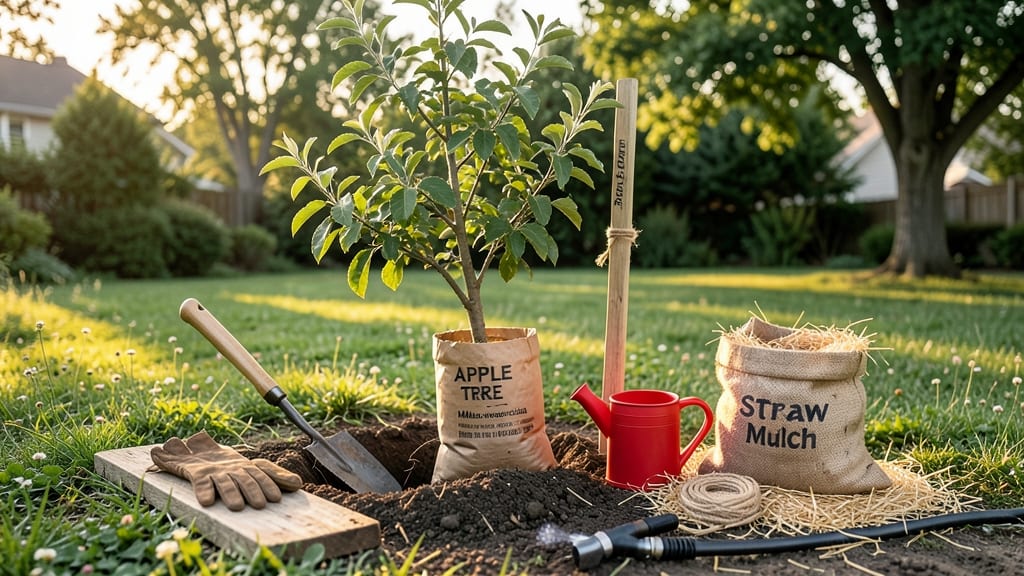
Planting an apple tree 🍎 in North Carolina at the wrong time could mean the difference between a thriving orchard and years of disappointment. The key isn't just picking the right season—it's matching your variety to the region's unique chill hours and frost patterns, especially across zones 6a-8a.
If you've ever wondered why some trees bloom beautifully while others struggle, the answer lies in timing. North Carolina's diverse climate means what works in the Piedmont might fail in the Coastal Plain, and vice versa.
I'll show you exactly when to plant—whether you're working with bare-root saplings or container-grown trees—to set your orchard up for success.
From late winter dormancy to early spring awakening, we'll cover the ideal planting window of February through April and how to prepare your soil for maximum root growth. You'll also learn which varieties thrive in your specific microclimate, ensuring those first blooms translate into fruit.
Skip the guesswork and plant with confidence. By the end, you'll know not just when to plant, but how to give your apple trees the best start possible—so you can enjoy homegrown harvests from August through October.
North Carolina apple tree planting timeline by chill-hour requirements
North Carolina's diverse climate—from the Coastal Plain to the Mountains—means chill-hour needs dictate when and where to plant apple trees. Most varieties require 200-1,000 chill hours (temperatures between 32°F and 45°F) to bloom properly.
If you plant the wrong variety in the wrong zone, you’ll end up with failed blooms or no fruit at all.
For example, high-chill varieties like 'Granny Smith' (900+ hours) thrive in the Mountains (Zone 6a), while low-chill types such as 'Ein Shemer' (300-500 hours) flourish in the Coastal Plain (Zone 8a). Matching your tree to your zone ensures reliable fruit production year after year.
Here’s a quick breakdown of planting windows by chill-hour category and region:
| Chill-Hour Category | Best Planting Window | NC Regions | Key Varieties |
|---|---|---|---|
| Low-Chill (300-600 hrs) | Late February - April | Coastal Plain (Zone 8a), Piedmont (Zone 7b) | 'Ein Shemer', 'Akane', 'Zestar!' |
| Mid-Chill (600-900 hrs) | Mid-February - March | Piedmont (Zone 7a), Foothills (Zone 7b) | 'Gala', 'Fuji', 'Honeycrisp' |
| High-Chill (900+ hrs) | January - Early February | Mountains (Zone 6a) | 'Granny Smith', 'McIntosh', 'Jonathan' |
In the Coastal Plain (Zone 8a), where winters are milder, aim to plant bare-root trees in late February or March to avoid early spring warmth that can trick trees into blooming too soon.
Meanwhile, in the Mountains (Zone 6a), plant high-chill varieties as early as January to ensure they get enough cold exposure before bud break.
If you’re in Zone 7a or 7b (like Raleigh or Charlotte), focus on mid-chill varieties planted in February. These trees balance cold requirements with warmer winters, reducing the risk of late frost damage to blossoms.
Always check your last frost date (typically March 15 in Zone 7a) to time planting for root establishment before growth resumes.
For container-grown trees, you have more flexibility—plant anytime except during extreme cold (below 20°F). However, bare-root trees must go into the ground while dormant (no leaves) to minimize transplant shock. Soak roots in water for 1-2 hours before planting to rehydrate them.
Pro tip: If you’re unsure about your chill-hour total, use a chill-hour calculator (like the one from the NC State Extension) or ask your local nursery. They can recommend varieties that match your microclimate—whether you’re in a valley, on a hillside, or near the coast.
Once planted, mulch around the base with 3-4 inches of wood chips to retain moisture and regulate soil temperature. This is especially critical in drought-prone areas like the Sandhills region, where soil can dry out quickly in spring.
Finally, avoid planting in summer or fall—apple trees struggle to establish roots in hot or freezing conditions. Stick to the late winter/early spring window, and your trees will reward you with abundant blooms and juicy apples for years to come. 🌱
North Carolina apple tree planting timeline by chill-hour requirements
North Carolina's diverse climate—from the Coastal Plain's mild winters to the Mountains' chilly nights—means chill-hour needs dictate your apple tree's success. Most NC varieties require 300-900 chill hours, but planting timing varies dramatically by zone and variety.
For example, Zone 6a (Mountains) can plant high-chill varieties like 'Granny Smith' in February, while Zone 8a (Coastal Plain) should wait until March-April for low-chill 'Ein Shemer'.
Understanding your last frost date is critical. In Asheville (Zone 6a), the average last frost is March 15, while Raleigh (Zone 7b) sees it by February 28.
Planting bare-root trees 2-4 weeks before bud break (when 50% of buds show color) gives roots time to establish before active growth. Container-grown trees offer more flexibility but still need soil temperatures above 40°F.
| Chill-Hour Range | Recommended Varieties | Best Planting Window (NC) | Zone Fit |
|---|---|---|---|
| 300-600 hrs | 'Ein Shemer', 'Akane', 'Zestar!' | March-April (Zones 7b-8a) | Coastal Plain, Piedmont |
| 600-900 hrs | 'Fuji', 'Gala', 'Honeycrisp' | February-March (Zones 6b-7b) | Piedmont, Foothills |
| 900+ hrs | 'Granny Smith', 'McIntosh', 'Cortland' | Late January-February (Zones 6a-6b) | Mountains |
⚠️ Pro Tip: Use a chill-hour calculator (like NC State Extension's) to match varieties to your exact microclimate.
For bare-root trees, prioritize planting in late winter (February-March) when soil is workable but before buds swell. This window—6-8 weeks before last frost—lets roots establish without competing with foliage growth.
In warmer zones (7b+), early March planting reduces heat stress risks. Container-grown trees can go in year-round, but avoid extreme heat (90°F+) or freezing temps.
Soil temperature matters just as much as air temperature. Use a soil thermometer to confirm 45°F+ before planting. In Zone 6a Mountains, this often means waiting until mid-March, while Zone 8a Coastal Plain gardeners can start in late February.
Amend heavy clay soils with compost or sand to improve drainage—a critical factor for root health in NC's varied landscapes.
Don't overlook rootstock compatibility. Dwarfing rootstocks like M.9 or B.9 thrive in warmer zones (7b+), while standard rootstocks suit cooler Mountain regions. Pairing the right rootstock with your variety ensures optimal growth and fruit production.
For example, 'Honeycrisp' on M.9 rootstock works in Zone 7a, but the same variety on MM.106 rootstock performs better in Zone 6b.
After planting, mulch heavily (4-6 inches of wood chips) to retain moisture and regulate soil temperature. In drought-prone Piedmont, mulch reduces watering needs by 30-50%. Water deeply once weekly for the first two months, then taper to bi-weekly once established.
Avoid overhead watering to prevent fungal diseases like apple scab, common in NC's humid summers.