
Plants
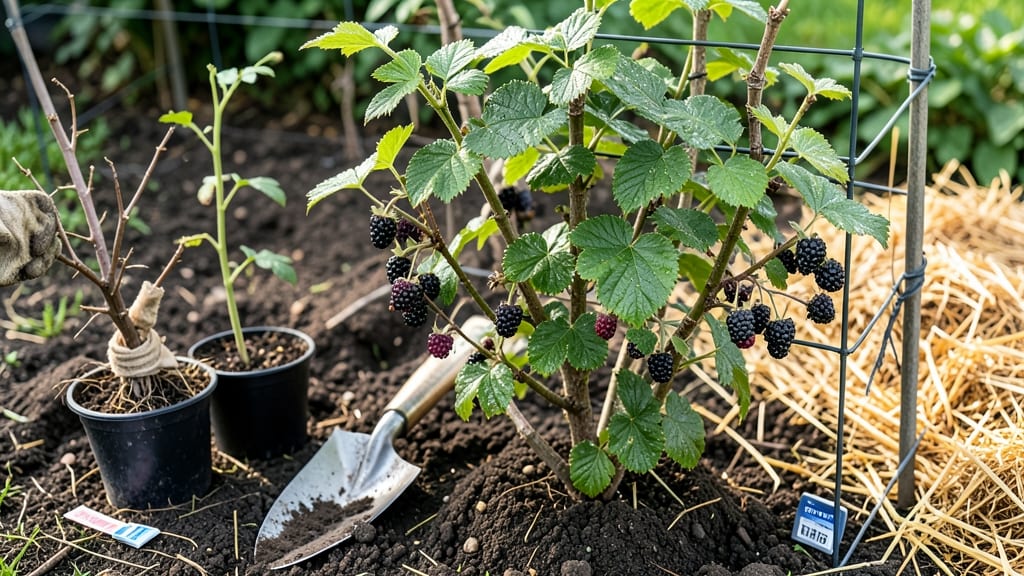
If you've ever dreamed of plucking juicy, ripe 🫐 blackberries straight from your Tennessee backyard, timing your planting is the game-changer that separates success from disappointment.
The right window isn't just about avoiding frost—it's about matching your blackberry variety to Tennessee's unique chill-hour zones to guarantee sweet, abundant harvests every summer.
Tennessee's climate varies dramatically from the cooler mountains of the east to the warmer valleys in the west, and these differences directly impact when you should plant.
Whether you're in Zone 6a or Zone 7b, understanding your local frost dates and chill requirements is the first step to growing thriving blackberry bushes that produce for years.
Most gardeners in Tennessee plant their blackberries in either late winter or fall, but which option works best for your region?
I'll break down the ideal planting months for each part of the state, including soil prep tips and how to protect your young plants from unpredictable spring frosts that can derail your harvest before it even begins.
By the end of this guide, you'll know exactly when to plant for maximum yield, which varieties thrive in your specific area, and how to extend your harvest season with simple techniques. Let's get those blackberries growing!
Tennessee’s chill-hour zones: how they dictate blackberry planting timing
Tennessee’s diverse climate—from the Appalachian Mountains in the east to the Mississippi Delta in the west—creates distinct chill-hour zones that directly impact when you should plant blackberries. These zones measure the number of hours below 45°F (7°C) your plants need to break dormancy and produce fruit.
Most blackberry varieties require 300-1,000 chill hours, but choosing the wrong type for your zone can lead to poor yields or no berries at all.
For example, East Tennessee (USDA Zones 6a-7a) typically accumulates 700-1,000 chill hours, making it ideal for traditional varieties like Natchez or Cheyenne. Meanwhile, West Tennessee (Zones 7b-8a) often sees only 300-500 chill hours, requiring low-chill varieties such as Prime-Ark Freedom or Arapaho.
Ignoring these differences can mean your blackberries bloom but fail to fruit—or worse, die from winter stress.
Chill-hour mismatches are the #1 reason blackberry gardens fail in Tennessee. If you plant a high-chill variety in Memphis (Zone 7b), it may never produce berries because it won’t get enough cold exposure. Conversely, planting a low-chill variety in Knoxville (Zone 6a) could result in weak growth or disease susceptibility. Always check your local chill-hour data before selecting varieties.
To simplify, I’ve broken down Tennessee’s three key regions and their ideal blackberry varieties based on chill hours. This ensures you pick plants that thrive in your specific microclimate, maximizing your harvest potential.
| Region | Chill Hours | Best Varieties | Planting Window |
|---|---|---|---|
| East Tennessee | 700-1,000 | Natchez, Cheyenne, Triple Crown | Late Feb - Early April |
| Middle Tennessee | 500-700 | Prime-Ark Freedom, Ouachita, Apache | Mid-March - Mid-April |
| West Tennessee | 300-500 | Arapaho, Choctaw, Osage | Early April - Early May |
Understanding your chill-hour zone isn’t just about picking the right variety—it also determines the best planting time. For instance, in East Tennessee, where winters are colder, you can plant as early as late February because the soil thaws sooner.
In contrast, West Tennessee’s warmer winters mean you should wait until early April to avoid frost damage to young canes.
Another critical factor is soil temperature. Blackberry roots need the ground to reach at least 50°F (10°C) before planting. In Tennessee, this usually aligns with late March to early April for most regions, but elevation plays a role.
High-altitude areas like Great Smoky Mountains may need to wait until mid-April, while lower elevations in Shelby County can start earlier.
If you’re unsure about your chill hours, check with your local Cooperative Extension Service—they often provide free soil and climate data. For example, the UT Extension in Knoxville or UTIA in Jackson can give you precise numbers for your county.
This small step saves you from costly mistakes like planting too early and risking frost damage or too late and missing the optimal growth window.
Once you’ve matched your variety to your chill hours, the next step is preparing your soil. Blackberries thrive in slightly acidic soil (pH 5.5-6.5) with good drainage.
If your soil is heavy clay or too alkaline, amend it with compost or peat moss at least 4-6 weeks before planting. This gives microbes time to break down organic matter and improve root health.
Pro tip: Test your soil in early spring before planting. Many garden centers offer DIY test kits for under $20, or you can send a sample to a lab for a detailed analysis.
Adjusting pH and fertility now ensures your blackberries get off to a strong start, setting the stage for a bountiful harvest in late summer.
Best planting months by Tennessee region: a month-by-month breakdown
Tennessee’s diverse climate means your blackberry planting window depends entirely on where you live. East Tennessee’s cooler temperatures and higher chill hours (500-1,000) allow earlier planting, while West Tennessee’s milder winters (300-500 chill hours) demand later starts.
Let’s break it down by region to avoid frost damage and maximize your harvest.
For East Tennessee (e.g., Knoxville, Chattanooga), aim to plant bare-root canes in late February to early March. Soil temperatures should reach at least 45°F to prevent root rot.
If planting in fall, choose September to early October—this gives roots time to establish before winter’s first frost (November 1 in most areas).
In Middle Tennessee (Nashville, Murfreesboro), your window shifts slightly later: mid-March to early April for spring planting. Fall planting works too, but stick to September—October can be too close to the first frost (typically mid-November). Soil prep here is critical; amend with compost to improve drainage.
- East TN: Late Feb - Early Mar (Spring) / Sep - Early Oct (Fall)
- Middle TN: Mid-Mar - Early Apr (Spring) / Sep (Fall)
- West TN: Late Mar - Early Apr (Spring) / Oct (Fall)
West Tennessee gardeners (Memphis, Jackson) have the shortest window: late March to early April for spring. Fall planting here is risky unless you’re in October, as frost can arrive as early as mid-November.
Focus on well-draining soil—West TN’s clay-heavy soils need amendments like sand or peat moss to prevent waterlogging.
Regardless of region, avoid planting in May or June. Blackberries need chill hours to flower properly, and late planting often results in poor fruiting. If you miss your ideal window, consider container growing—it gives you more control over soil temperature and moisture.
Always check your local frost dates (USDA Zone 6a-7b) and plan accordingly. For example, if your last frost is March 20, wait until mid-April to plant in Middle TN. Use a soil thermometer to confirm readiness—roots won’t thrive in cold soil.
Timing your blackberry planting right ensures your bushes enter dormancy strong and burst into growth come spring. With these regional guidelines, you’ll be well on your way to a bountiful harvest by June or July—just in time for fresh jams and pies! 🫐