
Plants
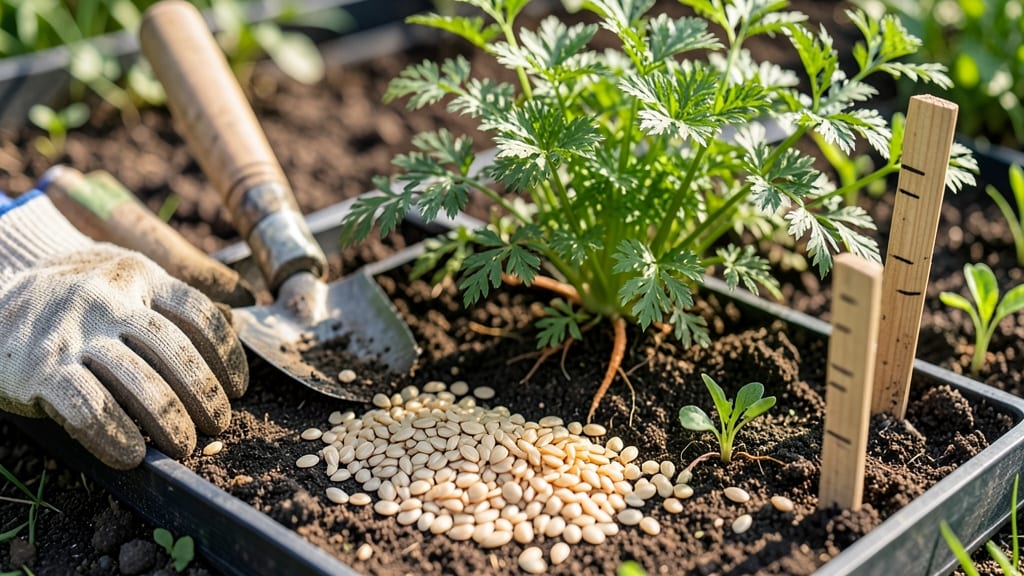
Timing your carrot planting just right in spring can mean the difference between sweet, perfectly straight 🥕 roots and bitter, forked disappointments—and the key is all about those 2-4 weeks before last frost.
If you've ever watched your seeds sprout only to bolt or rot in the cold, you know how frustrating it can be. The good news? With a little science and local know-how, you can nail the perfect window for your USDA Zone 6a garden (or wherever you're growing).
Most gardeners assume "spring" means "as soon as the soil looks dry," but that's where many go wrong. Carrot seeds need soil temperatures around 60°F to germinate properly, and planting too early can leave them vulnerable to frost damage.
I’ve learned the hard way that rushing leads to stunted growth, while waiting too long risks bolting before harvest. The sweet spot? Start when your region’s last frost date is just a few weeks away.
What makes this even trickier is that not all carrots are created equal. Short-season varieties like 'Early Nantes' can handle cooler soils, while longer varieties need that warmer window to develop properly.
Plus, your soil type plays a huge role—clay soils can compact and deform roots, while loose, sandy soil gives them room to grow straight. Let’s break down exactly how to time it right for your garden.
Once you’ve got the timing down, the next step is spacing and companions. Crowding leads to forked roots, and pairing carrots with the right plants (like onions or rosemary) can boost growth while deterring pests.
I’ll share my top tips for spacing, thinning, and companion planting to ensure you end up with a bountiful harvest of crisp, flavorful carrots all season long.
Optimal spring planting weeks before last frost for carrots
Carrots are cool-season crops that thrive when planted at the right time in spring—typically 2 to 4 weeks before your last frost date. This window ensures soil temperatures are ideal (50–70°F) for germination while avoiding early frost damage.
In USDA Zones 3–5, aim for mid-April to early May, while Zones 6–10 can start as early as late February to March. Timing is critical: planting too early risks cold soil and poor germination, while waiting too long may lead to bolting (flowering prematurely) in hot weather.
Your last frost date is the starting point, but soil temperature matters more. Carrot seeds need soil temps above 50°F to sprout reliably. Use a soil thermometer to confirm—if it’s cooler, wait or use a cold frame to warm the soil faster.
For example, in Zone 4, where last frost is May 15, I plant carrots around April 15 to ensure soil is ready. In Zone 8, with a last frost of March 1, I start in late February.
Regional variations play a huge role. Northern climates (like Minnesota or Maine) should wait until soil warms in late April or May, while Southern states (like Texas or Florida) can plant as early as February.
Even within a state, microclimates matter—valleys stay cooler longer than hillsides. Check local agricultural extension services for precise frost data tailored to your county.
| USDA Zone | Last Frost Date | Optimal Planting Window | Soil Temp Requirement |
|---|---|---|---|
| 3–5 (Cold Climates) | May 1–15 | April 15–May 1 | 50–60°F |
| 6–7 (Temperate) | April 15–May 1 | March 15–April 15 | 55–65°F |
| 8–10 (Warm Climates) | February 15–March 1 | February 1–March 15 | 60–70°F |
🌱 Pro Tip: Use row covers to extend early planting by 2–3 weeks in cold zones.
Short-season varieties like 'Early Nantes' or 'Paris Market' can handle cooler soils, while 'Danvers' or 'Chantenay' need warmer temps. If your spring is unpredictable, opt for fast-maturing varieties (50–60 days) to reduce bolting risks.
For example, I always plant 'Little Finger' in early spring for quick harvests, then switch to 'Napoli' for summer plantings.
Direct sowing is best—carrots hate transplanting and develop forked roots if disturbed. Scatter seeds ½ inch deep in rows 12–15 inches apart, then thin seedlings to 2–3 inches apart once they’re 2 inches tall.
Overcrowding leads to small, misshapen roots, so don’t skip thinning! Use a soil fork to loosen compacted soil before planting, as carrots need deep, friable soil to grow straight.
Succession planting every 2 weeks ensures a continuous harvest. In my garden, I make 3–4 plantings in spring: one right after the last frost, then every 3 weeks until early June.
This way, I enjoy fresh carrots from June through fall. Just stop planting by mid-summer to avoid bolting—carrots detect daylight length and flower when days get too long.
Watch for soil crusting after rain, which can smother seedlings. Use a fine mulch (like straw) to keep moisture even and prevent crust formation. In containers, choose deep pots (12+ inches) and use a lightweight potting mix to prevent root binding.
Carrots grown in containers often produce shorter, sweeter roots due to restricted space.
Finally, test your soil pH—carrots prefer 6.0–7.0. Amend heavy clay with compost or sand, and rocky soil with organic matter to prevent forked roots. If your soil is too sandy, add peat moss to retain moisture.
With the right timing and soil prep, you’ll harvest perfectly straight, sweet carrots all season long. 🥕
How to adjust planting for your local climate and soil conditions
Your local climate and soil type can shift the ideal planting window for carrots by weeks—sometimes even months.
For example, gardeners in USDA Zone 3 with cold, heavy soils might plant 4-6 weeks after the last frost, while those in Zone 8 can start as early as February under row covers.
The key is matching soil temperature (aim for 50-60°F) and moisture levels to your region’s spring thaw.
If your garden has clay-heavy soil, amend it with sand or compost before planting—carrots refuse to grow straight in compacted dirt. Sandy soils, on the other hand, dry out faster, so mulch heavily after sowing to retain moisture.
Rocky terrain? Choose short varieties like ‘Paris Market’ or ‘Little Finger’ to avoid stunted roots.
- Clay Soil: Loosen with gypsum or compost; plant 2-3 weeks later than average.
- Sandy Soil: Water daily until established; use mulch to lock in moisture.
- Rocky Soil: Choose short varieties or grow in raised beds with fine soil.
- Heavy Loam: Ideal for carrots—plant 2-4 weeks before last frost for best results.
For northern climates, extend your growing season with row covers or cold frames. These tools can push your planting window 2-3 weeks earlier in spring or 4-6 weeks later in fall.
Just remove covers when soil temps hit 60°F to prevent overheating. In southern regions, focus on shade cloth during scorching summer months to prevent bolting.
Don’t overlook microclimates in your garden. A south-facing bed warms up faster than a north-facing one, so plant seeds there first. If your yard has frost pockets (low areas where cold air settles), wait until those spots thaw before sowing.
A simple soil thermometer ($10 at garden centers) takes the guesswork out of timing.
Pro tip: Test your soil’s pH level (ideal range: 6.0-6.8) before planting. Carrots struggle in acidic soil (pH <5.5), which can cause forked roots. Amend with lime if needed, but do this 4-6 weeks before sowing to avoid burning seeds.
Finally, succession planting is your secret weapon for continuous harvests. In most climates, sow new seeds every 2 weeks from spring until mid-summer. This ensures you’re always pulling fresh carrots while avoiding overcrowding, which leads to misshapen roots.
Just mark your planting dates on a garden calendar to stay organized!