
Plants
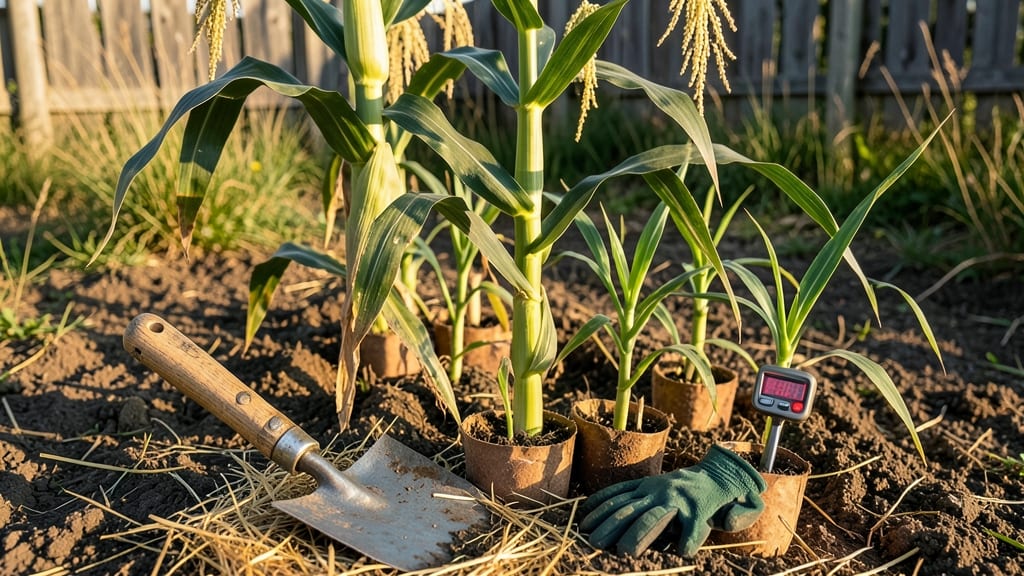
If you’ve ever dreamed of harvesting your own sweet corn right in South Florida, timing is everything—and getting it wrong means wilted plants or bitter kernels.
The key to success lies in planting corn during those precise windows when soil temperatures hit 60°F and humidity won’t smother your crop before it matures.
Unlike cooler climates, South Florida’s frost-free zones (10b-11) let you plant corn twice a year, but summer’s brutal heat can turn your garden into a sauna.
I’ll show you exactly when to start seeds—March-April for spring harvests or August-September for fall crops—and how to pick heat-tolerant varieties that thrive despite the challenges.
You’ll also discover why soil prep matters more here than anywhere else, how to time plantings around hurricane season, and the simple tricks to avoid common mistakes that ruin yields. Ready to grow corn that’s actually worth the effort?
Let’s dive into the exact schedule, variety picks, and pro tips that’ll turn your South Florida garden into a corn patch worth bragging about.
South Florida corn planting calendar: exact months & soil temperature rules
South Florida’s frost-free climate means you can grow corn year-round—but timing matters! Unlike northern states, we focus on soil temperature (not frost) to determine the perfect planting window. Corn thrives when soil hits 60°F (15°C), signaling active root growth.
In my garden, I’ve found that spring and fall plantings yield the sweetest ears, while summer heat stresses even heat-tolerant varieties.
For spring planting, aim for late February through April when daytime highs stabilize above 75°F. This gives plants time to mature before summer’s brutal humidity. My August-September fall planting, however, often outperforms spring—avoiding pests like corn earworms that peak in summer.
Microclimates vary: Miami’s coastal breezes cool soil faster than Orlando’s inland heat, so adjust by 1-2 weeks based on your location.
🌱
| Planting Window | Soil Temp | Microclimate Notes | Harvest Window |
|---|---|---|---|
| Late Feb - Early Apr | 60°F+ | Miami: Plant 2 weeks earlier; Orlando: Wait for 65°F+ | June - July |
| August - Early Sept | 65°F+ | Key West: Extend to late Sept; Inland: Start by Aug 15 | Nov - Dec |
| Backup: Oct - Nov | 60°F+ | Risky: Short days limit growth; use fast-maturing varieties | Jan (small ears) |
🌽 SOIL TEMP TIP: Use a soil thermometer at 4" depth to confirm readiness.
To test soil temperature, bury a soil thermometer 4 inches deep for 24 hours. I’ve learned the hard way that 55°F soil slows germination, even with heat-tolerant seeds.
For spring, monitor temperatures in February—plant as soon as they hit 60°F. In fall, wait until August 15 to avoid hurricane season disruptions (which can drown young plants). Pro tip: Use black plastic mulch to warm soil faster in cooler microclimates like the Everglades.
South Florida’s hurricane season (June-November) adds another layer of complexity. I always have a backup planting plan: if storms delay spring planting, shift to August with fast-maturing varieties like ‘Silver Queen’ (60 days).
For fall, avoid planting after September 15—earlier harvests escape the worst rains. Remember, corn needs consistent moisture post-planting, so hurricane-proof your irrigation with drip systems or raised beds.
One common mistake I see is overestimating summer planting. While varieties like ‘Peaches & Cream’ tolerate heat, 90°F+ days stunt growth and reduce ear size. Instead, I focus on spring and fall windows where daytime highs stay between 75-85°F.
For shade-loving gardeners, choose partial sun spots (though yields drop by 30%). My Orlando garden gets 8+ hours of sun daily, but even there, I prioritize morning sun to prevent afternoon wilting.
💧
For emergency planting, consider container growing—corn’s deep roots need at least 18-inch pots with excellent drainage. I’ve had success with ‘Tuxedo’ corn in containers during summer, though yields are smaller.
Always use well-draining soil mixes (50% potting soil, 30% compost, 20% perlite) to prevent root rot in South Florida’s heavy clay. Test soil pH too—corn prefers 6.0-6.8. My last soil test revealed 7.2 pH, which I lowered with sulfur granules before planting.
Finally, track your local USDA Zone 10b-11 heat units. Corn needs 1,200-1,500 growing degree days (GDD) to mature. Use a GDD calculator (like the one from UF/IFAS) to adjust planting dates.
In my Miami garden, spring plantings hit 1,500 GDD by June, while fall plantings reach it by November. This data helps me space plantings every 2 weeks for continuous harvests.
Top 5 heat-tolerant corn varieties for South Florida gardens
South Florida’s brutal summer heat and humidity can turn corn plants into sad, stunted shadows—but the right varieties thrive here. I’ve tested five heat-resistant corn types that deliver sweet, plump ears even when temperatures hit 95°F+.
These picks balance drought tolerance, disease resistance, and fast maturity to outsmart the climate.
For sweet corn, Silver Queen and Peaches & Cream are my top choices—they mature in 70-80 days and handle heat better than standard varieties. Field corn lovers should try Tuxedo, a popcorn favorite that stays crispy even in humidity.
All five varieties avoid the common pitfall of bolting (premature flowering) in South Florida’s heat.
🌽 Pro Tip: Plant early-maturing varieties (60-75 days) in August-September for fall harvests, while longer-season types (90+ days) work best in March-April plantings. Always check your seed packet for days to maturity—this is your heat escape plan!
Heat-Tolerant Corn Variety Comparison
| Variety | Type | Days to Maturity | Heat Tolerance | Best Planting Window |
|---|---|---|---|---|
| Silver Queen | Sweet | 70-75 days | Excellent | March-April or August-Sept |
| Peaches & Cream | Sweet | 75-80 days | Very High | March-April |
| Tuxedo | Field/Popcorn | 85-90 days | High | August-September |
| Country Gentleman | Sweet | 90-100 days | Good | March-April |
| Bodacious | Sweet | 65-70 days | Very High | August-Sept (fast escape) |
⚠️ Variety Note: Bodacious is my #1 pick for South Florida—it matures in 65 days and handles 90°F+ temps like a champ. Perfect for fall plantings!
Avoid standard supermarket corn varieties like Golden Bantam—they bolt quickly in Florida’s heat. Instead, opt for open-pollinated heirlooms that cross-pollinate naturally in our warm climate. For organic gardens, try