
Trees
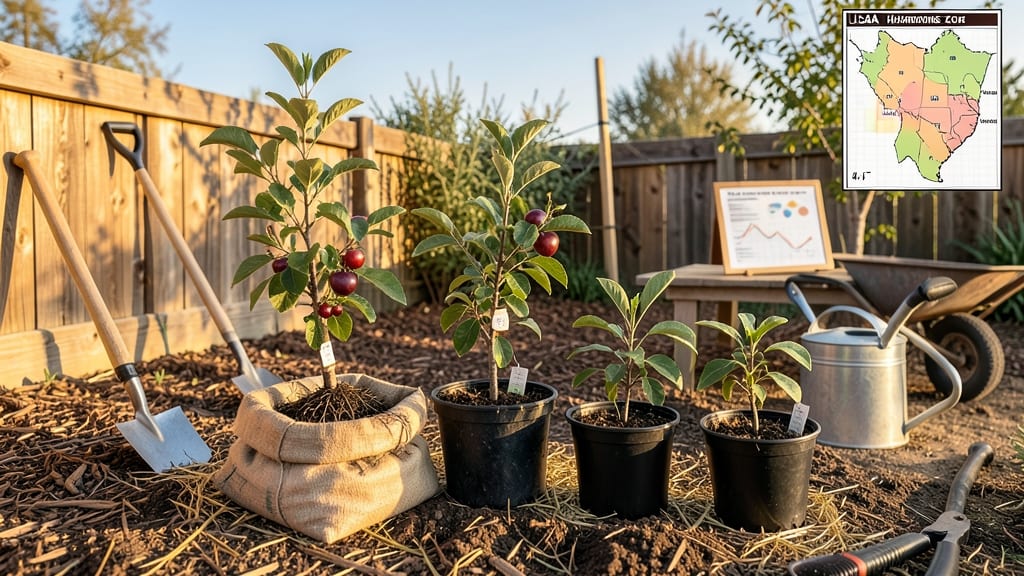
Timing your fruit tree planting in Colorado isn't just about the calendar—it's about matching varieties to chill hours and avoiding those brutal late frosts that can kill young trees before they even take root.
With Colorado's USDA Zones 4-7 and dramatic elevation shifts, you can't just follow general planting advice. Whether you're in Denver or the Western Slope, getting this right means the difference between a thriving orchard and a sad investment.
I'll walk you through the exact windows and varieties that work best in your specific microclimate.
Most gardeners make one critical mistake: planting too early or too late. The ideal window is actually late winter to early spring, but there's more to it than just dates.
We'll cover how to prep your soil, choose the right trees for your chill hours, and protect your new 🍎 from Colorado's infamous spring swings.
Ready to plant with confidence? Let's break down the science behind successful fruit tree planting in Colorado—so you can enjoy that first harvest without the guesswork.
Best planting months for Colorado fruit trees by chill-hour requirements
Colorado’s diverse microclimates and variable frost dates demand precise timing for fruit tree success. Planting too early risks frost damage, while waiting too long delays root establishment. The best window for most Colorado varieties is late winter to early spring (February–April), but chill-hour needs dictate exact timing.
For example, high-chill varieties like apples and pears (requiring 600–1,200 chill hours) thrive when planted in March, after the ground thaws but before bud break. Meanwhile, low-chill peaches and plums (300–500 hours) can handle February planting in warmer zones like Colorado Springs or Pueblo.
🌱
Fall planting is risky in Colorado due to early frosts, but bare-root trees can be planted in October–November if soil isn’t frozen. This method lets roots establish before dormancy, but watering is critical to prevent desiccation during winter.
For container-grown trees, extend your window to May, but prioritize dwarf varieties (e.g., ‘Columnar apples’) for smaller spaces. These adapt better to late planting and urban heat islands common in Denver or Boulder.
Always check your local last-frost date—tools like the National Weather Service or Colorado State University Extension provide hyperlocal data. In high-elevation areas (e.g., Fort Collins), delay until mid-April to avoid spring freezes.
🌿
After planting, mulch heavily (4–6 inches) with straw or wood chips to retain moisture and regulate soil temperature. In dry climates like Grand Junction, drip irrigation is a game-changer for first-year survival. Avoid overwatering, which can suffocate roots in Colorado’s clay-heavy soils.
Pro tip: Test your soil’s pH (ideal: 6.0–7.0 for most fruit trees). Colorado’s alkaline soils often need sulfur or peat moss to create optimal conditions. A simple $20 soil kit from a garden center saves costly mistakes later.
✂️
How to match fruit tree varieties to Colorado’s chill-hour zones
Colorado’s diverse climate—from the high-altitude chill of the mountains to the warmer valleys—means not all fruit trees thrive equally. The key to success? Matching your tree’s chill-hour requirements to your specific zone.
Chill hours are the number of hours below 45°F (7°C) a tree needs to bloom and fruit properly. Get this wrong, and you’ll end up with poor pollination or no fruit at all.
Most of Colorado falls within USDA Zones 4–7, but chill hours can vary dramatically even within a single county. For example, Denver (Zone 5) averages 600–800 chill hours, while Grand Junction (Zone 6) might only see 400–600 hours.
This difference explains why a Honeycrisp apple tree (which needs 800+ chill hours) might fail in the Western Slope but thrive near Boulder.
| Chill-Hour Zone | Best Fruit Tree Varieties | Notes |
|---|---|---|
| 300–500 hours | Peaches ('Reliance'), Plums ('Santa Rosa'), Figs ('Celeste') | Low-chill varieties for Western Slope (e.g., Grand Junction). Avoid apples/pears. |
| 500–700 hours | Apples ('Gala', 'Fuji'), Pears ('Bartlett'), Cherries ('Montmorency') | Ideal for Front Range (Denver, Colorado Springs). Use dwarf varieties for small spaces. |
| 700–900+ hours | Apples ('Honeycrisp', 'Granny Smith'), Plums ('Stanley') | Best for higher elevations (e.g., Fort Collins, Boulder). Needs extra winter protection. |
To find your exact chill-hour count, check the Colorado State University Extension or use a weather station app like NOAA Climate Data. Enter your ZIP code to see annual chill hours for your area.
Pro tip: If you’re in a warmer microclimate (like a south-facing slope), opt for low-chill varieties to avoid failed blooms.
Once you’ve matched your tree to the right zone, plant in late winter or early spring (February–April) to give roots time to establish before summer heat. For bare-root trees, plant as soon as they arrive—don’t let roots dry out.
Container-grown trees can go in slightly later but need extra watering during their first year to compensate for transplant shock.
Remember: Even the right variety needs proper care. Mulch heavily in winter to protect roots from freeze-thaw cycles, and prune in late winter to encourage strong spring growth. With the right match, your fruit tree will reward you with abundant harvests for decades.
🌱