
Planting
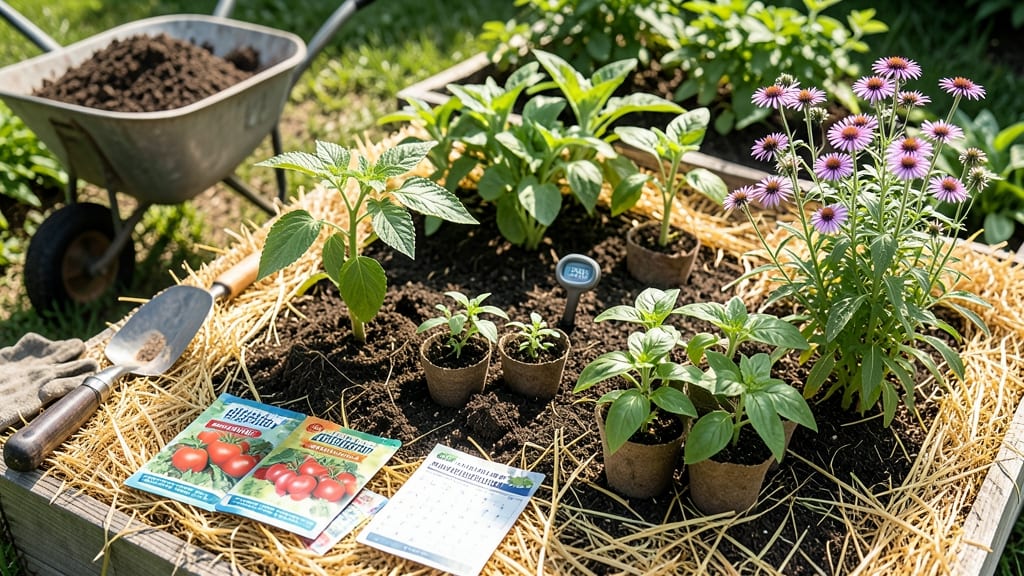
If you're asking "when can I plant my garden in Michigan", timing is everything—and getting it wrong could mean lost crops or wasted effort.
Michigan's climate throws curveballs with its unpredictable frosts, so knowing your region's average last frost date is the difference between a bountiful harvest and starting over.
Most gardeners in Michigan's Southern regions can plant warm-season crops like tomatoes and peppers after mid-May, while Northern areas should wait until early June.
But here's the catch: soil temperature matters just as much as air temperature, and cool-season crops like spinach and peas can actually go in the ground much earlier.
I'll break down exactly when to plant based on your specific Michigan zone, plus pro tips for extending your growing season. Whether you're dealing with late spring frosts or early fall chills, these strategies will help you maximize your garden's potential year after year.
Let's dive into the data-driven planting schedule that Michigan gardeners swear by—so you can finally stop guessing and start growing with confidence.
Michigan last frost dates by region: critical planting windows
Michigan’s last frost dates vary dramatically across its three main regions—Upper Peninsula, Northern Lower Peninsula, and Southern Michigan—meaning your planting schedule should never be one-size-fits-all.
The Upper Peninsula often sees its last frost around May 20–June 1, while Southern Michigan can be frost-free as early as April 25–May 10. These differences matter because warm-season crops like tomatoes and peppers need consistent warmth, while cool-season crops like spinach and peas thrive in cooler temps.
Even within a region, microclimates play a huge role. A south-facing slope warms up faster than a shaded valley, and urban areas can experience urban heat islands that delay frost. Always check local weather forecasts and use frost-free date averages as a guideline, not a rule.
For example, my garden in Ann Arbor has seen last frosts as late as May 25—so I wait until May 15 to plant heat-lovers like basil and cucumbers.
Now, let’s break down the average last frost dates by region and how they impact your planting calendar. Understanding these windows helps you avoid frost damage while maximizing your garden’s potential.
If you’re planting warm-season crops like tomatoes, peppers, or squash, wait until the soil temperature reaches at least 50°F (10°C)—a simple soil thermometer helps here.
For cool-season crops such as lettuce, spinach, or peas, you can start seeds indoors 4–6 weeks before your last frost date or sow directly into the garden as early as March in Southern Michigan.
For transplants, like tomato or pepper starts, hold off until 2 weeks after your last frost date to ensure they’ve outgrown any lingering cold snaps. I’ve learned the hard way that rushing tender plants into the garden too soon can stunt their growth or worse—kill them outright.
Always err on the side of caution, especially in the Upper Peninsula, where late frosts are more common.
Another pro tip: Use Michigan State University Extension’s frost date maps for your exact location. These maps account for historical data and give you a more precise timeline than general averages.
For example, Traverse City might have a last frost date of May 10, while Detroit averages April 28. Even a 10-day difference can mean the difference between a thriving garden and a failed crop.
Don’t forget about first frost dates when planning your fall garden. In Southern Michigan, the first frost typically arrives between October 10–25, giving you a 3–4 month window for warm-season crops.
This means you can still squeeze in late-season tomatoes, peppers, or squash if you plant them by July 1 or use row covers to extend the season.
For ornamental plants, like annuals or perennials, timing matters too. Most annuals can handle light frosts once established, but tropical plants like hibiscus or canna lilies need to wait until after your last frost.
Perennials, on the other hand, often benefit from being planted in early spring or early fall to establish strong root systems before winter.
Finally, keep a garden journal to track your local frost dates over the years. Weather patterns shift, and your garden’s microclimate might change
How to adjust planting dates for Michigan’s unpredictable weather
Michigan’s variable climate means frost can strike even after Memorial Day—so flexibility is your best friend. I’ve learned to adjust planting dates based on local frost clocks and microclimate factors, like whether my garden sits in a frost pocket or near a large body of water.
These tweaks help me avoid late-season setbacks while maximizing my harvest.
Start by tracking your average last frost date (typically May 10–20 in Southern Michigan, June 1–15 in the UP). But don’t stop there—add a two-week buffer for warm-season crops like tomatoes or peppers.
For example, if your last frost is May 15, wait until June 1 to plant heat-lovers. Cool-season crops (spinach, peas) can handle light frosts, so I plant them as early as March or April in most regions.
🌱
- 1 Use row covers to extend early planting by 2–4 weeks for crops like lettuce or kale.
- 2 Plant fast-maturing varieties (e.g., bush beans in 50 days) to harvest before fall frosts.
- 3 Try succession planting: Sow radishes every 2 weeks from April to July for continuous harvests.
- 4 Use cold frames to start seedlings indoors 4–6 weeks before your last frost date.
- 5 Monitor soil temperature—warm-season crops need soil at 60°F+ to germinate.
For late-season extensions, I rely on black plastic mulch or straw bales to warm the soil faster in spring. In fall, I use low tunnels to protect crops like kale or carrots until the first hard frost (usually October 10–20 in Southern Michigan).
Even a simple cloche can add 2–3 weeks to your growing season.
Pro tip: Check Michigan State University’s frost date maps annually—they update based on long-term climate trends. I also keep a gardening journal to note when my local frosts occur, adjusting future years accordingly. This way, I’m never caught off guard by Mother Nature’s surprises.
🌿
Remember, hardy crops like potatoes or onions can handle early planting, while tender plants like eggplants need to wait until after the last frost. By balancing these strategies, I’ve successfully grown a year-round harvest in my Michigan garden—even with our finicky weather!