
Plants
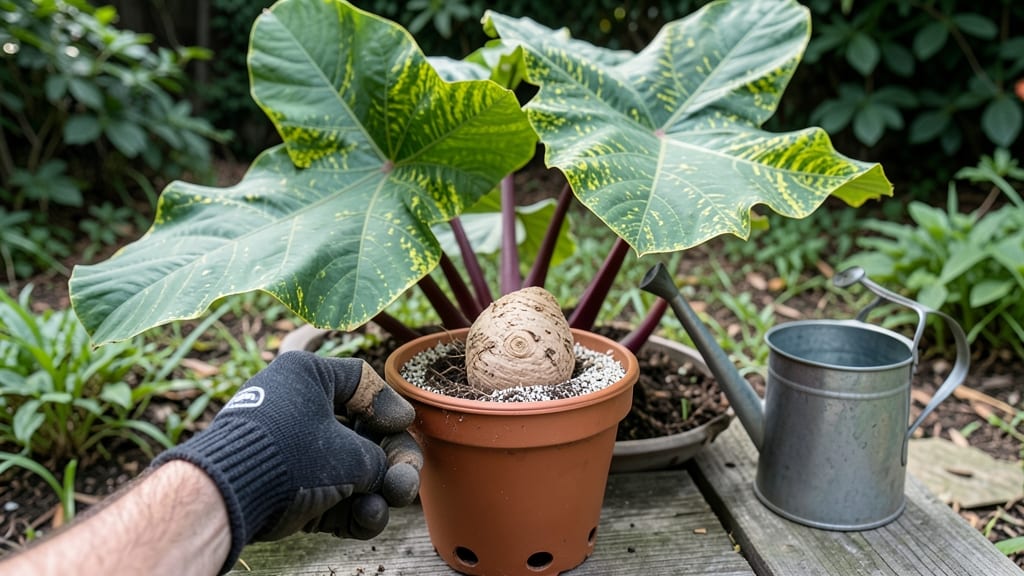
Timing your Elephant Ear 🌿 bulbs perfectly in pots can mean the difference between lush, vibrant foliage and a sad, stunted plant struggling to take root.
If you've ever planted too early and watched your bulbs wilt or rot, you're not alone—many gardeners make this common mistake, especially when working with containers.
The key to success lies in waiting until the soil temperature reaches that sweet spot of 55°F–65°F, a range that signals it's safe for those tropical roots to dive in and establish themselves.
For most of us in USDA Zone 6a and beyond, that window typically opens right after the last frost date, usually around mid-April or later, depending on your microclimate.
But here's the thing: pots heat up and cool down faster than garden beds, so you'll need to adjust your timing based on whether your containers are sitting in full sun or partial shade.
I'll show you exactly how to read the signs—like soil warmth and sprouting cues—that tell you it's finally time to plant for fast, healthy growth.
Let's break down the exact steps to time your planting like a pro, including how to prep your pots and soil for maximum root success. Trust me, your Elephant Ear will thank you with dramatic, show-stopping leaves all summer long.
Ideal soil temperature ranges for planting elephant ear bulbs in pots
Elephant ear bulbs (Colocasia) thrive when planted in soil temperatures between 55°F and 65°F—this range triggers active root growth and prevents cold damage. Since pots heat up and cool down faster than garden beds, you’ll need to monitor and adjust carefully to hit these critical thresholds.
Using a soil thermometer is your best tool for accuracy, especially if you’re in a transitional climate zone.
If your outdoor temperatures dip below 50°F, your bulbs risk rot or stunted growth—even in pots. The key is to wait until the nighttime lows consistently stay above 55°F for at least 3–5 days.
In cooler zones (like USDA 6–8), this might mean delaying planting until late May or early June, while warmer zones (9–11) can start as early as mid-April.
Pots also create a microclimate that can be 5–10°F cooler than surrounding soil. To compensate, place containers in sheltered spots (like against a south-facing wall) or use black pots to absorb and retain heat. Avoid dark, shaded corners where temperatures lag behind.
| Temperature Range | Root Activity | Pot Adjustments |
|---|---|---|
| Below 50°F | Dormant or rotting | Delay planting; store bulbs in dry peat moss |
| 50°F–55°F | Slow growth, risk of rot | Use heat mats or insulated pots |
| 55°F–65°F | Optimal root growth | Plant in well-draining mix with perlite |
| Above 70°F | Stress from heat | Provide afternoon shade; increase watering |
Your potting mix plays a huge role in temperature regulation. Avoid heavy garden soil—it stays too cold and compacted. Instead, blend 50% peat moss or coconut coir with 30% perlite and 20% compost for airy, fast-warming soil.
This mix warms up 2–3 days faster than garden soil, giving your bulbs a head start.
For container-specific tricks, bury your pots slightly into the ground (if space allows) to stabilize temperatures. If you’re in a Zone 5–7 area, consider pre-warming pots by placing them in a sunny window or on a heat mat for 24 hours before planting.
This jumpstarts root activity and compensates for cooler spring soil.
One common mistake is assuming air temperature reflects soil temperature. A 55°F morning might feel pleasant, but your pot’s soil could still be 48°F—too cold for safe planting. Always check with a soil thermometer at 2-inch depth (where roots will form) for the most accurate reading.
If you’re planting in late summer or fall (for tropical varieties), aim for soil temps between 60°F–70°F—warmer than spring but still cool enough to avoid heat shock.
This window works best in Zones 9–11, where frost isn’t a concern. In cooler zones, stick to spring planting and treat pots as annuals.
Pro tip: Water your pots with warm (not hot) water the day before planting to gently raise soil temperature by 2–5°F. This small step can make the difference between sluggish sprouts and vigorous growth in marginal climates.
Finally, remember that larger pots (12"+ diameter) take longer to warm up than small ones. If you’re using big containers, plant 2–3 weeks later than you would for small pots to ensure the soil reaches the ideal 55°F–65°F range.
Best months to plant elephant ear bulbs in pots by US climate Zones (with container-specific adjustments)
Timing your elephant ear bulbs (Colocasia) in pots depends heavily on your USDA hardiness zone and whether you’re growing tropical or cold-hardy varieties.
Containers warm up faster than garden beds, so you can often plant 2–4 weeks earlier than ground-planted bulbs—but only if soil temps stay above 55°F. Let’s break down the best months for each zone, plus pro tips for extending your growing season in pots.
For Zones 5–7, aim to plant after your last frost date (typically late April–mid-May), but use a heat mat if night temps dip below 60°F. In Zones 8–11, you can plant as early as March for tropical varieties or late summer (August–September) for a fall display.
The key? Soil temperature, not air temperature—containers can stay 10°F warmer than surrounding soil.
| USDA Zone | Best Planting Month | Soil Temp Threshold | Container Adjustments |
|---|---|---|---|
| Zones 5–7 | Late April–May | 55°F–65°F | Use heat mats; black pots absorb warmth |
| Zones 8–9 | March–April or August–September | 60°F+ | Insulated pots for fall planting |
| Zones 10–11 | Year-round (avoid frost) | 65°F+ | Move pots to shade in summer |
If you’re in a cooler zone (5–7), start bulbs indoors 6–8 weeks before your target outdoor date using a grow light to simulate warmth. For tropical varieties, like Colocasia esculenta, plant in late summer to enjoy foliage before cooler weather arrives.
Pro tip: Black pots absorb heat faster than terracotta, giving your bulbs a 5°F warmer start in early spring.
For fall planting, aim for August–September in Zones 8–11. Use insulated pots or wrap containers in bubble wrap to protect roots from early frosts.
In Zones 5–7, treat fall planting like a short-season experiment—only attempt it if you can move pots to a protected garage or greenhouse before temps drop below 40°F.
Remember, elephant ear bulbs in pots are portable—move them to sheltered spots if night temps threaten to dip. A frost cloth or clear plastic dome can buy you 2–3 extra weeks of growing time. The goal? Root establishment before stress—whether that’s heat or cold.
🌱