
Trees
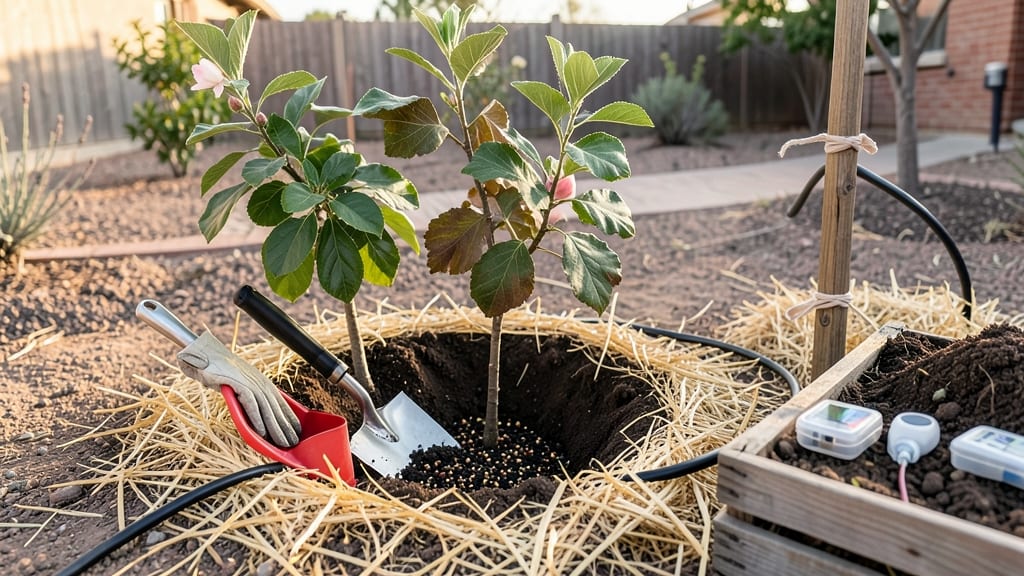
Timing is everything when it comes to planting fruit trees in Arizona—get it right, and your 🍎 thrives; get it wrong, and you’re fighting the desert climate for years.
The key isn’t just picking a season but understanding how Arizona’s unique microclimates (from Phoenix’s scorching lowlands to Flagstaff’s cooler highlands) dictate the perfect window for root establishment.
Most gardeners know winter is ideal, but did you know November through February offers the sweet spot? This period gives young trees time to settle before summer’s brutal heat arrives.
Whether you’re planting citrus that loves the warmth or stone fruits that need a cooler start, aligning with Arizona’s 9b zone rhythms is non-negotiable for success.
Think planting in summer sounds tempting? Think again. Those 100°F+ days stress transplants, while monsoon downpours can drown shallow roots. I’ll show you how to read your local frost dates, adjust for elevation, and even outsmart Arizona’s unpredictable weather to give your fruit trees the best possible start.
Ready to skip the guesswork? Let’s dive into the exact months, soil prep secrets, and watering hacks that’ll turn your Arizona orchard from a gamble into a guaranteed harvest. Your future 🍎 depends on it!
Best planting months for Arizona fruit trees by variety
Arizona’s diverse microclimates and extreme temperature swings demand precision when planting fruit trees. Unlike temperate climates, timing isn’t just about frost—it’s about avoiding 110°F soil and monsoon downpours that can drown roots. The ideal window spans November through February, when cooler temps and shorter days reduce stress.
Citrus trees like lemon or orange thrive when planted in late fall (November-December), while stone fruits (peaches, plums) need early winter (January) to establish roots before spring blooms. Pomegranates and figs, desert natives, can handle slightly later plantings but still prefer cooler months to avoid heat shock.
🌱
For low-desert areas (Phoenix, Tucson), November is critical—soil temps drop below 70°F, reducing root stress. In high-desert zones (Flagstaff, Prescott), wait until March to avoid late frosts, but prioritize dwarf varieties that mature faster in cooler climates.
Pro tip: Bare-root trees planted in January establish 30% faster than container-grown trees, thanks to cooler temps and natural moisture retention. If you must plant in March, use shade cloth for the first 4 weeks to protect young leaves from 100°F+ afternoons.
🌡️
Citrus trees planted outside their optimal window often suffer from root rot or leaf scorch.
I learned this the hard way with a meyer lemon planted in April—it survived, but took 3 years to bear fruit compared to 1.5 years for a November-planted tree. Patience in timing pays off in harvest speed and tree health.
Container-grown trees can be planted 1 month later than bare-root, but still avoid May and June—these months bring monsoon floods and soil-borne diseases that overwhelm new roots. Always check USDA Zone 9b frost dates for your exact elevation—a 1,000-foot difference can shift ideal planting by 2–4 weeks.
🌳
How to time planting for Arizona’s microclimates (Phoenix vs. Flagstaff vs. Tucson)
Arizona’s microclimates create wildly different conditions for fruit tree planting. Phoenix’s low desert heat (Zone 10a) behaves nothing like Flagstaff’s high desert chill (Zone 6b). Even Tucson’s mid-elevation balance (Zone 9a) demands its own approach.
Ignore these differences, and your tree could face heat shock, frost damage, or stunted growth.
Let’s break down the critical planting windows for each region, including frost dates, summer heat tolerance, and the best months to get your fruit trees in the ground. Whether you’re in the Valley of the Sun or the Pine Country, timing is everything.
🌱
In Phoenix, your November–February window is non-negotiable. The 100°F+ summers will fry young roots if planted later. Meanwhile, Tucson’s slightly cooler climate lets you stretch into March, but avoid the monsoon season (July–September), where heavy rains can suffocate roots.
Up in Flagstaff, the rules flip entirely. Plant in April–May after the last frost risk passes. Stone fruits like cherries and apples thrive here, but they need chilling hours—something Phoenix’s heat simply can’t provide. Choose low-chill varieties like figs or pomegranates for the Valley.
Pro tip: Check your local Cooperative Extension Service for hyper-local frost dates. A 50-mile elevation change can shift your planting window by 6+ weeks. For example, Sedona’s Zone 7a allows March planting, while Yuma’s Zone 10b demands winter-only planting.
☀️